dailynewsnblog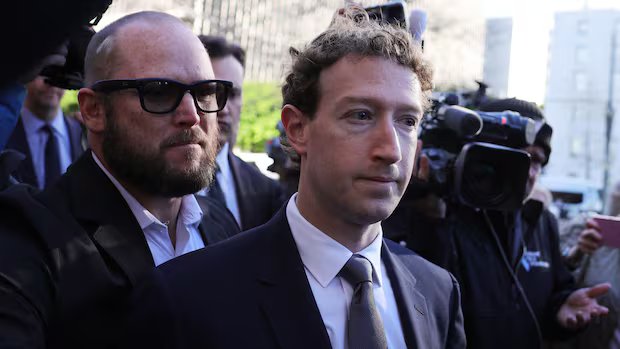
Meta, which has lost two trials concerning child safety on its platforms so far this year, faces what could be its most consequential trial yet beginning Tuesday.
Jury selection took place last week in Oakland, Calif., for the federal trial to be heard by U.S. District Judge Yvonne Gonzales Rogers. While the eight-person jury will render a decision, they are actually serving only as an advisory jury, with the outcome ultimately decided by Rogers alone.
The trial is expected to last at least six weeks, and Meta CEO Mark Zuckerberg and Adam Mosseri, head of Instagram, could be called to testify.
Here’s more on the trial and the stakes.
Who’s suing?
The origins of the trial date back nearly three years, when dozens of states led by officials from both U.S. political parties jointly field the lawsuit in federal court in California. The lawsuit alleged that Meta — owner of Facebook, Messenger Instagram and WhatsApp — was violating federal law by collecting data on users under 13 without their parents’ consent.
The 233-page complaint alleged that Meta has engaged in deceptive practices to conceal how harmful and addictive its platforms are to young users as currently constructed, while monetizing their attention for profit through data harvesting and targeted advertising.

Meta is facing a major U.S. trial over allegations it designed Facebook and Instagram to keep young users hooked and misled consumers about their safety.
Four states are up first in this trial: California, Colorado, Kentucky and New Jersey. Twenty-five other states could have their own trials later, though it’s also possible a damaging result for Meta in this trial — which they would undoubtedly appeal — could see the company look to avoid more costly litigation with those other states.
“The state attorneys general are going for the gusto,” Eric Goldman, a professor and co-director of the High Tech Law Institute at Santa Clara University School of Law, told The Associated Press. “They are trying to set the definitive precedent in this case and they have asked for extraordinary damages and they are going to seek extraordinary structural remedies if they succeed.”
Last week, Rogers denied a Meta bid to prevent a key witness for the plaintiffs, Arturo Béjar, from testifying at the upcoming trial.
Bejar, a former director of engineering at Facebook, testified earlier this year in a case brought by the state of New Mexico that Facebook was internal research that showing online harms to teens — such as bullying and sexual images — but failed to act appropriately. He has said Meta’s safety features are “woefully ineffective” and that the the company is not adequately staffed to respond to safety violations.
What they’re asking for
The states haven’t said what they are seeking in damages monetarily. But Meta has said in a legal filing it could face financial damages up to $1.4 trillion US at trial. The total is nearly as high as the company’s entire market capitalization — that is, the value of all its outstanding shares on the stock market.
“A sanction of that size has no analogue in the history of consumer protection enforcement,” Meta said in a court filing last month.
The court would ultimately determine the financial penalty if Meta is found liable, and some legal experts say the $1.4-trillion US total is unrealistic.
“It’s not plausible in the sense that Meta doesn’t have that much money and could not get it,” James Grimmelmann, a law professor at Cornell Law School and Cornell Tech, told AP. “An award that large would put Meta into bankruptcy, wipe out its owners, and effectively result in the states owning Meta.”
Aside from financial damages, the four state attorneys general are also asking the judge to issue an order to make changes to Meta’s platforms, including implementing age restrictions and eliminating infinite scroll.
What Meta says
Meta disputes the allegations, and says the trial evidence will show its commitment to supporting young people.
“We’ve listened to parents, worked with experts and law enforcement, and conducted in-depth research to understand the issues that matter most,” the company said in a statement.
Meta has introduced new safety measures since the lawsuit was filed. It launched teen accounts on Instagram, which are private by default and come with messaging, content restrictions and parental controls. The company also uses artificial intelligence to determine if kids under 13 are using Instagram or if teens are lying about their age to access adult accounts.

A New Mexico judge has ordered Meta to pay $567 million US after finding the company created a public nuisance and misled consumers about the safety of its platforms for children. Meta says it will appeal the ruling.
The legal landscape for Meta
Meta reported a rare profit decline last month, in part due to $2.4 billion US in legal expenses.
In the New Mexico case, which Meta is appealing, jurors in March ordered the company to pay $375 million US in civil penalties. The judge in the case last month hit the company with another $567 million US in damages, with the bulk to go toward treatment services for young people and awareness and prevention campaigns.
The judge ordered new safety measures on the platforms for users in that state, including time limits for minors and AI chatbot restrictions.
More than 1,000 school districts in the U.S. have sued social media companies including Meta for causing harm to students by contributing to anxiety, depression and self-harm. A rural Kentucky school district was set to be the first to head to trial, but a settlement was reached in June.

Meta, according to public records, was to contribute $9 million US of the $27 million US the district was set to receive, with the owners of Snapchat, TikTok and YouTube also paying damages.
Meta was also put on the hook this year in a Los Angeles Superior Court civil trial for 70 per cent of the $6 million US in damages awarded to a young woman who testified that as a youth she became addicted to social media as a child and that her addiction exacerbated mental health issues. Alphabet, owner of YouTube, was found liable for the rest of the amount.
Zuckerberg and Mosseri both testified at that trial. Zuckerberg said the company’s policy restricts Instagram users under the age of 13 and that they work to detect users who have lied about their ages, while Mosseri said he disagrees with the idea that people can be clinically addicted to social media platforms.
It’s “not good for the company, over the long run, to make decisions that profit for us but are poor for people’s well-being,” Mosseri said.
Meta is also defending itself currently in Tennessee. That state’s attorney general alleges that Instagram was intentionally built to be addictive and that Zuckerberg was repeatedly warned by some Meta employees about research that found a negative impact on teens, but declined to fund efforts to minimize those harms.
Meta also faces litigation in Canada over alleged harms for young users, from both individuals and school boards, among others.