dailynewsnblog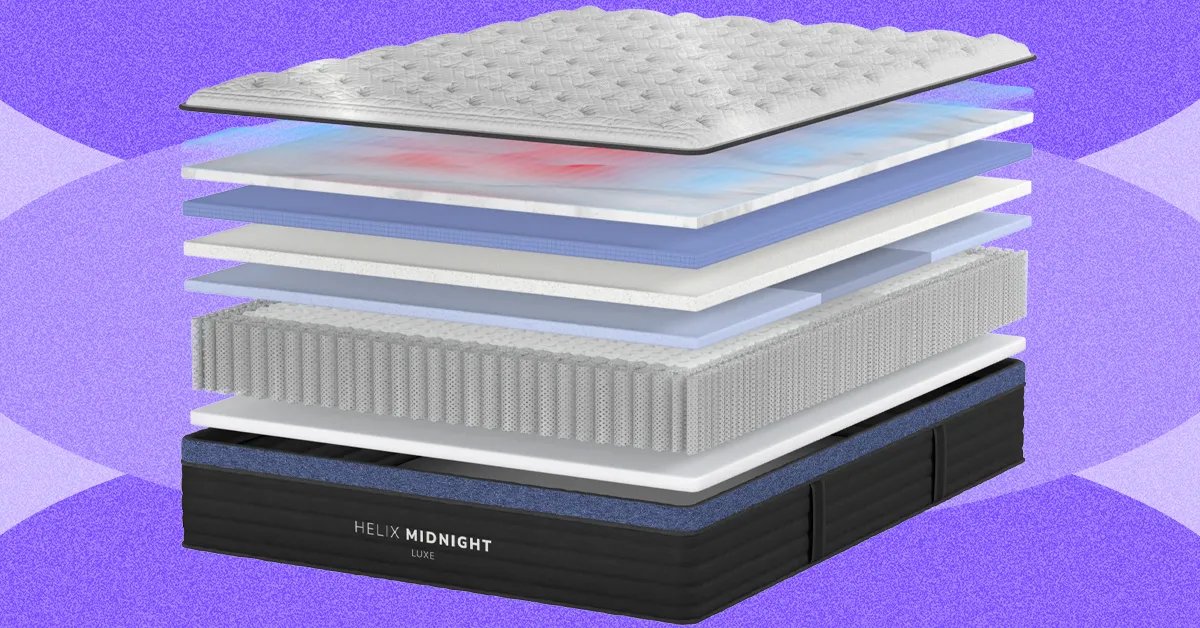
If you’re looking to buy a mattress, I don’t need to tell you the research process is complex. To assist with that, we have a whole guide that lays out (pun partially intended) where to begin. But for now, I’m going to walk through the various types of mattress materials. My hope is that by the time you finish reading this, you’ll have a better idea of what kind of mattress you’re looking for, which will make your final decision that much easier.
Updated April 2026: We’ve added a new section explaining the merits of getting a traditional mattress versus one that comes in a box. We’ve also ensured prices are up to date throughout.
Our Favorite Mattresses We’ve Tested
I’m a certified Sleep Science coach and mattress tester with over five years of experience. I can dissect a mattress design faster than you can pour your morning cup of coffee, I’ve perfected my unboxing form (because mattresses are heavy and spring-loaded), and I can recite the manufacturing process of major mattress materials at any given moment. It’s a fun party trick, but it makes me what I like to think of as the final boss of mattress testing. My Reviews teammates also know their stuff (we sleep on mattresses we test for a week or more, then report back on our findings), which helped us compile this list of the best mattresses of 2026.
Despite the popularity of mattresses in a box, they’re so much more than a rectangular piece of foam you sleep on. There are five main types of mattresses: innerspring, hybrid, memory foam, latex, and smart beds (otherwise known as adjustable mattresses). To help me explain these materials even more, I asked John Merwin, CEO of 3Z Brands (parent company of Helix, Birch, Bear, Nolah, and Leesa) and founder of Brooklyn Bedding, to weigh in as well.
Hybrid
Traditional coil mattresses have evolved into hybrids, which is what you will likely encounter on today’s mattress market (aside from latex and foam options). Hybrid mattresses are highly customizable, allowing you to pick and choose what you want in your bed, whether that’s a combination of foam and coils, latex and coils, or even a mix of the three. Many mattress reviews will use the phrase “best of both worlds” to describe hybrids, as this mattress lets you sample the design aspects of the materials involved. You can get the pressure relief you need from memory foam or latex on top, but ample support from the coil core (not to mention the aforementioned responsiveness from coil inclusion).
Speaking of coils and harking back to traditional mattress design, the type of coil used in hybrid mattresses matters too, as it improves upon the design of the Bonnell coil. The keywords to look for are “pocketed coils” or “individually wrapped coils,” which make up the main support mechanism of a mattress. Instead of being interconnected, each coil stays in its own lane (pocket, really) and will compress uninhibited by the other coils around it. In other words, where there is more weight, the bed will feel firmer.
This is especially applicable for areas where body weight is centralized when you’re lying down, particularly around the hips and shoulders. Pocketed coils are also meant to outperform traditional ones in the motion isolation arena, meaning that when you move around, the individual coil takes the heat motion-wise and stops the bed from reenacting a small earthquake. With the interconnectivity of traditional coils, it doesn’t take much for the feeling of movement to travel along the entire surface of the bed.