dailynewsnblog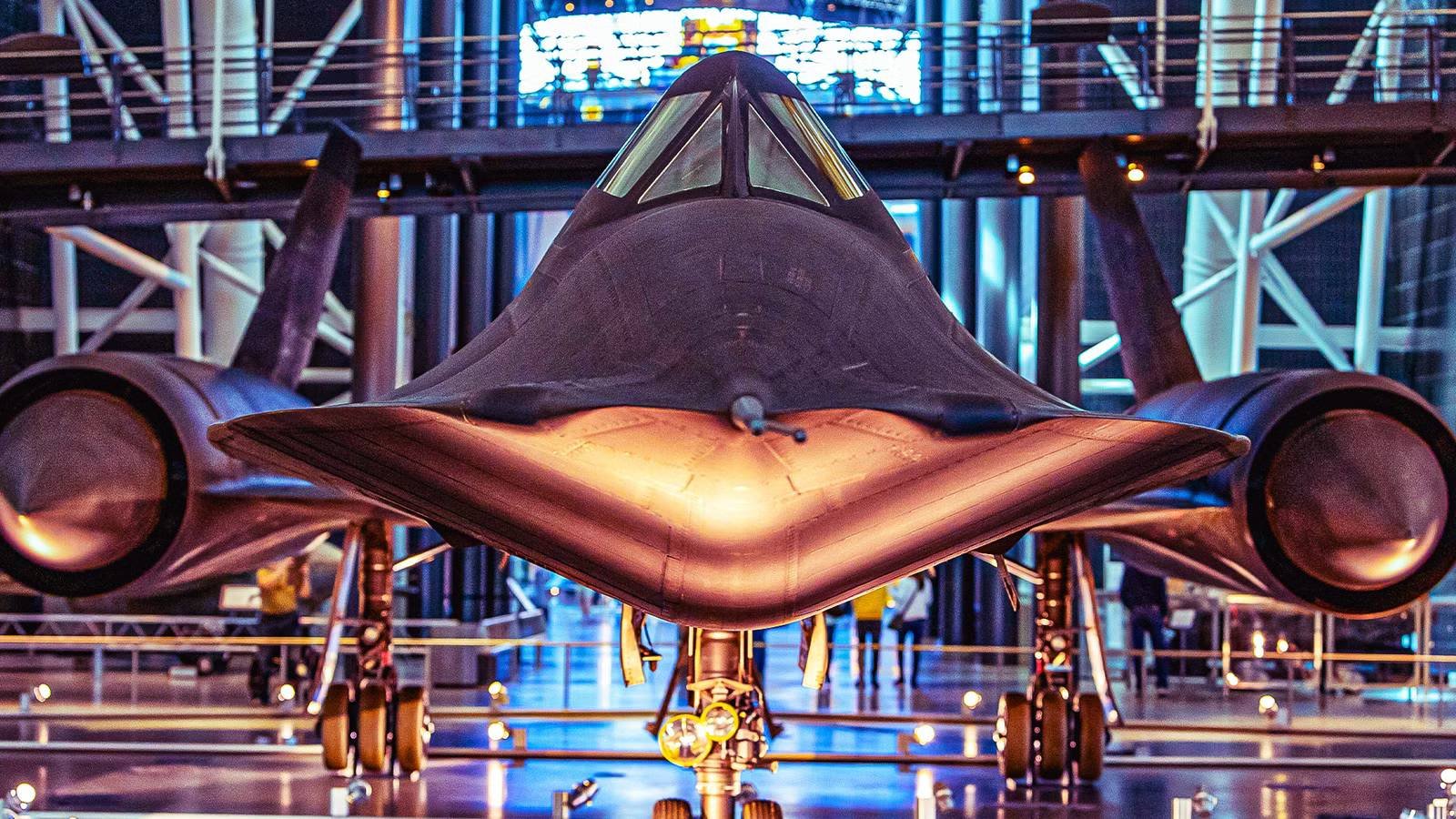
The Lockheed SR-71 Blackbird was not a normal aircraft. It was the fastest air-breathing aircraft ever made and was designed to fly at such a height (over 80,000 feet or around 24,300 meters) and speed (over Mach 3) that it could outpace enemy air defense and missiles. There are confirmed reports that it successfully outflew around 4,000 missiles fired at it over the course of its career.
The aircraft was built to fly higher and faster than the subsonic Lockheed U-2 spy plane that had proven itself vulnerable to enemy air defense since 1960. The SR-71 was designed so that the United States could gather intelligence throughout the Soviet Union and other countries of interest. This was a time before satellites, the internet, and the USSR had largely closed its borders to foreigners.
Before the Lockheed U-2, the US was left largely guessing what was happening in the USSR. The value of these spy planes was displayed in 1962 when a U-2 discovered Soviet missiles in Cuba, triggering the Cuban Missile Crisis, while also highlighting the vulnerability, as a U-2 was the only aircraft successfully intercepted. The successor SR-71 was more extreme than the U-2 and pushed pilots to cross over with astronauts.
When Pilots Cross Over With Astronauts

While the Lockheed SR-71 was an air-breathing aircraft that flew in the atmosphere, it was so extreme that its crews had to go through procedures that had more in common with astronauts than with typical pilots. Blackbird crews had to wear full-pressure full-body suites derived from those used by astronauts. Before flight, pilots had to undergo lengthy suit-fitting procedures while also checking for leaks and inspecting the oxygen systems.
Technicians were required to step into the rear-entry suit like ‘a new skin.’ They needed to adjust layers, including the comfort liner, the bladder/thermal layer, and the restraint layer. The pilots had to don the parachute harness, boots, a completely sealed helmet, and gloves. The boots even came with spurs for egress. Every seal, zipper, and hose of the David Clark S1030 full-pressure suit had to be meticulously checked.
The suit was heavy, restrictive, and relied on a portable cooling unit that the pilots carried with them to the aircraft to keep from overheating before the SR-71’s cockpit air conditioning could kick in. The Flight Test Historical Museum says of the suit that “the S1030 evolved from its remote ancestor, the original David Clark XMC-2-DC suit first produced in 1956, via the Pilot’s Protective Assembly (PPA) model S901 worn by the first SR-71 crews.”
Will Lockheed Martin Build The SR‑72?
Lockheed Martin’s SR-72 “Darkstar” could be real. From Top Gun fame to Mach 6 specs, here’s what we know about the hypersonic spy plane’s future.
A Preparatory Diet

A released CIA report said that “crew preparations for the AVIATION ‘WEEK demonstration flight began more than three hours before the flight with a high-protein breakfast of steak and eggs.” It went on to explain that the Air Force’s Physiological Support Division maintained dedicated dining facilities specifically for SR-71 and U-2 Dragon Lady crews. Around an hour and a half before takeoff, the crews would undergo medical checks, including temperature, blood pressure, and general physical condition.
The high-protein preparatory diet was the strike’s operational requirement. The crew needed to have a high-protein, ‘low-residue’ meal that could be entirely absorbed by the body and therefore minimize the need for bowel movements. Once in the suits and zooming at 85,000 feet (25,900 meters), the pilot’s flight suits didn’t accommodate bathroom breaks. A gastrointestinal issue in that pressurized space suit could ruin a mission or worse.
With that said, the pilots sometimes wore a urine collection device that had a tube that attached to a manually operated valve on the inside of the left leg. The meal also allowed the pilots to sustain energy on long missions, although their meal could sometimes be supplemented later on with tube foods like applesauce in the helmet.
Catch what other flight trackers miss
Emergency squawks, holds, NOTAMs — live signals, no signup.
Open tracker
Catch what other flight trackers miss
Emergency squawks, holds, NOTAMs — live signals, no signup.
Open tracker
Breathing Pure Oxygen Before Takeoff

Related to fitting the astronaut-like suit was breathing pure oxygen before takeoff. In order to prevent decompression sickness (aka the bends), crews had to breathe 100% oxygen for around an hour before the flight. This allowed nitrogen to be purged from their bloodstream. Some sources say the pre-breathing period would last at least 30 minutes.
Once the aircraft was flying at altitude, a sudden depressurization would expose the crew to conditions close to space and would help stave off decompression sickness; no human can survive in those conditions for long. The aircraft was designed so that the pilots could bail out and eject at 85,000 feet. Although doing so at that altitude and at around three times the speed of sound was extremely risky and required a very specific and carefully engineered sequence. This practice continues today for astronauts
Lockheed SR-71 Blackbird Stats (Per the Air Force Museum) | |
|---|---|
Role | High altitude, high Mach spy plane |
Number built | 32 |
Altitude | Over 80,000 feet (24,300 meters) |
Retired | 1989 (temporary), 1998 (permanently) |
Final operator | NASA (1999) |
In 2024, NASA said that during the Exploration Atmosphere Prebreathe Protocol Study, eight crew members spent 11 days in a reduced-pressure, 20-foot chamber at NASA’s Johnson Space Center. This would determine how spacewalk operations can be conducted safely and frequently on the surface of the Moon or Mars. NASA added that “the study evaluates alternative prebreathe protocols for crewmembers, maximizing time on spacewalks while minimizing risk of decompression sickness for the astronauts.”
Getting To & Into The Aircraft

Even getting into the aircraft before the flight was an extensive procedure. Before the pressure suits were hot and uncomfortable, the crews were transported in a van equipped with cooling hoses. Even after they got into the cockpit, the cooling support remained essential. SR-71 crews could normally try to be in the aircraft 50–55 minutes before the scheduled takeoff. The engines were started around 40 minutes prior to takeoff.
Long before the crew had arrived at the aircraft, the maintenance personnel had spent hours checking the aircraft’s crew survival equipment, cabin pressurization, and environmental control systems. While it is often well known that fires were lit under trucks to allow them to start in Second World War winters (such as in the Soviet Union), the fact that the SR-71’s oil was unusually thick and needed to be pre-heated for the engines to start is less well-known.
One notable feature of the SR-71 is that it could leak fuel while cool and on the ground. This is because it was designed for extreme heat that could expand the engine and panels. The engine could expand by around six inches in length (15 cm), while the gaps between the panels would seal. As it was leaking fuel, the first tanker rendezvous was considered part of the normal launch sequence.
Other SR-71 Pilot Preparations

Preparation for an SR-71 mission would start at least a day earlier. This included spending an entire day in the SR-71 simulator with typical missions rehearsed under instructor supervision. The simulator was to practice navigation procedures, learn emergency actions, experience failures, and become familiar with the heavy workload encountered during the climb and cruise. In the released CIA document, the author notes that this was barely enough to appreciate the demands of the aircraft on an actual mission.
Another aspect was shaving. The pressure suit’s helmet was a matter of life and death, and pilots had to be perfectly clean-shaven every single morning. Even a small amount of stubble had the potential to compromise the seal. While not necessarily a same-day practice, the pilots had to practice inserting specialized tube food through a tiny, sealed feed port in the helmet visor without breaking the internal pressure.
Entering the cockpit in the full pressure suit was cumbersome and difficult. Support personnel aided the crews in getting seated and connected. The cockpit controls were also designed to prevent stiff, inflated gloves from triggering the wrong instruments. Lockheed designed the cockpit with oversized controls, tactile-based layouts, and touch-blind switch guards. The selectors, throttles, and dials were enlarged and spaced further apart to allow the pilot with an inflated pressure glove to operate them.
How Many Lockheed U-2 Dragon Lady Spy Planes Were Built?
Discover the story of an iconic American ‘eye in the sky.’
An Aircraft Of Its Time

Mission planning also began a day earlier to determine which reconnaissance sensors were needed and which mission tapes were required. This would allow the aircraft to follow a predetermined route, automatically activate sensors over targets, and avoid radio emissions while maintaining precise navigation. The SR-71 hails from a period before satellites and GPS, and it had to take images on a film that had to be developed once back on the ground.
While the SR-71 was unusual in its astronaut-like preparation for the crew, it was not exactly unique. Before the SR-71, the United States developed the North American X-15 rocket plane launched from a mothership. This is the only plane to have flown hypersonically (Mach 6.7) with humans on board. The pilots (which included Neil Armstrong) were later recognized as astronauts. This is perhaps the closest other aircraft to the SR-71 in terms of astronaut preparation.
The Lockheed U-2 also featured a pressure suit, near-space altitude, and pre-breathing oxygen, but was altogether less astronaut-like in training. The WB-57 and ER-2 have some equivalence, but this is becoming a thing of the past. The Air Force is lobbying to retire the U-2s, although Congress appears to want them to remain in service. Otherwise, most of these extreme ISR tasks have been taken over by a combination of systems like satellites, signals intelligence, various spy drones, and other systems.