dailynewsnblog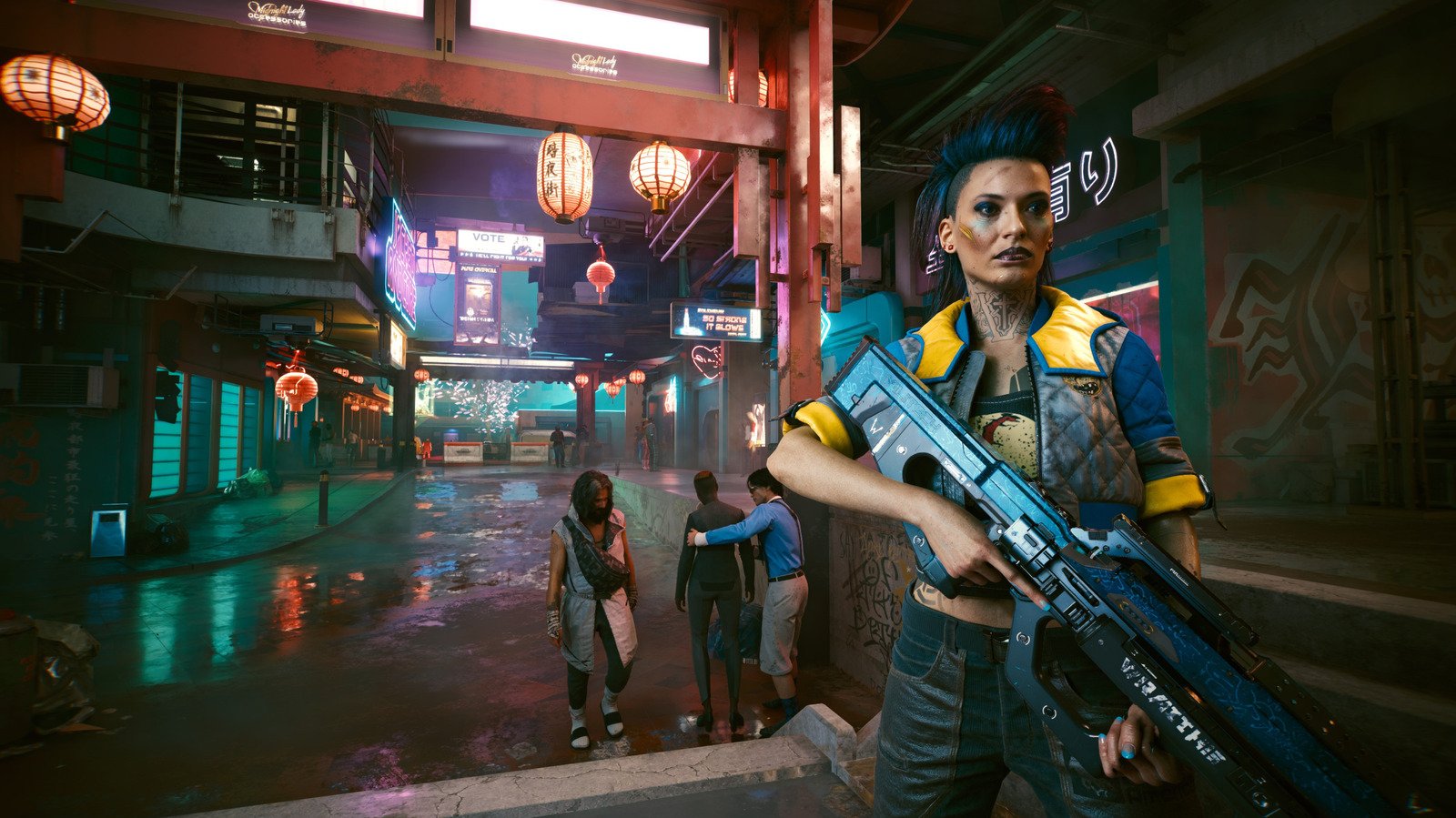
Games look way more beautiful, but it comes at a high cost.
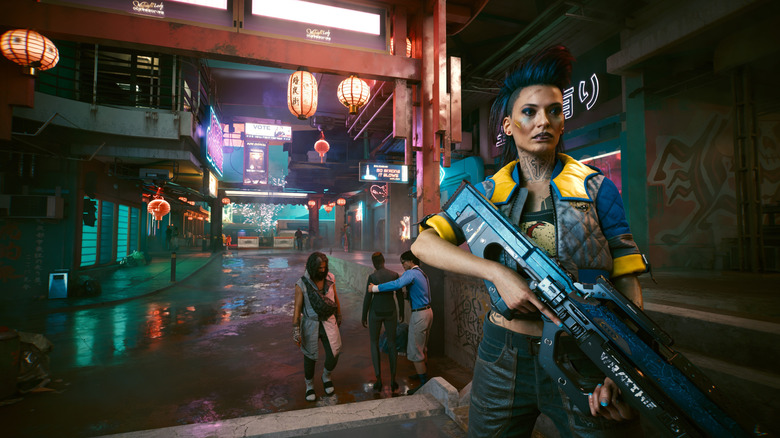
One of the main selling points of the current console generation is that Sony and Microsoft’s machines can finally handle ray tracing (RT) at a decent level. Yet while the PS5 and Xbox Series X can provide moderate ray-traced experiences, the top end of the PC gaming food chain is on an entirely different level. High-end rigs offer the most advanced RT features with incredible fidelity. But what if you’re on an aging or average PC? Is ray tracing really worth enabling?
It all comes down to the hardware you’re using. If your GPU is more than five years old, any ray-traced games your PC is capable of running will likely perform poorly. Ray tracing is a luxury gaming feature that should only be turned on if you own a fairly high-end rig. And that’s not even mentioning its flashier sibling: path tracing.
Is ray tracing worth it?
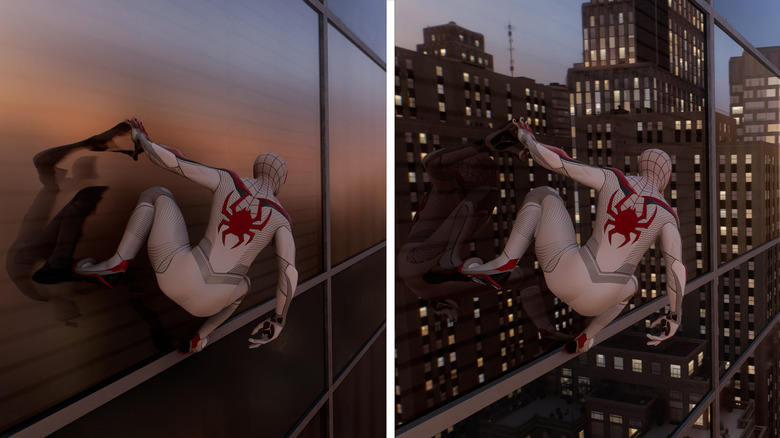
For your average PC gamer playing on a middling GPU, ray tracing will cost too many frames to make it worth enabling. That said, at time of writing, the Steam Hardware Survey ranks the extremely capable NVIDIA GeForce RTX 5070 as the graphics card with the highest usage share. We thus see dedicated PC players are embracing graphics cards more than capable of handling ray tracing. If your GPU is a couple of generations old, though, RT should be disabled.
But what is ray tracing exactly? In short, it’s an advanced rendering technique that simulates realistic lighting effects, shadows and reflections more accurately than old-school rasterization methods. In older games that don’t support ray tracing, screen-space reflections are used, which aren’t very accurate. By contrast, modern titles that support RT can reflect offscreen objects and shadows by bouncing rays around the screen, before accurately calculating how the in-game world should be lit.
I’ve been enjoying ray tracing in some of the best PC games for years, and I absolutely adore the technology. There are a couple of major caveats, though. I’m fortunate to have access to an RTX 5090, and I often don’t mind embracing NVIDIA’s DLSS 4.5 Multi Frame Generation tech to boost my frame rates (at the admitted cost of increased input lag).
For folks gaming on an RTX 3060 or AMD Radeon RX 6600 XT, there’s no way I can recommend ray tracing. Instead, focus on locking down a stable frame rate at your monitor’s native resolution. After all, if you’ve never seen ray tracing in action, you’re not going to miss it.
How much does ray tracing impact FPS?
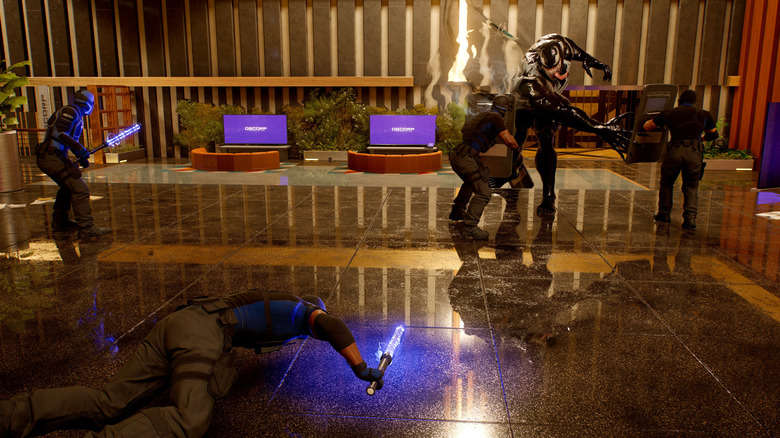
“A whole lot,” is the succinct answer. Though it depends on the specific game you’re booting up, performance in many modern AAA PC titles will often plummet once you enable ray tracing features, unless you’re rocking a seriously powerful rig. You can improve your fps for smoother gaming by turning on DLSS or embracing frame generation, sure. Yet if you’re not into frame rate-boosting AI tech, ray tracing can be a performance killer.
A while back, TechSpot analyzed the impact of ray tracing across a whopping 36 different games. During the site’s comprehensive testing, average FPS dropped between 20 to 40 percent when RT was on. That’s a whole lot of frames to sacrifice for a fancy lighting technique many folks will struggle to notice in motion.
Some of the worst offenders, according to the report: Hogwarts Legacy saw a 45 percent dip in frame rates; for Alan Wake 2 the decrease is around 52 percent, and Hitman 3‘s average frame rate drops by an absurd 65 percent. I’ve played Agent 47’s latest assassination adventure with RT cranked to the max, and as much I admire all of those geometrically correct rays bouncing off the chrome dome killer’s head, that’s a brutal performance hit.
Ray tracing vs. path tracing: what’s the difference?
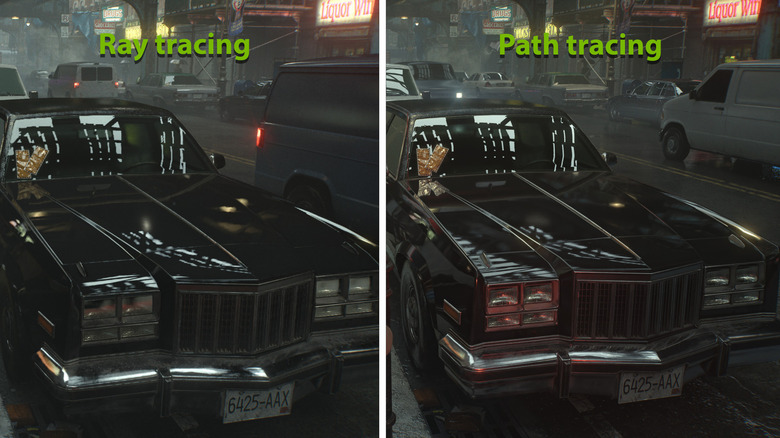
Permit me to indulge in a nerdy Star Wars analogy: if ray tracing is a talented Padawan, path tracing is a full-blown Jedi Master. Path tracing is still a type of RT, but a more advanced one. In the handful of PC games that deploy this incredibly pretty technique, the results are often jaw-dropping.
Path tracing — sometimes referred to as “full ray tracing” in certain titles — can calculate far more lighting sources than traditional RT. In games that don’t support path tracing, RT is often combined with traditional rasterization methods, with ray tracing handling specific effects like reflections or shadows. Path tracing works differently. Compared to standard RT, it usually controls the entire look of a game, leading to a more consistently lit image.
I replayed the opening scene of Resident Evil Requiem for this feature and compared its High ray tracing preset to the full path tracing option (as you can see in the screenshot above). If you’re reading this on your phone, you probably won’t be able to spot the differences between the two techs. But they definitely exist.
Path tracing’s multi-bounce global illumination is most clearly seen in the car’s left headlight. Notice the slight red tinge being cast by the neon lights from a nearby, off-screen shop window. This is absent with ray tracing, where bounce lighting is more limited. If you squint, you can also see that path tracing handles the specular reflections on the car’s windshield more effectively, exhibiting less aliasing compared to standard RT. Trust me, it’s a lot easier to spot the difference when looking at an uncompressed 4K image.
As much as I admire path tracing in the likes of 007: First Light and Cyberpunk 2077, it’s even more brutally taxing on frame rates than traditional ray tracing. With the latter title, enabling path tracing can be 50 percent more demanding than RT depending on the scene. Unless you’re lucky enough to own an RTX 5090 or RTX 5080, you’re best off steering well clear of the gorgeous but performance-punishing tech.