dailynewsnblog
The two most common reactions I received to the remuneration of Members of Parliament during my brief time in the role was: ‘that is way too much money’, and ‘that is not nearly enough money’. There is no goldilocks zone for politician pay, but the salary is only a part of the question.
The school of thought that says politicians should make minimum wage because that would force them to raise the minimum wage is a logical fallacy. Politicians should raise the minimum wage to a genuinely liveable wage because politicians should be people who have the best interests of the public, not of themselves, at heart.
Paying politicians minimum wage will not bring such people into elected office in any meaningful way, and would likely further reduce the already dangerously low percentage of politicians who run for the right reasons. Rather, it would ensure that only those who do not need an income will credibly offer themselves in election. As the billionaires filling the White House today should remind us, those people are not driven by the principled pursuit of our collective best interests.
The state of New Hampshire famously pays each of its 400 state representatives $100 per year. Louisiana pays its state reps $16,800, which is still more than their country’s minimum wage. Texas pays its state reps $7,200 a year — about half of minimum wage. New Mexico does not pay its state reps at all. Only California, Pennsylvania, New York, and DC pay six figures. The National Conference of State Legislatures lists both salary and demographic information for every state.
In Canada, there is no central website that lists each province’s legislative remuneration, but the range is quite a bit narrower, with all ten provinces treating it as a full time job with salaries ranging between about $85,000 in PEI and about $157,000 in Ontario.
Federally, MPs currently earn $217,000 CAD per year while American congressmen make $147,000 USD — about $202,000 CAD. MPs’ pay is indexed around an industrial average to detach MPs from their own pay raises, while the Americans have had their salaries frozen for the past 17 years.
But none of that really matters, because in nearly every case, elected politicians are not banned from having outside income or financial interests. Some even argue in favour of such secondary income so they can feed their families, without any sense of irony of the impact of their policies on the average citizen’s ability to feed their own families.
In the United States, the current controversy is around the ability — and extent to which — American legislators trade on the stock market, profiting off of information they learn from their positions in office. There are few members of either the American Senate or the American House whose net worth increases while in office are proportionate to their pay. Nor are they consistent with growth in the general public’s investment portfolios, for those voters wealthy enough to have one. A 2014 study showed that among the top 20 congressmen, the average increase in net worth was a staggering 422% per year — and Democrats are nearly as lucky as Republicans in this regard, in case you were about to jump to any conclusions.
In Canada, MPs are bound to the Conflict of Interest Code for Members of the House of Commons, which itself is a part of the Standing Orders, the rules by which the House governs itself. The Conflict of Interest and Ethics Commissioner has the power of investigation, but the enforcement action is limited to a report back to the House of their findings, leaving it to the legislators themselves to deal with a colleague found to have fallen out of bounds.
Should MPs as a whole one day decide, as their American counterparts already have, that if everyone profits through conflict of interest then nobody can be held accountable, there is no current mechanism to stop it as even public shame is proving to be of no effect south of the border.
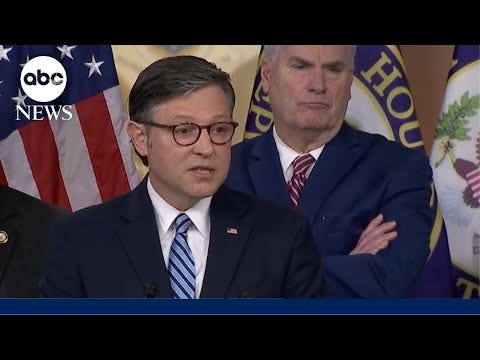
Regardless of the stated intent by Republican Speaker Mike Johnson to crack down on conflict of interest, for which he is doing a miserable job, and of the existence of ethics committees and commissioners and policies in some form in nearly all elected bodies, the very ability of lawmakers to have outside income is inherently corruptible.
A significant number of Members of Parliament are landlords. The vast majority own assorted stocks. Only a very small group of them must place their assets in blind trusts, but one can reasonably assume even they are aware of what went into those trusts when they entered office. Whether outcomes consciously benefit them or not, it will more than likely impact their perspectives when debating policies or casting votes.
An elected body where members of all parties own revenue property will not naturally solve the housing crisis. An elected body where members of all parties invest in the casino that we call the stock market will not seek to break monopolies or end the planned obsolescence that generates unnecessary sales and waste throughout the economy at the expense of share value. They will not spend their time seeking ways to make sure that employees are the primary protected creditors of a failing business rather than the investors, lenders, and shareholders.
Elected representatives need to be paid sufficiently well that their focus is on the task at hand, not on their own well-being. They must not spend their time wondering how they will make a living should they lose office, which will also tend to corrupt their decision-making. Why would they publicly make policy that might negatively impact a potential future employer?
To truly do their jobs, to build elected bodies that will make sure that minimum wages rise, that cost of living increases are brought under control, that greedy corporatists are held to account, they also must be free of outside financial consideration, of outside interests. They must see potential for making a post-electoral living that is not based on the sale of their rolodexes and networks to interests whose focus is on influencing the governments they left.
A legislator who is paid $7,200 per year but who makes $4 million in stock trades is probably overpaid. The $7,200 is inconsequential to them and becomes an insult to citizens rather than remuneration for a job well done. One who makes $85,000 and who eschews all other financial opportunity probably is not paid enough for the hours and level of responsibility. The raw dollar salary is not the full story.
The right pay for politicians can be measured on the question: what is the amount needed that will allow them to have their primary professional focus be on doing their job to the best of their abilities, without outside interest or consideration? It is not so much a specific number as it is a philosophy.
This is not unique to the role of an elected representative. Every employer should be ending the current race to the bottom and asking the same question about how they pay their employees. Politicians are hardly the only ones looking for side hustles to pay their mounting bills. In the case of public office holders, we are the employers — and must lead by example.