dailynewsnblog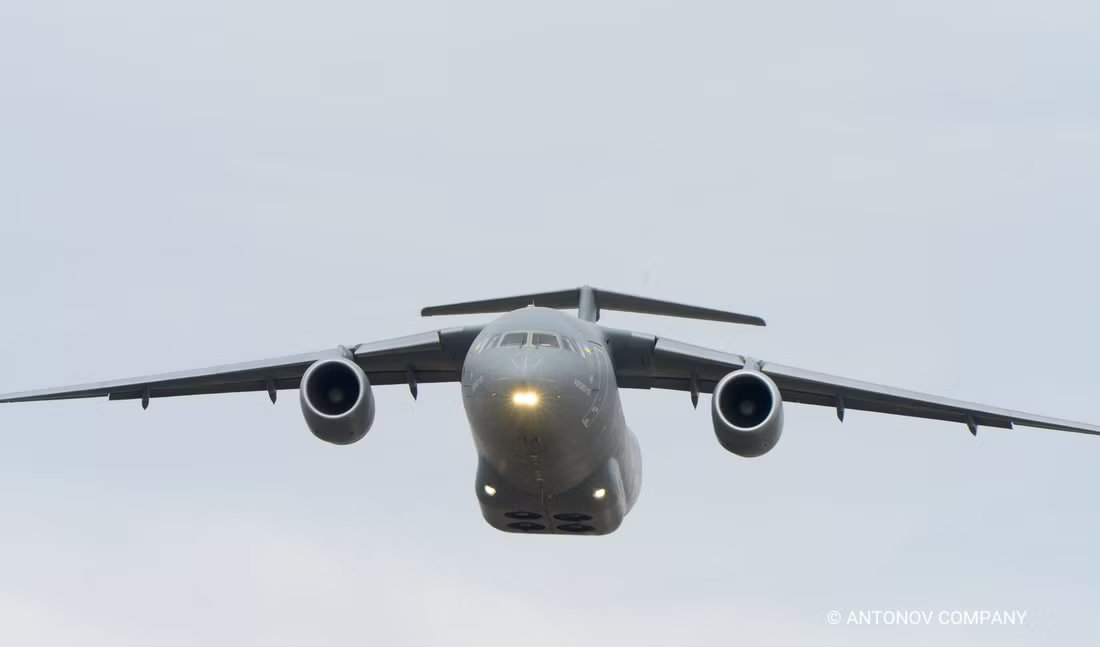
Antonov produced many of the Soviet Union’s most iconic transport aircraft, including the huge An-124 Ruslan and An-225 Mriya. It built most of the mid-sized military transports as well as regional aircraft like the Antonov An-148 and the enormously successful An-2 biplane. By the late 1980s, the company was producing around 250 aircraft annually. After the Soviet collapse, that fell to between five and 20 annual deliveries, with the last new aircraft produced in 2016.
However, the former Soviet giant is not yet gone, and it may yet stage another comeback. Today, it is unable to manufacture and deliver transport aircraft. It is more concerned with degrading the capability of its former Soviet (now Russian) counterpart bureaus and their ability to serially produce aircraft. Let’s examine the story of how Antonov has endured three shocks in three decades that could have doomed other aerospace companies and how it plans to return to its old military transport market when the time is right.
The Great Collapse

The collapse of the USSR was catastrophic for all of the Soviet aviation design bureaus. Of these, Antonov was the only one to find itself outside of Russia, in independent Ukraine. The others, Tupolev, Ilyushin, Yakovlev, Sukhoi, MiG, and Beriev, found themselves in newly independent Russia. Somehow, all these managed to survive, with Russia finally admitting it was unable to support multiple competing design bureaus and bundling them together in the United Aircraft Corporation.
Ukraine represented around 20% of the former Soviet population, while Russia was around half. However, the collapse of 1991 was much worse than that might imply. The shock saw the collapse of the economy, with Russian defense spending falling by roughly 90% in real terms during the 1990s. All of these independent states struggled to maintain the equipment they inherited; there was little to no money for procuring new aircraft.
At the same time, the end of the Cold War meant that there was now a surplus of military transports and fighter jets. In time, many of the former Soviet customers turned to purchasing Western replacements. While the replacement of Soviet-era military aircraft took decades, the transition to Western airliners was more immediate. By the 2000s, almost all countries had transitioned to Western Airbus and Boeing aircraft. Commercial demand for Tupolev and Ilyushin aircraft dried up almost completely.
Antonov Suffered The Most

Even though Ukraine was the second largest piece of the former USSR with a population of around 52 million and much of its industrial and engineering capacity, it struggled to maintain the one major design bureau it inherited. Ukraine’s economy contracted by around 60% during the 1990s and never truly recovered. Antonov’s major business was military transport aircraft, but the 1990s saw a major glut of these aircraft.
Another major limitation was that Antonov’s supply chain remained tightly integrated into Russia. These supply chains had been designed to function as part of a single integrated state economy, not in independent national companies in different countries. Around 60% of Antonov’s supplies came from Russia. It is also important to keep in mind that Russia remained highly dependent on supplies from Ukraine. By the 2010s, Russia was producing warships, but these relied on gas turbine engines from Ukraine.
Russia’s aerospace industry relied heavily on Ukrainian manufacturing, primarily through the Motor Sich enterprise in Zaporizhzhia and Antonov. Both Ukraine and Russia continued in the 1990s and 2000s to develop upgraded aircraft that were highly dependent on supply chains from each other. For example, Ukraine developed the An-178 medium airlifter to replace aging medium airlifters, and Russia developed the modernized Beriev Be-200 (Motor Sich engines) amphibious aircraft.
Not Prepared For The 2014 Rupture

Through the 1990s, 2000s, and early 2010s, Ukraine and Russia’s relations were often tense and problematic; this was particularly apparent during election periods and times of gas pipeline diplomacy. But the two countries continued cooperating in the military and aerospace sectors.
Catch what other flight trackers miss
Emergency squawks, holds, NOTAMs — live signals, no signup.
Open tracker
Catch what other flight trackers miss
Emergency squawks, holds, NOTAMs — live signals, no signup.
Open tracker
There were efforts in Ukraine to pivot its economic integration to the West, but there was little thought in Ukraine or Russia that the countries’ economies would be completely severed from each other. In 2014, Russia annexed Ukraine’s Crimea and launched a hybrid insurgency in its Donbas region. Now in a state of undeclared war, Ukraine cut Russia off.
This was a major shock to various Russian programs, from tank turrets to frigate gas turbines to its aerospace sector. While Russia has managed to recalibrate many of its supply chains and find substitutes, the process has been costly, time-consuming, and incomplete.
Russia has never fully recovered. Perhaps the clearest example is a recent Dallas Analytics report that says Russia is struggling to maintain its roughly 368 Antonov series aircraft. This is creating a burgeoning mid-sized transport aircraft capability gap.
How Antonov Planned To Revive Its Fortunes

Antonov did manage to continue producing military transport and regional airliners through the 1990s and 2000s, but at a rate of around 10% of what it was delivering during the 1980s. This period was characterized by Antonov providing services to maintain the thousands of Antonov aircraft in the world and upgrading those aircraft. It also provided outsized cargo services through its Antonov Airlines division.
But the airline also wanted to continue producing aircraft, and it couldn’t keep maintaining old Soviet aircraft forever. It continued to build and sell examples of its An-148 and An-158 regional jets, the An-140 turboprop, and the An-70 heavy military transport. But its flagship modernization program was the An-178 medium-lift transport that soon attracted orders and interest from customers around the world.
Antonov aircraft with potential to restart serial production (post-conflict) | Primary role (per Antonov) | First flight | Payload/capacity | Status before 2022 | Main competitors |
|---|---|---|---|---|---|
An-178 | Tactical medium airlifter | 2015 | 39,500 lbs (18 tonnes) | 1st Peruvian aircraft under assembly | C-390, C-130J |
An-70 | Medium-heavy airlifter | 1994 | 103,000 lbs (47 tonnes) | Prototyping (effectively suspended) | Airbus A400M Atlas, Chinese Y-20 |
An-148 | Regional jet airliner | 2004 | 68-95 passengers | Limited serial production | Embraer E-Jets, COMAC C909 |
An-158 | Stretched regional jet | 2010 | 97-99 passengers | Limited production | E190/E195, C909 |
An-140 | Regional Turboprop | 1997 | 52 passengers | Limited Production (including Iran) | ATR 42, Dash 8 |
An-132D | Tactical transport/utility turboprop | 2017 | 20,000 lbs (9.2 tonnes) | Demonstrator | C-27J, C-295 |
Antonov said there was demand for 200 of these aircraft, which is much more than the orders Brazil’s competing Embraer C-390 Millennium has secured as of mid-2026. Antonov often attracted orders in specific niches. For example, Iran signed an agreement to locally produce the Antonov An-140 turboprop in Isfahan as the IrAn-140 from knock-down kits. This was later followed by deals for the An-148 regional jet.
Going From Shock To Shock

2014 was a massive shock to Antonov. It immediately found itself needing to de-Russify its aircraft. Fortunately for Antonov, it was able to turn to Western suppliers, although this often required redesigning aircraft and recertifying systems, rather than plug-and-play. Antonov was able to purchase avionics from Honeywell, navigation equipment from Collins, landing gear from Safran, and more.
The upgraded An-132 was powered by Pratt & Whitney Canada PW150A turboprop engines. At the same time, Ukraine retained significant aerospace capability through Motor Sich, FED, and Hartron. By 2022, de-Russification work was well underway, and it looked like Antonov was set to emerge as a notable military transport producer independent of Russia.
The first An-178 aircraft intended for export to Peru was being assembled, filled with Ukrainian and substituted Western components. However, the full-scale conflict then broke out and work stopped. The last new-build Ukrainian aircraft was delivered in 2016, according to a Reuters report.
As stated, 2014 was also a shock for Russian aviation, but a less dramatic one. A more dramatic shock came in 2022, when Western sanctions cut Russia off from Western components that had been extensively incorporated into its upgraded commercial airliners. The last commercial Russian passenger airliner delivered was in 2022 (Superjet) as pre-sanctioned stocks ran out. Russia delivered its first Russified Tu-214 in early 2026, but it was a business jet.
An Unfortunate Aerospace Company Clinging On

Antonov’s fortunes have broadly mirrored those of its Russian counterparts within the United Aircraft Corporation, although it has generally endured more severe shocks. The company has endured and retains considerable engineering expertise, proven aircraft designs, and a globally recognized brand. However, it is currently in no position to return to manufacturing new-built aircraft until the current conflict is over.
At the same time, Russia’s companies are working to resume serial production of the Superjet (now SJ100), MC-21, Il-114, Tu-214, and other programs while also producing fighter jets and other aircraft. Production of the Il-76 airlifter continued mostly uninterrupted. With that being said, the future remains fraught and complicated for Russia’s aerospace companies.
While they are making some progress, other aspects are deteriorating. This is partially because Ukraine’s increasingly effective long-range drone strikes against aerospace and defense facilities have become more acute. While Russia has ended (at least for now) Ukraine’s ability to serially manufacture aircraft, it remains to be seen how far Ukraine will go in disrupting (or ending) Russia’s ability to deliver at least some types of aircraft.
Despite Antonov’s massive 1991, 2014, and 2022 shocks, it survives and plans to return to serial production of military transport aircraft in the future when conditions improve. It also appears that since 2022, Antonov’s expertise is rapidly evolving and could emerge as a significant drone manufacturer alongside its traditional transport aircraft business.