dailynewsnblog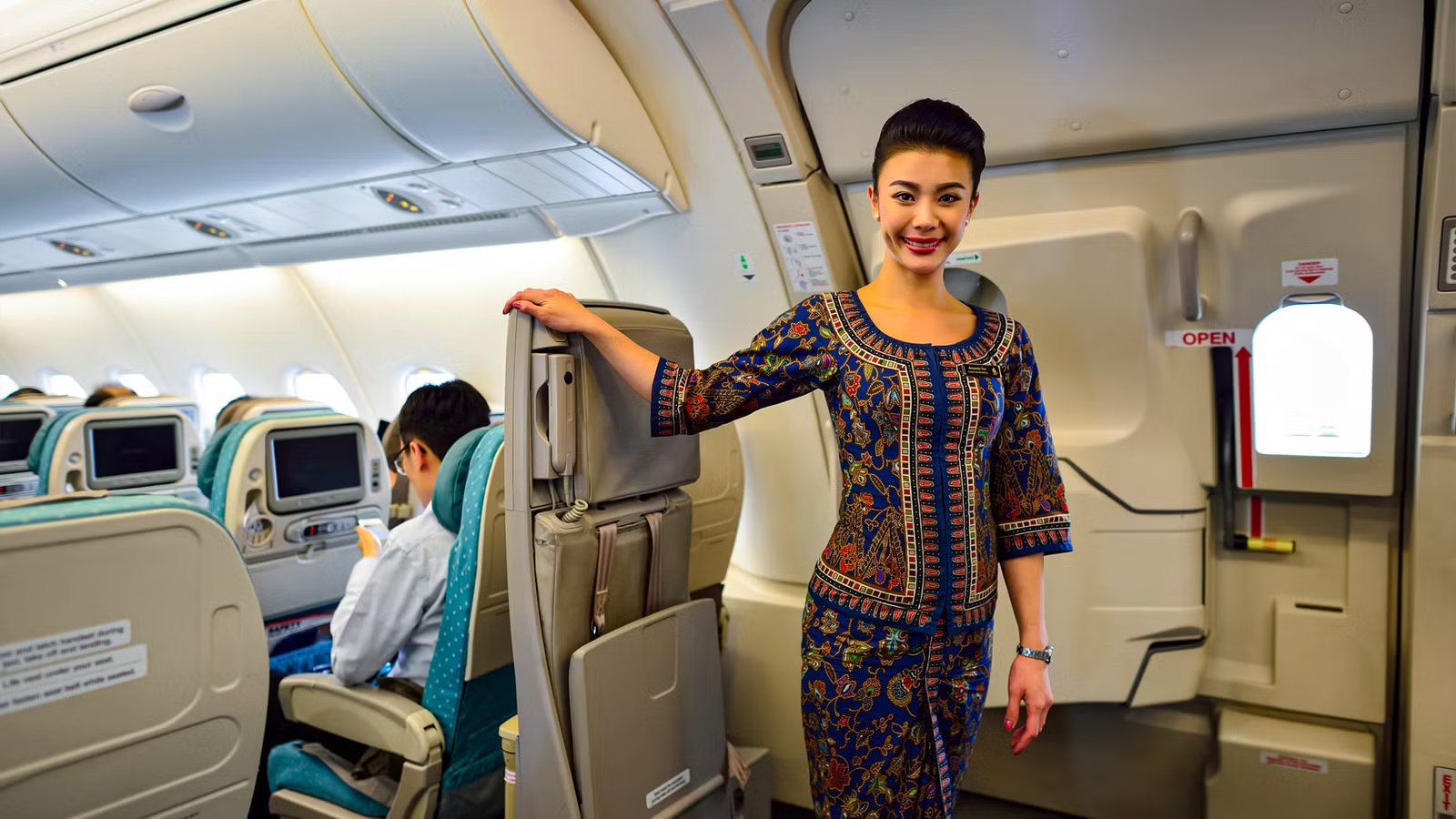
The aim of any flight attendant, cabin crew, or flight crew member, every time we board an aircraft, is to ensure a safe and efficient flight. Although flight attendants are seen as service providers, they are actually onboard to handle issues when a flight does not go according to plan. They are there primarily for safety, and passenger comfort is secondary. Their role is to prevent incidents and accidents and to deal with the outcome.
They are heavily trained in safety and emergency procedures and equipment, as they may have to deal with inflight fires, unruly passengers, decompression, turbulence, medical emergencies, and evacuations on land or water. Many of their duties are unseen by passengers, including one very important procedure that begins as soon as the door is closed.
Cabin Safety: A Background

Skybrary says that cabin safety encompasses the disciplines, training, and equipment designed to prevent accidents, protect occupants, and maximize survivability in emergencies. What was once a reactive form of safety, in that it was focused purely on evacuation, modern cabin safety looks at risk management, hazard identification, and strict adherence to regulatory frameworks such as the International Air Transport Association (IATA) and the International Civil Aviation Organization (ICAO), as well as the aviation authorities.
Both ICAO and IATA set the global standards for cabin safety. ICAO’s Cabin Safety Program focuses on “improving regulations related to cabin operations; the operator’s procedures and documentation; cabin crew training and qualifications (including facilities and devices); human performance; design and manufacturing; equipment and furnishings on board aircraft; and the operational environment.” ICAO also states that: “Cabin crew members also play an important proactive role in managing safety, which can contribute to the prevention of accidents.”
IATA’s Cabin Operations Safety Guide provides a central reference source that emphasizes best practices, policies, procedures, and regulations for delivering safe and efficient cabin operations. The guide defines the role further.
“Crew members designated to perform safety duties in the passenger cabin in accordance with the requirements of the operator and the Authority; qualified to perform cabin functions in emergency situations and enact procedures to ensure a safe and orderly evacuation of passengers when necessary.”
A Role That Has Evolved

Cabin Crew are now seen as safety professionals, and their critical duties include pre-flight checks prior to boarding. This includes the emergency exits, onboard safety equipment, jump seats, and communication systems. Thorough security checks also take place. All safety equipment is checked to ensure it is operable, in the correct location, and ready for immediate use if needed. This is down to small details, such as checking that items are sealed correctly and are not expired. Oxygen bottles must have a minimum pressure, and the needle on the fire extinguisher gauge must be in the green zone.
Passenger management is also important, ensuring that baggage is stowed correctly, seat belts are worn, and the cabin is secure before takeoff and landing. The safety briefing is also critical and legally required, although most passengers do not watch it. They also have to monitor the cabin for unruly passengers, those who may become ill or require special assistance. Situational awareness is important at all times.
Cabin crew are onboard, most importantly, to administer first aid, lead evacuations, and prepare the cabin for an emergency landing. They are also trained to handle emergencies, such as in-flight fires, loss of cabin pressure, potential hijacking, and ensuring the flight deck remains secure at all times. Cabin crew are trained to evacuate an aircraft in less than 90 seconds.
Medal Of Honor Recipient Helps Save Southwest Airlines Passenger Amid Medical Emergency
The incident ultimately only delayed the flight by a little over an hour.
“Arm The Doors And Cross-Check”

One of the most critical tasks that passengers never see takes place as soon as the doors are closed. Once boarding is complete, the doors are closed, and the aircraft is ready to leave the stand, the flight crew will announce, “Cabin crew, arm the doors and cross-check.“ Another variation on this is “Cabin crew, doors to automatic and cross-check.” This means the doors will be armed and ready, and the slide will be attached. So, if an emergency were to occur, the slides would automatically inflate when the door is opened.
The crew member will arm the door by moving the arming lever to the armed position. This action places the girt bar and attaches the slide. They will then check visual indicators, which vary depending on aircraft type. There may be a visual indicator on the door and one on the floor. Each opposite crew member then checks the same indicators on their colleague’s door to ensure they are armed and verbally confirms “cross-check.” The cross-check procedure reduces the chance of error.
The senior crew member then calls all crew stations, and each crew member confirms that their door is armed and cross-checked. The senior then reports this to the flight crew, and the aircraft can begin its journey safely, knowing that if an emergency occurs, the doors are armed and the slides will deploy within a few seconds. In any evacuation, speed is of the essence, and every second counts; lives depend on it.
Catch what other flight trackers miss
Emergency squawks, holds, NOTAMs — live signals, no signup.
Open tracker
Catch what other flight trackers miss
Emergency squawks, holds, NOTAMs — live signals, no signup.
Dis
“Disarm The Doors And Cross-Check”

On arrival at the destination, the whole process is reversed. When arriving at the stand, the flight crew will announce “Cabin crew, disarm doors and cross-check” or “Cabin crew, doors to manual and cross-check”. The crew disarms the door by moving the arming lever to the disarmed position. This disconnects the girt bar and therefore the slide from the aircraft door. The ground equipment will be attached for disembarkation.
The crew member then checks the visual indicators that the door is disarmed, depending on aircraft type. The crew member proceeds to cross-check the opposite door to confirm it is disarmed. The senior crew member will call all crew stations to confirm all doors are disarmed and cross-checked before reporting it to the flight crew. Once the ground crew knocks on the door window and gives a thumbs-up confirming that air stairs or a jet bridge are in place, we can open the door to start disembarking passengers.
Arming and disarming the doors are small but very important parts of the procedure. If doors are not armed correctly, the slides might not deploy in an emergency. The cabin crew would have to pull the manual inflation handle to inflate the slide, and those seconds could be saved in an emergency evacuation. If doors are not properly disarmed on arrival, the slide could be deployed inadvertently (by mistake). This could cause injury to ground staff or equipment and is also extremely expensive to repack (between $25,000 and $50,000), according to Aerodynamiks.
What Does It Take To Get A Plane Back In Service After An Unintended Slide Deployment?
There are several stringent steps that airlines must follow to get their aircraft back into service following an inadvertent slide deployment.
Differences In Airbus & Boeing Doors

All Airbus and Boeing doors are plug-type doors that cannot be opened in pressurized flight. However, they are very different types of doors and operate differently. Airbus main doors operate upwards and outwards, and the door slides parallel to the fuselage. The interior of the door faces the exterior of the fuselage. Boeing doors operate by pulling slightly inward and then swinging outward horizontally so that the exterior of the door meets the exterior of the fuselage. The interior of the door is seen when standing outside the aircraft. Air stairs should always be in place before a crew member closes a door.
Airbus doors have pin-lever-pin arming mechanisms: the pin is removed, the lever is moved to the flush position, and the pin is placed in its holding position. On the flight attendant panel, the senior crew member can check that all doors are armed and disarmed. On aircraft such as the 737, the red door streamer (a visual indicator) is manually placed across the window by cabin crew. The girt bar must be removed from the girt bar bracket and attached to the floor bracket manually by the cabin crew.
Airbus doors operate by lifting a lever from the bottom upwards. It is usually a smooth process and has mechanical assistance to help cabin crew operate it more easily.  Boeing doors are different in that the lever operates from left to right or clockwise. They can be heavy and cumbersome to move, requiring more physical effort from the cabin crew to operate than the Airbus door.
The Importance of Cabin Crew Door Procedures

Cabin crew are rigorously trained in door operation across all their aircraft types, as not all emergency exit doors are the same. They practice on specialized door trainers until it becomes second nature during their initial training and again during their recurrent training. It is important that it is performed correctly every time, as it could pose a safety risk. In an evacuation, precious time can be lost to manually inflating the slide. An inadvertent slide deployment can cause injuries to ground staff, incur high costs to repack the slide, and delay the flight.
Passengers may notice that as soon as the flight crew makes the call to arm and disarm the doors, the cabin crew will immediately go to their assigned door and follow the instructions. During this time, you may hear calls of “armed”, “disarmed,” and “cross-check”. It is a procedure that has to be done quickly and efficiently and communicated to the whole team.
This ensures that should an emergency occur, the doors can be opened quickly, and the slides deployed within seconds. At the arming of the doors, the crew methodically put an important safety system in place. This means passengers can be evacuated within the required 90 seconds, increasing the chance of survival. Disarming the doors restores the doors to their normal operation.