dailynewsnblog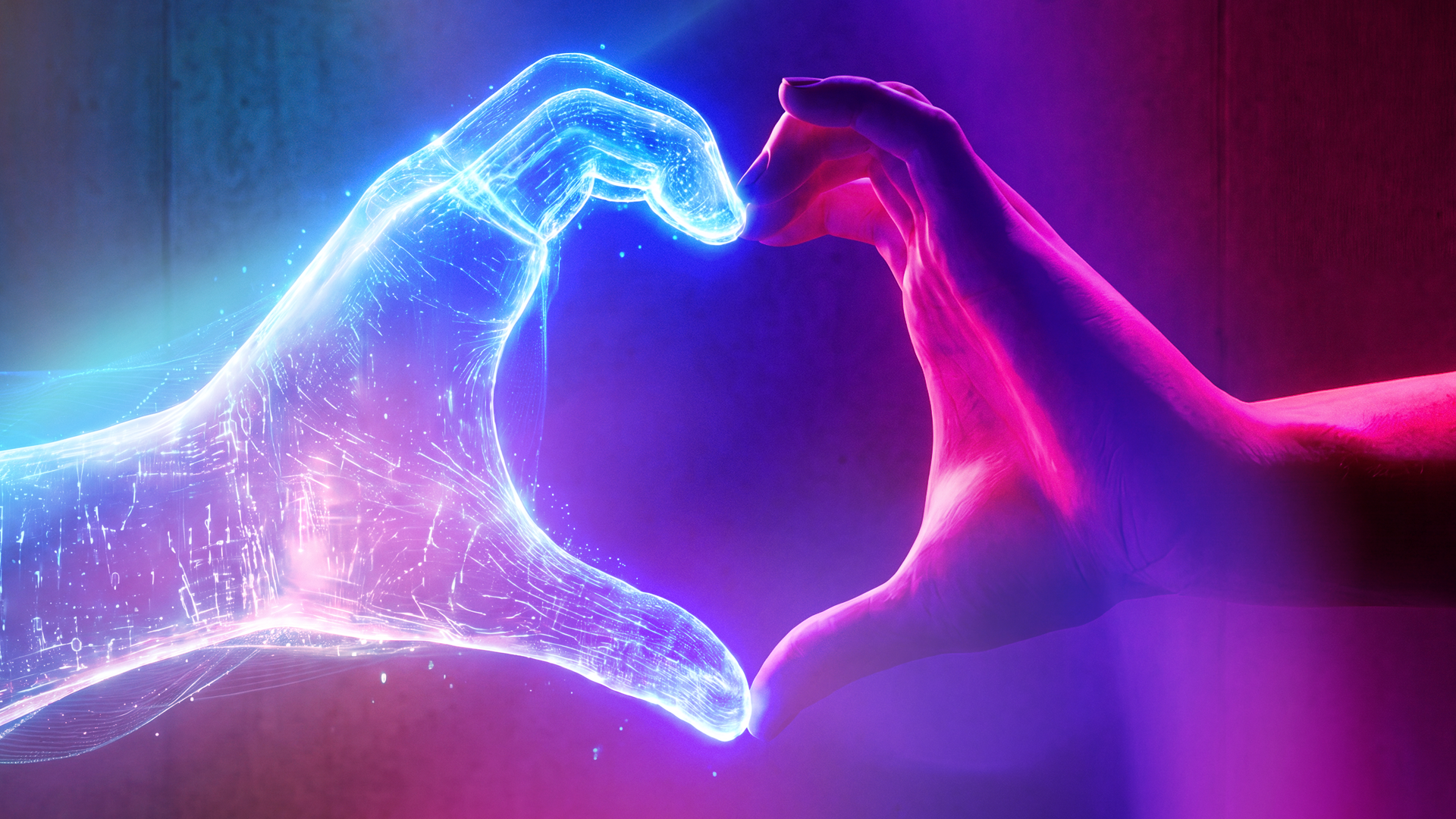
In all my conversations about generative AI, there’s nothing as controversial as the idea of AI chatbots acting as companions for friendship, romance or even sex. But author Bridget Todd is convinced — and has convinced me, with good reason — that we’re asking the wrong questions about these virtual partners.
In her new book Love at First Prompt: AI and the Future of Intimacy, Todd, creator of the podcast There Are No Girls On The Internet and a MacArthur fellow, uses research and personal experience to paint a complex and emotionally nuanced portrait of people who form intimate connections with AI chatbots. Instead of directing our judgment toward those human-bot relationships, she argues, we should instead be examining the exploitative nature of the companies that built the technology.
“We’re asking whether it’s healthy for individuals to develop relationships with AI when we should be asking whether it’s ethical for companies to engineer emotional dependency and then profit from it,” Todd writes in her book, which was co-authored by social scientist Michael S. Amato. “We’re worried whether people are replacing human connection — we should be demanding to know what companies are doing with the intimate data we share in our moments of vulnerability.”
Big AI companies like OpenAI, Google and Anthropic didn’t build their large language models with the explicit purpose of creating AI companions, akin to Scarlett Johansson’s operating system in the 2013 movie, Her. They were largely general-purpose tools, intended for summarizing information, creating text or writing code.

But as soon as ChatGPT and other AI tech became widely available, people started developing social connections with digital personas. A recent Pew Research Center study found 14% of US adults report using chatbots for emotional support and companionship. Smaller AI companies dedicated solely to building digital partners, like Replika, have also popped up.
While it may be a niche use, artificial companionship has become the subject of think pieces, research and countless memes, largely emphasizing risks like social isolation or self-harm. But sometimes these relationships are treated with just plain derision. Meta CEO Mark Zuckerberg was mercilessly mocked online after saying he thought most people didn’t have enough friends and that AI could fill the gap.
Todd, though, rightly calls out the unspoken part in Zuckerberg’s proposal: That he hopes to own, operate and profit from all our potential AI besties by collecting troves of personal data.
“If this is the dynamic that tech leaders are saying they want for all of us, we should all be more critical and more checked in, in a way that’s more intentional than just saying, ‘Wow, look at this pathetic loser,’” Todd told me in an interview.
Who actually uses AI companions
Some critics of AI argue that people who use AI as companions are “delusional” and have lost touch with reality. According to Todd’s research, this isn’t largely true.
In Love at First Prompt, Todd breaks down some of the misconceptions surrounding AI companionship through interviews with tech experts, researchers and actual humans who have these artificial relationships. One of the most damaging stereotypes is of the lonely incel who struggles with intimacy and lives in their mother’s basement.
In fact, many who have AI partners also have human partners, along with jobs and other real-life connections. Todd cites research that has shown that using AI has actually strengthened people’s social confidence and helped them improve their relationships with other humans.
Though it’s not uncommon to ascribe human capabilities or emotions to AI models, many people build digital relationships with the full awareness that their AIs aren’t real. Discussions of AI sentience, the notion that the software is conscious, are banned in several popular Reddit forums, including r/MyBoyfriendIsAI.
AI companions can also fulfill a wide range of human needs, and the goals vary between users. Some want a friendly confidant for daily life, while others seek romantic, intimate connections. And yes, there’s an entire AI porn and sex industry.
In many cases, people don’t log into ChatGPT or Gemini with the intention of emotionally unloading; they use it for projects or homework, and then, in difficult situations, find themselves drifting toward the AI.
This was Todd’s experience. She started using AI to help her understand her father’s health conditions and then began to turn to it for some emotional support after he died. She had a full human support system, a partner and good friends that she knew she could rely on. But grief and loneliness can trick us into believing we’re alone, even when we logically know we aren’t.
“Loneliness is complicated,” she told me, “and it comes for the best of us.”
Part of the appeal of AI is that it offers something that no human, no matter how loyal, can. It’s always available, no matter the time. And it never tires of hearing from you – it’s built to be friendly and encouraging. AI models are intentionally designed to seduce us, in a way, to use them.
That personal validation was extremely evident with GPT-4o, a now-defunct version of ChatGPT. The model was widely used to power people’s AI companions, so when OpenAI swapped out the model for the next-generation GPT-5, it sparked outrage. Users were mad that the new version felt cold and indifferent compared to 4o’s “warmer personality.” OpenAI agreed with that assessment, but diagnosed 4o with a more troubling problem: It was sycophantic, overly flattering at the expense of truth and safety.
Sycophancy is a prelude to a bigger problem. We’ve seen several high-profile cases where people, particularly teens and young adults, have believed their AI was real, and the chatbots encouraged their delusions and harmful behaviors, including suicidal intentions, violence and drug use.
Even if AI companies never intend for their products to be used in this way, even if these fatal and tragic outcomes do truly represent edge cases, the tech executives who create these AI products have an obligation to ensure they build in the necessary guardrails. Several lawsuits, brought by bereaved families, allege that OpenAI and Google failed to protect their loved ones against these risks.
Your worst moment, their training data
As people use chatbots for emotional support, tech companies get unfiltered access to our most vulnerable moments and secrets, which is then used as training data for future AI models. Preventing your data from being collected, even during “private chats,” is difficult, and deleting your data is made nearly impossible.
With so little control given to us, AI companies own the thoughts we offer up in moments of crisis.
“We’re not even really users. We’re resources. We’re the data to be extracted, the engagement to be monetized, the vulnerabilities to be exploited and profited from,” Todd writes in her book.
“My intimate memories about the loss of my parents becoming training material for a system designed to profit from my vulnerability – all of it is there for the taking, precisely because I offered it all up in a moment of crisis,” she writes.
Rather than framing AI companionship as simply right or wrong, the more useful question is how these products are designed to exploit our emotional needs and dependence. The book poses the question: What does consent mean when your companion is owned by a corporation? Todd encourages us to hold tech companies accountable for the ways their systems intensify crisis and monetize humans at their most emotionally exposed.
A reasonable solution is to demand more transparency from tech companies about how they’re building their product and using our data, along with comprehensive data privacy legislation. But, according to Todd, those solutions will only happen if we start asking the right questions. Nobody, not even people with AI companions, thinks chatbots will replace human connection.
“The moral panic is a distraction,” Todd writes in her book. “The real question isn’t whether it’s weird or sad or pathetic to talk to a chatbot. The real question is who profits from our intimacy and what are they doing with it.”

See full bio