dailynewsnblog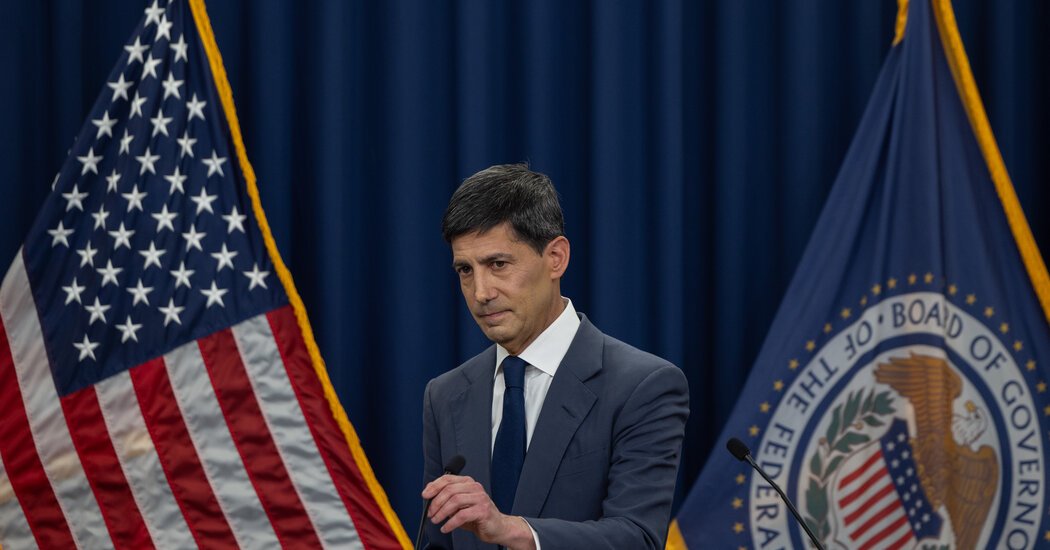
July’s jobs report has reduced some of the urgency around the need for the Federal Reserve to raise interest rates, but it has not eliminated the possibility.
Officials at the central bank instead appear much more sensitive to how price pressures are evolving, with heightened focus on next week’s inflation report.
Officials at the Fed have maintained for months that the labor market is not a primary driver of inflation, but that it is instead fueled by surging energy prices because of the war with Iran and other supply-related shocks. July’s jobs report made that abundantly clear. Employers shed 23,000 jobs for the month, and the past two months of jobs growth were sharply revised down. More people exited the work force as well, helping to drag down the unemployment rate to 4.1 percent from 4.2 percent. And wage growth remained subdued.
The combination suggests that the economy is not on as strong a footing as many have perceived it to be, which helps the case that rate increases from the Fed are not immediately necessary. But for that position to strengthen, the inflation data would need to cooperate.
Officials have grown increasingly impatient about the lack of progress toward the central bank’s 2 percent target. The Fed has overshot that level for half a decade and has moved further away from it over the past year, not only because of the Iran war, but also President Trump’s tariffs and other factors.
That impatience has been reinforced by a pledge from Kevin M. Warsh, the new chairman, to make delivering price stability the primary focus of his tenure.
While Mr. Warsh has not explicitly articulated how he will deliver on that goal — an approach that has sparked volatility across financial markets — his colleagues have been much more direct about their plans.
Most policymakers have indicated that if inflation does not soon ease, they will support higher rates. At least five officials have indicated that borrowing costs should have already been raised. Three of them are voting members on the policy-setting committee this year and voted against the Fed’s decision last week to hold rates steady at a range of 3.5 percent to 3.75 percent.
That stance suggests that the forthcoming inflation data will play an outsized role in determining whether officials feel compelled to support a rate rise at their next meeting in mid-September. After the release of July’s jobs report, investors scaled back their expectations of a September increase. The first quarter-point increase is penciled in for December.
The next Consumer Price Index report will be released on Aug. 12. It will cover a period in which oil prices surged again after a re-escalation of the Iran war. Those prices have fallen back toward their prewar levels in recent days, however, on hopes of a deal to end the impasse over the Strait of Hormuz, which has caused severe supply disruptions.
Economists expect consumer prices to have inched lower in July, according to estimates aggregated by Bloomberg. On a monthly basis, they expect “core” prices, which strip out volatile food and energy items, to have risen 0.2 percent. A faster pace would likely motivate more officials to consider raising rates soon, even after July’s weak jobs report.
“The people who have talked about rate hikes have done so because of inflation, not because of the labor market,” said Eric Winograd, chief U.S. economist at AllianceBernstein. “I don’t believe that this takes a rate hike off the table.”