dailynewsnblog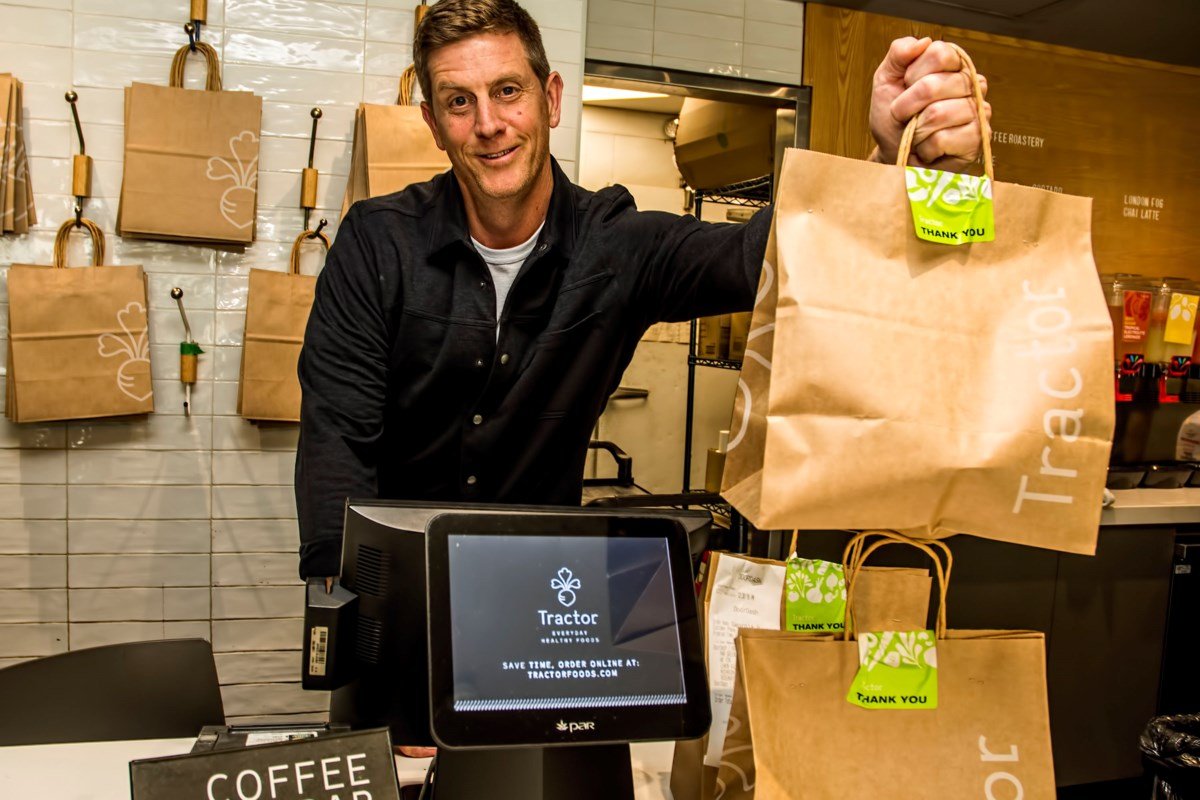
Trading tangible goods for other materials or services has been standard practice for millennia.
While these transactions will no doubt continue in Canada, the ease and efficiency of digital payments is prompting businesses, governments and tourism attractions to stop accepting cash payments.
Places where consumers in Vancouver are not able to use cash include the eight-location restaurant chain Tractor, the Pacific National Exhibition and vendors at Rogers Arena.
The City of Vancouver plans this month to decommission its last parking meters that accept coins. Early in May, the Vancouver Aquarium stopped accepting cash payments.
Ride sharing and meal-delivery platforms have long had business models built entirely around digital payments.
Much like how fiat currencies became common for transactions when traders saw using them as being more convenient and practical than lugging around beaver pelts, cooking oil or copper shields, digital payments are now seen by many executives as more efficient than cash, said David Gray, a retail analyst and Capilano University School of Business instructor.
“Trying to know your exchange rate on beaver pelts compared to a fiat currency was also likely a challenge,” Gray said with a laugh.
Most retailers still accept cash, he said, adding that the move away from accepting cash has tended to be at businesses that provide services as opposed to physical goods.
Bank of Canada data show cash payments being remarkably resilient countrywide since 2020.
Cash formed 53.7 per cent of payment volume in Canada in 2009, according to the BoC’s data.
That fell to:
- 43.5 per cent in 2013;
- 32.6 per cent in 2017; and
- 21 per cent in 2020.
Cash has since held its own.
The BOC’s most recent data, for 2024, held that 20.5 per cent of the purchase value of all transactions in Canada was by cash—nearly the same as four years earlier.
The moves many organizations are making to exclusively accept digital payments could hasten the decline of cash as a main form of payment in the province, Gray said.
Older Canadians are the cohort most likely to carry cash, according to the BoC.
Of those aged older than 55 years, the central bank found that 86.8 per cent carried cash in 2024.
Gray, who is in that cohort, said that percentage might sound high but many people still use cash.
“I’ve got a lot of friends who, unless it’s a big-ticket item, or whatever, carry and spend cash,” he told Business in Vancouver. “If they’re out grabbing lunch or dinner or beers, they’re paying cash. I’m the opposite. I rarely have cash on me.”
Organizations phase out cash payments in May
The Vancouver Aquarium stopped accepting cash payments on May 6 but no executive was available to speak about the shift to digital-only payments.
Communication manager Todd Haupman pointed to his organization’s website, which said the rationale for no longer accepting cash payments was to “help streamline transactions across the aquarium—from admissions and food outlets to retail and special events—making purchases quicker, easier, and more secure for both guests and staff.”
The aquarium has a digital kiosk, which looks similar to a bank machine, for visitors who only carry cash.
Those customers can insert paper money into the kiosk and have those bills’ value converted to a balance on a free plastic card.
Once loaded, those cards’ balances can be used at the aquarium. To encourage frequent use, customers with those cards have their balances dinged with $3.95 in fees each month unless they have used their cards within the previous 92 days.
The City of Vancouver is also shifting away from accepting cash.

Deputy general manager of engineering services Jimmy Zammar said he anticipates the city this month will phase out the last of its parking meters that accept coins.
This is part of the city’s campaign to decommission 2,000 coin meters, which launched in April.
The meters for now are set to stay on city sidewalks, but they will have coin blockers that restrict customers from inserting coins, Zammar said.
The city for many years has been shifting toward having kiosks that manage parking for multiple spots, he added.
“Over the years, we have been seeing the number of single-space coin meters reduced and replaced with what we call paystations,” he said.
Phasing out existing meters that accept coins also aligns the city with other metropolises, Zammar said.
“There is a desire to eliminate the coin-handling life cycle,” he said.
“That is the labour of collecting coins, and the security of transport of coins from the meters to our yards and from our yards by armoured vehicles. As well, there is the maintenance cost for a smaller and smaller number of meters that are distributed around the city. There is the cost of physical inspections, and repairs due to jams, and increasingly vandalism. That is quite costly and disruptive.”
He estimated that the city would net $800,000 to $1 million annually by no longer accepting coins at parking meters.
It is difficult to estimate the city’s overall cost to administer parking because some staff only spend part of their time on those tasks.
The city generates between $85 million and $90 million in annual parking revenue, Zammar said.
Two apps that are available for all street parking in the city are HotSpot and PayByPhone, he said.

Drivers have long been able to pay by those apps when parking at coin meters, he added.
Private parking lots around the city may use those apps, or one or more of a proliferation of other parking apps, Zammar added.
“Most folks are already using apps, as about 88 per cent of parking payments to the city come through the apps,” said Zammar.
“Another eight per cent come from credit card transactions at pay stations. The remaining four per cent of payments are by coins.”
He said that the reaction to phasing out coin meters so far has been “positive.”
Digital payments are safer, more hygienic, cheaper to manage
When Tractor owner Steve Clarke launched his healthy-food café chain in 2013, he accepted cash.
He then converted what is now an eight-location, 130-employee restaurant chain to exclusively accept digital payments during the COVID-19 pandemic.
He said he saw the payments as being more hygienic for customers and staff because paper money could be laden with viruses or bacteria.
PNE spokesperson Laura Ballance said her organization similarly stopped taking cash payments during the pandemic.
“It was a requirement from Vancouver Coastal Health,” she said.
The PNE in 2020 operated a drive-through service that enabled customers to drive their cars to the PNE site, where they could buy mini-donuts without leaving their vehicles.
“One of the conditions for those drive-through events, and then later when we reopened Playland, was to not accept cash,” Ballance said.
Beyond the more sanitary nature of not passing paper bills around, Clarke said staff safety was a bigger rationale for him to stop accepting cash.
It also eliminated the risk of theft, he said.

Sometimes that theft was by employees, while other times it was by members of the public.
“You’re exposed in different ways,” he said.
“We had a store that had its cash drawer ripped out in the middle of the day by a criminal that is probably not going to get into any trouble for it. Things have become less safe over time.”
His restaurants each have between 30 and 50 seats, he said, and in the early afternoons they can be quite busy.
Phasing out cash payments means queues for food can move much faster, Clarke said.
BC Restaurant and Foodservices Association CEO Ian Tostenson said Clarke is one of many restaurant owners who are not accepting cash.
“There is a cost to that, right?” he said.
“Every transaction by a credit card or debit card has transaction fees, but the convenience and the security far outweigh those costs.”
Clarke also contracted to build an app, which is gaining traction with customers. About 10 per cent of his sales are via the app. Another 20 per cent are via food-delivery services such as DoorDash Inc. (Nasdaq:DASH) or SkipTheDishes Restaurant Services Inc., he said.
He calls his own delivery service Tractor At Home, and he said it delivers meals across central parts of Vancouver.
Food-delivery platforms, including Tractor At Home, are built entirely around digital payments.
Customers pay for orders in advance via apps and they store credit card numbers in the apps to be able to order meals faster.
Ride-share ventures such as Uber Technologies Inc. (NYSE:UBER) and Lyft Inc. (Nasdaq:LYFT) operate similarly.
Taxis, in contrast, by law must accept cash, said Mohan Kang, who has worked in the taxi industry for more than 50 years and has been president of the BC Taxi Association for the past 28 years.
He said he doubts that the government, or the Passenger Transportation Board, will change the law to allow taxi companies to reject cash payments.
“Some people do not want to use cards or they do not have cards,” he said.
Unhoused people, or those who do not have bank accounts, tend to use cash, he said.
Many seniors also tend to use cash.
Kang said those who have mobility challenges and are HandyDART or HandyCard users tend to buy up to $100 worth of taxi vouchers per month at the discounted rate of $50. That helps limit cash transactions.
He said that carrying cash can mean that drivers are at an increased risk of being robbed. Still, he added, they often prefer to accept cash.
When drivers are paid cash, they can pocket and use the cash right away, he explained.
“When they are paid by the taxi companies, normally it is at the end of the month,” he said.
“It takes time. Whatever the drivers owe to the companies, the companies will deduct, and then they pay the drivers.”
Kang said he personally prefers using cash.
“I take money out of the bank for groceries, gas,” he said.
“When my grandkids come to visit, I give them some money, right? I’m not going to give them a credit card.”
[email protected]
Bluesky.com/glenkorstrom.bsky.social