dailynewsnblog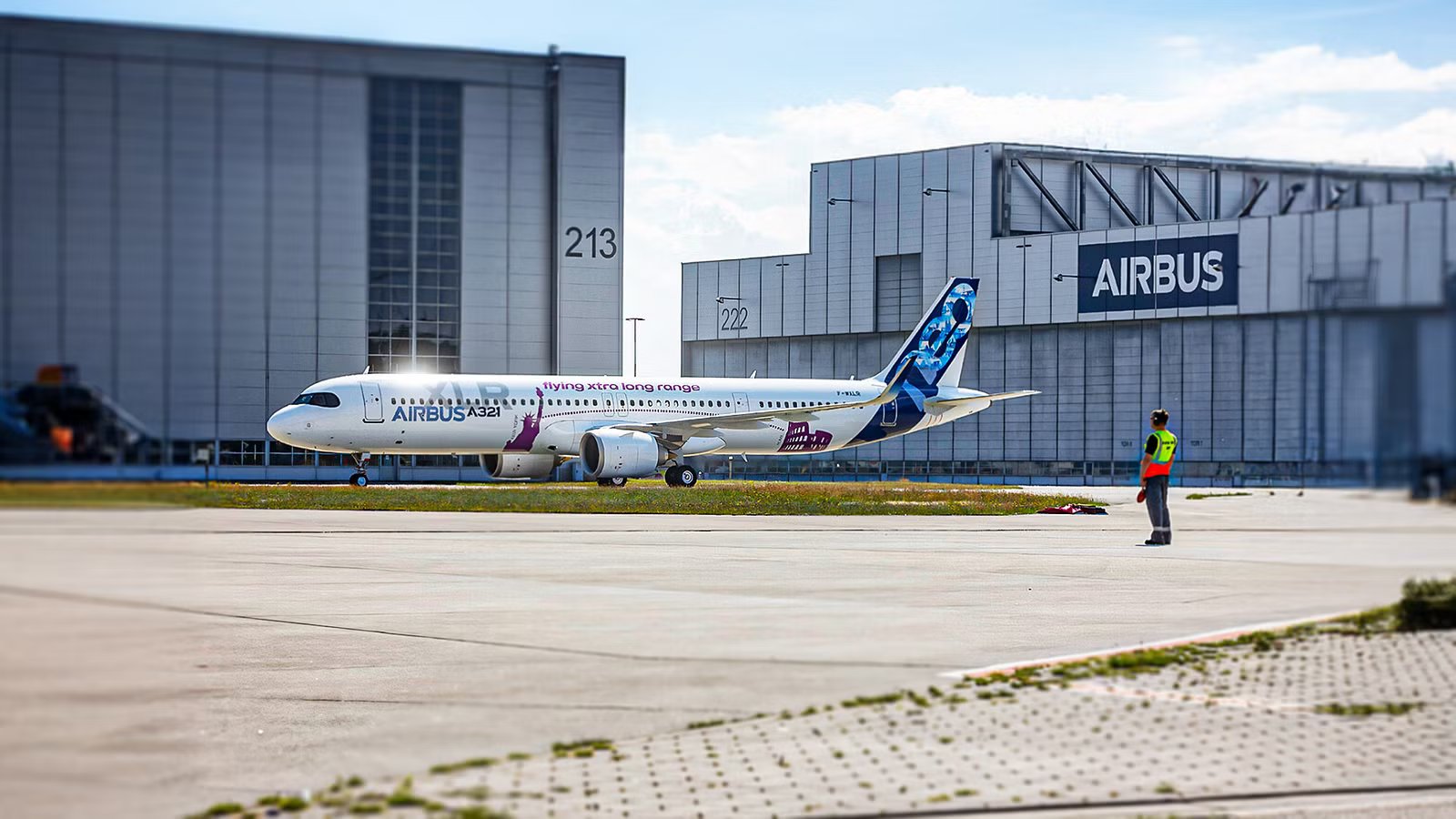
Airbus and Boeing have long competed across both widebody and narrowbody markets. Both manufacturers offer aircraft designed for different types of operations. Airlines choose between these options based on what best fits their network, whether that means carrying more passengers on high-demand routes or operating longer sectors with lower demand. This is clearly seen in how airlines are choosing their next-generation narrowbody fleets.
Airbus’ Airbus A321XLR entered service in November 2024 and has continued to attract orders from airlines looking for more range from a narrowbody aircraft. Boeing’s competing aircraft, the Boeing 737 MAX 10, which was launched almost a decade ago, is still awaiting certification. Both aircraft are targeting the same part of the market, but they have attracted interest for very different reasons. Simple Flying takes a look at five reasons why some airlines are leaning towards the A321XLR over the MAX 10.
Range That The Boeing 737 MAX 10 Cannot Match
The Airbus A321XLR is designed to fly longer routes.

One of the main reasons airlines are choosing the A321XLR over the MAX 10 is range. The European planemaker launched the A321XLR during the 2019 Paris Air Show as a narrowbody aircraft capable of operating notably longer routes than traditional single-aisle jets. It advertises a range of up to 4,700 nautical miles (8,704 km), which is around 1,600 nautical miles (2,963 km) more than the MAX 10. To achieve that range, the manufacturer made some major changes to the aircraft’s fuel system.
As we know, the A321XLR is an extension of the earlier A321LR, which already introduced additional fuel capacity through auxiliary tanks. For the extra-long-range variant, Airbus added an enlarged center wing tank and a new permanent Rear Center Tank (RCT) to carry more fuel. The tank can hold up to 3,400 gallons (13,100 liters) without significantly affecting cargo space, allowing the aircraft to remain airborne for up to 11 hours and connect city pairs such as New York to Rome, London to Delhi, and Kuala Lumpur to Sydney.
Aircraft | Range |
|---|---|
Airbus A321neo | 3,400 nautical miles (6,297 km) |
Airbus A321LR | 4,000 nautical miles (7,408 km) |
Airbus A321XLR | 4,700 nautical miles (8,704 km) |
Boeing 737 MAX 7 | 3,800 nautical miles (7,040 km) |
Boeing 737 MAX 8 | 3,500 nautical miles (6,480 km) |
Boeing 737 MAX 9 | 3,300 nautical miles (6,110 km) |
Boeing 737 MAX 10 | 3,100 nautical miles (5,740 km) |
Boeing, meanwhile, has developed the MAX 10 with a very different priority. It is the largest variant of the MAX family and is approximately 66 inches (1.68 meters) longer than the MAX 9 and more than 10 feet (3.04 meters) longer than the MAX 8 aircraft. However, the added length does not translate into more range. In fact, the MAX 10 has the shortest range in the MAX family at around 3,100 nautical miles (5,700 km). The US planemaker has instead focused on increasing passenger capacity for high-density short- and medium-haul operations.
It Unlocks Entirely New Point-To-Point Routes
The A321XLR is allowing airlines to open long-haul routes economically.

Indeed, the A321XLR’s additional range gives airlines new opportunities to connect secondary cities across long distances without relying on widebody aircraft demand. Carriers are opening routes that were previously difficult to operate profitably with larger aircraft, particularly in markets where demand fluctuates throughout the year. Notably, this is already becoming visible in the transatlantic market, where airlines such as American Airlines, United Airlines, Air Canada, Aer Lingus, and Iberia are either operating or planning to operate the A321XLR on thinner routes across the Atlantic.
Currently, the Spanish flag carrier operates the type on services from Madrid to Boston, Washington DC, Santo Domingo, San Juan, Recife, and Fortaleza.  Aer Lingus flies the aircraft between Dublin and secondary US cities, including Nashville, Indianapolis, and the recently added Raleigh-Durham. Furthermore, in March, American launched its first A321XLR long-haul service between
  New York JFK and Edinburgh. The airline is also deploying the aircraft on routes to Barcelona and plans to introduce flights from Philadelphia to Amsterdam and Lisbon.
Looking ahead, United, which has about 50 aircraft on order, has planned to introduce the aircraft on select international services, gradually replacing its aging Boeing 757-200s. Currently, as per scheduled data from Cirium, it deploys its 757 fleet on routes including Málaga, Bilbao, Bogotá, Dublin, Edinburgh, Faro, Reykjavík, and Shannon; all of which are expected to become key A321XLR destinations in the future.  Air Canada is also planning to operate the type on some transatlantic routes such as Montreal to Edinburgh, Toulouse, and Palma de Mallorca.
Beyond this, several airlines are deploying or planning to deploy this extra-long-range aircraft on longer routes across Europe, the Middle East, and Asia. Wizz Air, for instance, is deploying the narrowbody on  London Gatwick to Jeddah and Milan to Abu Dhabi routes.
  IndiGo is deploying the aircraft on services from Mumbai and Delhi to Athens and from Delhi to Istanbul. Other carriers such as AirAsia, Qantas, Cebu Pacific, and JetSMART are positioning the aircraft for longer international operations across Asia, the Middle East, and South America.

Why The World’s Long-Haul Routes Are Increasingly Being Flown By Narrowbodies
Operational efficiencies and better economics offered by these aircraft enable carriers to be more competitive and access new markets.
It Is Replacing The Boeing 757 — And Boeing Has No Direct Successor
The A321XLR is filling a gap in the market that Boeing never replaced.

Furthermore, another major reason airlines are choosing the A321XLR is that it effectively replaces the Boeing 757, an aircraft Boeing itself never truly succeeded in replacing. The 757 entered commercial service in 1983 and quickly became popular with airlines looking to operate routes that didn’t have enough demand for larger widebody aircraft. With seating for around 180 to 200 passengers and a range of up to 3,900 nautical miles (7,200 km), the aircraft allowed carriers to connect smaller cities and serve lower-demand markets, especially across the Atlantic. For decades, airlines used the 757 to connect secondary cities in the US and Europe.
However, those fleets are now aging. The operators are increasingly moving towards newer and more efficient aircraft. Despite the aircraft’s popularity, Boeing never developed a direct successor or a modern re-engined version of the 757. The planemaker instead shifted its focus towards other programs, leaving the gap in the so-called “middle-of-the-market” segment. Airbus, meanwhile, took advantage of that gap in the market by developing longer-range variants of its A321neo family. Therefore, as airlines started searching for modern aircraft capable of performing similar missions more efficiently, many turned towards the A321LR and A321XLR.
As noted previously, both offer more range than the 757 while carrying a similar number of passengers. They also consume significantly less fuel, giving airlines lower operating costs on long and thinner international routes. Indeed, for airlines that rely heavily on connectivity between smaller markets, particularly across the Atlantic, the A321XLR has become an increasingly attractive replacement. United has described the aircraft as one of the most important parts of its long-term network plans. Icelandair, one of the world’s longest-serving 757 operators, is also transitioning towards the A321neo family and is expected to receive A321XLR aircraft later this decade as part of its strategy to continue serving smaller transatlantic markets.
Fleet Commonality With The World’s Best-Selling Aircraft
The A321XLR gives Airbus operators a smooth transition.

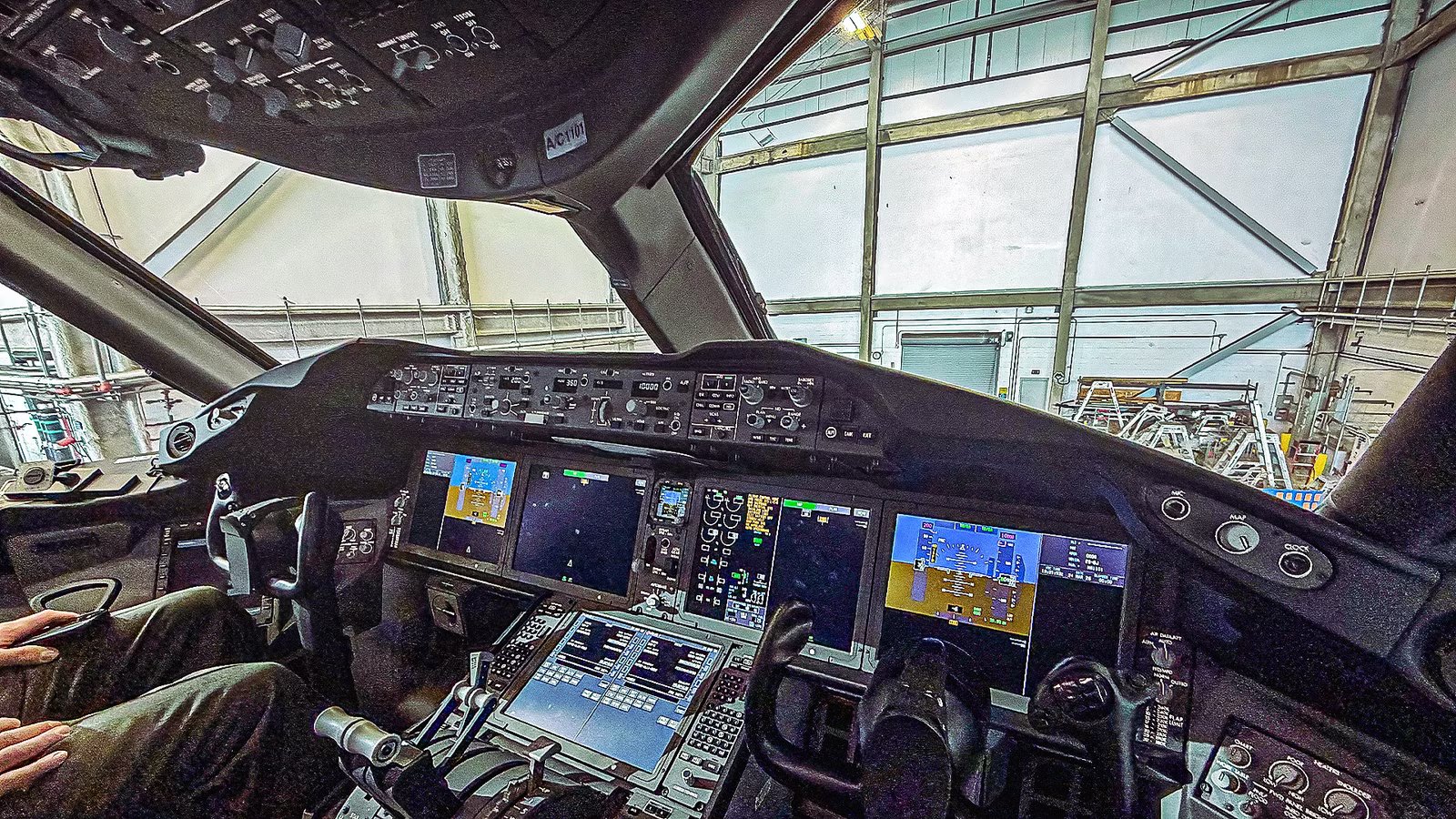
Another reason airlines are choosing the A321XLR is fleet commonality. For airlines, operating aircraft with common cockpit layouts, maintenance procedures, and pilot certifications can significantly reduce operational complexity and costs. It also gives them more flexibility when it comes to crew scheduling, aircraft substitutions, and maintenance planning. The A321XLR is based on the A321neo, one of the best-selling commercial aircraft programs in recent years, which means many airlines are already familiar with the platform.
The aircraft also shares the same type rating as the rest of the Airbus narrowbody family, allowing pilots to transition between variants with minimal additional training. So, airlines already operating the Airbus A320neo family can integrate the A321XLR into existing fleets far more easily than introducing an entirely new aircraft type. That is already becoming visible in the aircraft’s order book. IndiGo, which already operates one of the world’s largest Airbus narrowbody fleets, has ordered nearly 70 A321XLRs, two of which have already been delivered.
The aircraft will join hundreds of A320neo family aircraft already operated by the Indian carrier. Wizz Air, another all-Airbus operator, has also introduced the type as part of its expansion into longer routes. Furthermore, multiple airlines have also adjusted existing fleet plans to add more A321XLRs. Earlier this year, Air India converted 15 A321neo orders into A321XLRs as part of its broader fleet strategy. Meanwhile, last year, Qantas announced an additional order for 20 aircraft. At the end of March 2026, Airbus confirmed that orders for the A321XLR had surpassed 500 aircraft.
How The Airbus A321XLR Could Seriously Impact Boeing’s Future
The Airbus A321XLR reshapes narrowbody aviation and threatens Boeing’s hold on long-range one-aisle routes by occupying the Boeing 757 niche.
The 737 MAX 10 Still Isn’t Certified
Boeing’s competing aircraft is still awaiting approval.

Certification delays surrounding the 737 MAX 10 have also become an important factor for airlines evaluating future narrowbody fleets. The A321XLR is already flying passengers, but Boeing’s competing aircraft still remains uncertified nearly a decade after its launch. The US manufacturer introduced the MAX 10 back in 2017 as the largest variant of the MAX family, but the program has faced a prolonged certification process that continues today.
That said, the aircraft is now moving closer towards certification. Earlier this year, Boeing confirmed that the Federal Aviation Administration (FAA) had authorized Type Inspection Authorization 2 for the aircraft, leaving one final stage remaining before certification. However, the process is still not complete. The US planemaker still needs to submit dozens of system safety assessments. As recently as April, the FAA ordered a new round of structural load testing on the aircraft.
Indeed, these additional testing requirements have raised further questions around the certification timeline. The company anticipates receiving the certificate sometime this year. However, several analysts have suggested the latest work could push certification and deliveries back by another four to eight months, creating uncertainty for airlines that had expected the aircraft to arrive this year.
Meanwhile, the A321XLR is already in commercial service and accumulating operational experience with airlines across multiple regions. That has given the European planemaker a major advantage in the market, particularly as airlines continue making long-term fleet decisions while MAX 10 remains grounded awaiting FAA approval.