dailynewsnblog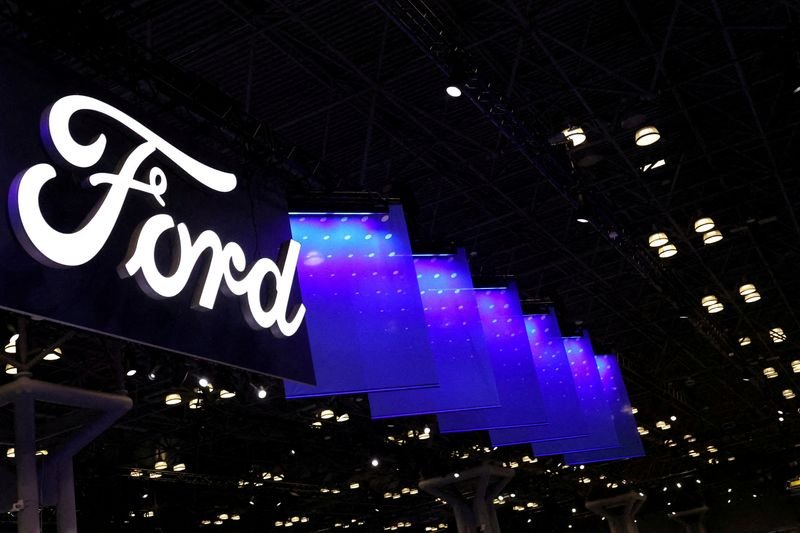
By Nora Eckert
DETROIT, June 15 (Reuters) – Ford Motor and other automakers are scrambling to obtain U.S. government authorization to continue selling models that have been in U.S. showrooms for years, but have recently come under fire as part of a ban on Chinese software in connected vehicles
Ford has asked the U.S. Commerce Department for authorization to continue importing its China-built Lincoln Nautilus SUV, the company confirmed to Reuters. The model is among a small handful of Chinese imports that automakers already had been selling in the U.S. prior to the government restrictions.
The Nautilus’ software is developed in the U.S., but installed into the vehicle in China, requiring government approval to continue selling it in the United States, Ford said.
Ford is among the automakers navigating a complex and opaque licensing process, which is exposing the extent to which the U.S. auto industry has intertwined its supply chains with China.
The rules include a ban on most Chinese-developed and -maintained software and cover companies with significant Chinese ownership. Lawmakers have proposed making the rules even tougher.
They were adopted in January 2025 under President Joe Biden, based on national security concerns linked to the ability of vehicles to collect sensitive data on American owners, and have been kept in place under the Trump administration.
The software prohibitions take effect for model year 2027, and separate restrictions on hardware take effect for model year 2030. Ford said it will likely start importing 2027 model year Nautilus vehicles in January, so it has several months to secure an authorization.
HARDWARE BAN POSES BROADER COMPLICATIONS
While the software ban has become a headache for some automakers on certain models, it is preparing the industry for the much more difficult task of decoupling the U.S. auto hardware supply chain from China.
“Hardware restrictions are likely to be more cumbersome and require more time for automakers to adapt,” researchers at the Rhodium Group said in a study.
Some automakers are already making the costly push to rewire their supply chains away from China. General Motors set a deadline for some suppliers to scrub their own supply chains of parts from China by 2027, Reuters reported.
Volvo Cars, majority-owned by China’s Geely, said in May it received an authorization, though it said it still must meet the rule’s specifications across its lineup sold in the U.S. The company confirmed it needed a specific authorization because of its ownership structure.