dailynewsnblog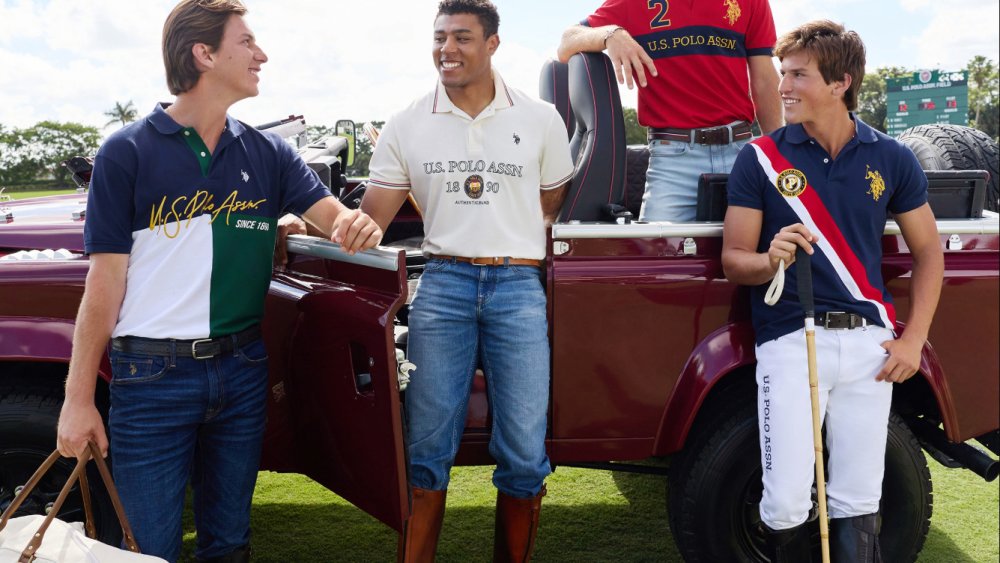
Although J. Michael Prince has been running USPA Global, the company that manages and markets the U.S. Polo Assn. brand, for nearly a decade, he never forgot the lessons he learned during his years at Nike.
Prince, president and chief executive officer of USPA Global, spent more than five years at the sports brand and its Converse, Cole Haan, Hurley and Umbro divisions, and has applied those lessons to significantly expand the reach of the U.S. Polo Assn.
When he was named CEO of USPA Global in 2018, the division had $1.2 billion in worldwide retail sales. Today, that number has more than doubled to $2.7 billion. And Prince is not stopping there. He has a stated goal to hit $4 billion within the next five to seven years.
Currently, the company operates in 190 countries and has 1,200 monobrand stores. To reach his lofty sales goal, the game plan is to expand across the U.S., India, the Middle East, Western Europe and Latin America with more stores, an enhanced e-commerce presence as well as an increased broadcast presence. Entering new markets including Australia, Poland, Thailand and Vietnam is also in his sights. So is expanding womenswear and footwear.
“When I came in, I saw a sleeping giant that was misunderstood in the marketplace,” he said. “I had this Nike lens because I had grown up around great sports brands and started executing on that vision.”
He said his initial goal was to reach $2 billion by 2025, but the company managed to exceed that number.
“Our global team and strategic partners delivered exceptional results across retail, digital, product, marketing and sport initiatives in 2025,” Prince said. “I have never been more confident in the trajectory of the U.S. Polo Assn. business as we continue to expand our global footprint and strengthen our leadership position. With sustained momentum and clear strategic focus, we remain firmly on track toward our long‑term objectives, including surpassing $4 billion in worldwide retail sales, 1,500 U.S. Polo Assn. stores and 100 country-specific digital sites globally.”
Prince believes everything starts with “brand relevance,” he said, noting, “We’ve all seen a lot of great brands come and go. So it’s important to always understand your existing consumer and the next generation coming behind them.”

Young people are a key demographic for U.S. Polo Assn.
Mark Dunn, Photographer
He sees India, already the company’s fastest-growing market where U.S. Polo Assn. ranks as the largest sports-casual menswear brand, as prime for further growth. “We already passed Levi’s in men’s and we’re the largest in boys. India is a $500 million market today and we’ve already laid out the plan to grow that to $1 billion-plus with our partners there, and we believe it’s very doable.”
In addition, e-commerce, which has increased from 2 percent of sales in 2018 to 20 percent today, is seen as an engine to increase business. Currently there are more than 60 e-commerce sites in 20 countries and the goal is to increase that to 100.
Although USPA Global is one of the top five largest licensed sports brands worldwide, Prince said it is different from the other brand marketing companies such as Authentic Brands Group and WHP Global.
“Ours is an asset-light model,” he said. “We take our trademarks and find the best partners in every region. I give the brand management companies tremendous credit for the size of the businesses they’ve built, but we’re part of the U.S. Polo Assn., and our focus is to control and own this brand. We treat it very carefully, nurse it, grow it and look at how it can be positioned over the next 50 to 100 years.”
USPA Global leans into the U.S. Polo Assn.’s history as its differentiator. The organization was founded in 1890 and is the largest association of polo clubs and players in the U.S. It sponsors a number of major events around the world, including the U.S. Open Polo Championship held annually at NPC in The Palm Beaches.

Michael Prince
Jason Nuttle Photography
The airing of polo matches globally is serving to boost business. Prince first approached ESPN in 2021 about broadcasting polo matches in primetime on its site and he admitted that the sports channel wasn’t initially keen on the idea. But after testing it with three matches, and discovering its unexpected popularity, ESPN now broadcasts the U.S. Open Polo Championship along with other premier games as well as the group’s award-winning series, “Breakaway.”
But Prince didn’t stop there. He also inked deals with other broadcasters globally, including TNT and Eurosport in Europe, Star Sports in India and BeIn Sports in the Middle East.
“Fifty million viewers around the world watch the sport on multiple platforms or distribution channels around the world,” he said. And while some only tune in to catch the “divot stomp” — the unique halftime tradition where spectators walk onto the field and replace chunks of torn turf — that’s OK with him. “We just want you to be part of the ecosystem,” he said, adding: “Polo is the only sport where people can go on the field with a glass of Champagne, stomp a divot and be part of the experience.”
Although polo is considered an upscale sport — it’s often called the “sport of kings” — it has significantly expanded its reach with a younger crowd in recent years. “What has helped us is our pivot toward a sports lens and targeting young Millennials and Gen Alpha,” Prince said. These young people are attracted by the company’s classic Americana-inspired merchandise offered at affordable prices. Returning to his “Nike lens,” Prince cited the iconic, yet affordable, Converse Chuck Taylor sneaker as an example. “You didn’t have to have a lot of money to wear it, and you felt cool,” he said.
The sport can trace its roots to 600 B.C. when it was invented as a training game for elite cavalry units in Persia, but today it is much more democratic. Prince said that 40 percent of the players in the U.S. are female and of the 75 collegiate polo teams here, half of those players are women.
“The younger generation is coming in to experience the sport,” Prince said. And they’re also buying the product.
The top-selling item for USPA Global globally is the polo shirt, which retails for around $44. “It’s our number-one selling item worldwide and we sell it in 190 countries,” he said. “It’s become a fashion icon that is timeless.” Also popular are oxford button-down shirts, graphic T-shirts and “tons of caps.” And while the brand offers pants, Prince said four times as many tops than bottoms are sold.

Women’s handbags are among the popular pieces sold by the brand.
Mark Dunn, Photographer
For women, polo dresses are also popular, as are handbags. Prince acknowledged that U.S. Polo Assn. bags — primarily crossbody models that retail for $50 to $80 — are the female customer’s “number four or five choice,” but are appropriate for matches or other sporting events.
“We’re seeing a mixing of high and low,” he said. “There’s this higher end demographic that will engage with the brand, and they’re buying luxury brands as well. We’ll see someone in Gucci loafers that cost $800 and a $25 USPA baseball cap stomping divots. We’ll never be a luxury brand, but we have great product that is accessible for all demographics.”
In 2025, in celebration of its 135th anniversary, the company revamped its stores to reflect a more refined, sport-focused concept, a strategy that is also paying dividends. And it also brought its celebration to different venues globally.
“There are not many sports that have been around 135 years, so we did events all over the world,” he said. That included one in Florence, Italy, during Pitti Uomo when the company took over a basilica for three days to showcase its sport and product.
Over the years, U.S. Polo Assn. and Ralph Lauren have been at loggerheads over the trademark for their similar names and logos — Polo Ralph Lauren uses an image of a single polo player while USPA showcases two players. But while there have been several lawsuits, the two have come to terms in recent times.
“I have the upmost respect for Ralph Lauren, the person, and the unbelievable brand he built and the dream world that he created,” Prince said. “Our brand is more of a sports inspiration with a different demographic and we both coexist.”