dailynewsnblog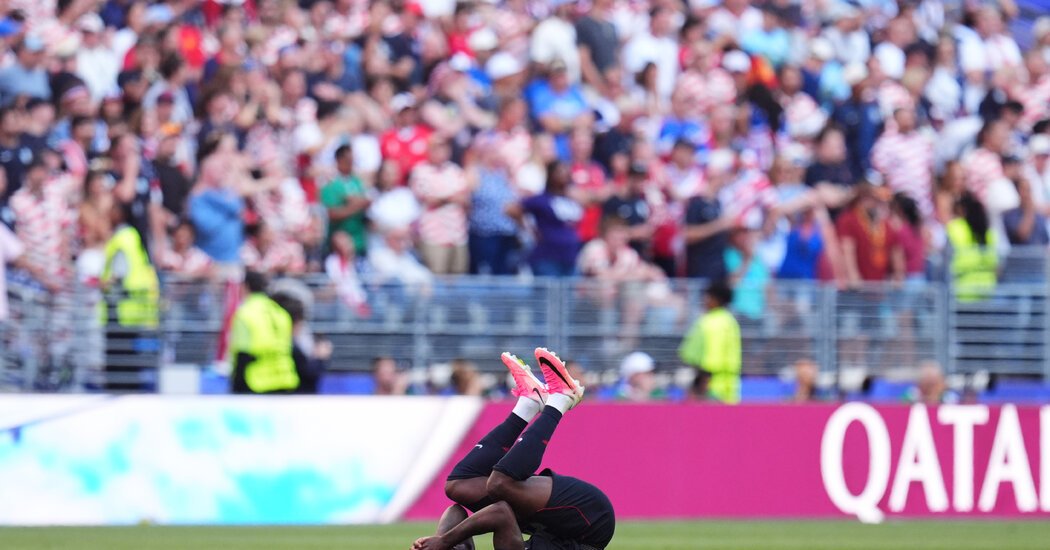
As the United States players hung their heads after a 4-1 loss to Belgium in Seattle on Monday night, a nation momentarily captivated by soccer mourned the sudden end of a promising journey.
But buried within the disappointment of the sobering defeat was evidence that this World Cup has accelerated soccer’s decades-long climb into the national consciousness.
With established professional leagues for both men and women, and youth participation continuing to soar, the men’s national team is far from the sole metric for the health of the sport in the United States. Despite the end of the U.S.’s World Cup run, soccer’s stakeholders are eagerly anticipating a boost for the sport’s presence and potential in a nation where it has long battled other sports for attention.
“I hope we can continue to inspire the country with great victories in the future,” Don Garber, the long-serving commissioner of Major League Soccer, said in an interview in his office in Manhattan last week. “But the growth of the sport is not dependent on that. The success of the World Cup in general has been driving the sport forward in ways that are almost as important as the success of the U.S. team.”
As it did in 1994, the last time the men’s World Cup was held in the United States, the tournament is sure to lift interest, not only because of the U.S.’s supposed “golden generation” of players — bolstered by Christian Pulisic and several other starters in top European leagues — but because of the dazzling goals, exciting comebacks and fun-loving, flag-waving fans from around the world who poured into stadiums and downtowns across the country.
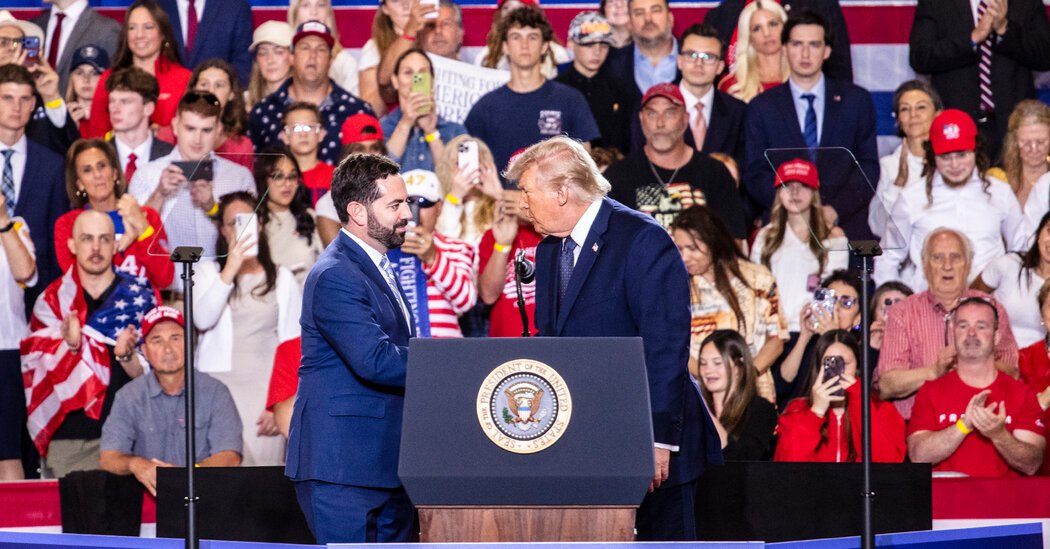
The U.S. team even found itself in the middle of a genuine international soccer scandal, after President Trump pushed FIFA for a review of a red card issued to the American forward Folarin Balogun that disqualified him from the Belgium match. FIFA lifted the one-game suspension, infuriating the soccer associations of Belgium and several other nations while churning up interest in, and headlines about, the U.S. squad.
With its expanded 48-team field, this World Cup has already broken records for viewership in the United States and overall attendance. The Americans’ win over Bosnia and Herzegovina in the round of 32 averaged 24 million viewers on Fox, the most-watched English-language World Cup telecast in U.S. history, with another 9 million watching in Spanish on Telemundo. About 4.6 million spectators attended the first 72 matches across 16 host cities, surpassing the attendance record of 3.5 million set at the 1994 World Cup, which included 52 games.
Thirty two years later, soccer fans and officials again hope to leverage the tournament to take American soccer to the next stage, where its men’s league and national team can compete among the best in the world, as the women’s league and national team already do.
Part of that challenge will be to elevate Major League Soccer, which since its inception in 1996, has worked to muscle into an established sports landscape.
M.L.S. attendance has grown steadily, with the average per game at almost 22,000 people last year (compared with about 70,000 in the National Football League, 29,000 in Major League Baseball and 18,000 in the National Basketball Association). But many soccer fans in the United States still prefer to follow other leagues around the world, like the English Premier League, Mexico’s Liga MX and Spain’s La Liga.
Some point to the 45 M.L.S. players on World Cup rosters, including eight on the U.S. team, as a sign of growth. For others, that is not good enough.
“We are not in a spot where we should look at the U.S. national team’s success and for one second think this is because of Major League Soccer,” said Eric Wynalda, the former national team star who was the first American to play in Germany’s Bundesliga.
He pointed to several factors that he felt were suppressing the quality of play in the league, including modest payrolls and its habit of signing aging stars near retirement, like David Beckham and Lionel Messi. Mr. Wynalda was 23 when he took a significant pay cut to join M.L.S., where he played from 1996 to 2001, but he said he was frustrated that the league was still not in tune with the rest of the world.
“In every other country, the league itself takes responsibility for producing players that are going to help the national team,” Mr. Wynalda said. “Our league looks at itself as a separate entity that is location-based entertainment. That is not something that will help us be a better soccer nation.”
Mr. Garber said the league, which is set to switch to a fall-to-spring season in 2027 to be in line with other leagues, is also considering other fundamental changes, including promotion and relegation (the system where the worst teams are demoted to lower divisions), to better compete with other leagues.
“Unless M.L.S. continues its momentum and continues its growth, we will not fully capture the opportunity here in this massive, soccer friendly market,” Mr. Garber said.
FIFA, the overlord of international soccer, has long eyed North America as fertile ground to expand and reap the profits. Before the United States was awarded the ’94 World Cup, FIFA insisted it create a new professional men’s league. But when that World Cup ended, M.L.S. was still two years away from its debut, losing some hard-earned momentum.
According to Alan Rothenberg, the head of the United States Soccer Federation at the time, the wait was strategic, for several reasons.
“We wanted to lower expectations,” he said. “Coming directly off a World Cup where you had 90,000 people packed into stadiums, it wouldn’t look good to then have games in half-filled stadiums.”
More than three decades later, the league is firmly established alongside a growing women’s league, the National Women’s Soccer League, and has a broadcast deal with Apple TV to show all of its games.
“Where we were then was the night, and where we are now is the day, and it’s going to continue to grow,” Mr. Rothenberg said. “I believe that 20 years from now, soccer is going to be challenging American football as the No. 1 sport in the United States, surpassing baseball, basketball and hockey.”
As millions of American families know, the sport is thriving at the youth level. In 2025, there were 16.8 million outdoor soccer players ages 6 and up, according to Alex Kerman, the senior director of research operations and business development for the Sports and Fitness Industry Association, a nonprofit trade association that has tracked participation in 100 sports for 39 years.
Mr. Kerman said soccer was the third-largest team sport in the country for participation across all age groups and genders, behind basketball and baseball. And from 2024 to 2025, it grew by 15.8 percent, the fastest of any team sport.
“For a sport already that large, it’s pretty incredible,” he said.
He added that participation was boosted by the arrival of Mr. Messi, one of the greatest players in history, to Inter Miami of M.L.S. in 2023, plus the 2024 Copa América and last year’s Club World Cup in the U.S. The World Cup is expected to be another multiplier.
“I would be shocked if we don’t see a significant increase,” Mr. Kerman said.
The players on the national team have felt it. Giovanni Reyna, a midfielder whose father was a member of the 1994 U.S. team, recently marveled that some of the marquee sports chat shows, which normally stick to American football, basketball, and baseball, spent significant time discussing the World Cup.
“It’s really, really cool to see the country rally around this sport,” he said during the team’s run, “which seems like the strongest they ever have.”
Even with the United States out, M.L.S. still has a presence. For the first time, FIFA is allowing domestic league games to be played during the World Cup, and M.L.S. will stage three games between the semifinals and the final to capitalize on the buzz.
M.L.S. knows that the challenge is the same as it was the last time, to convert that buzz into a league with better players and even more passionate fans.
“If the goal in ’94 was to start a league, the goal in 2027 and beyond is to have one of the top leagues in the world,” Mr. Garber said. “Our attitude is, ‘Thanks world, we’ll take it from here.’”
On Monday night, some of the dejected fans outside the stadium in Seattle saw a silver lining.
Bennett Haselton of Bay View, Wash., said that the success of the World Cup as a spectacle could only advance the cause of soccer as a major sport in the United States.
“It gains a little bit every year,” said Mr. Haselton, 47.
Charles Suey, 64, who was visiting from Los Angeles, said that he expected World Cup to cement the sport’s growing place in American culture. Children who experienced the World Cup, he added, “will now think, ‘That could be me.’”
“All it takes is a ball,” he said. “You don’t even need a hoop.”
Tim Arango contributed reporting.