(Bloomberg) — A new US drawdown of roughly 5,000 troops from Germany over the next year prompted strong questions from both NATO allies and Republicans in Congress.
Most Read from Bloomberg
A NATO spokesperson said the defense alliance is looking for details on the US effort, which was announced Friday, adding that Washington’s move underscores the need for Europe to continue to invest more in its own defense.
The alliance remains confident of its ability to provide for deterrence and defense as a shift toward a stronger Europe in a stronger NATO continues, the spokesperson said. Polish Prime Minister Donald Tusk said Saturday the trans-Atlantic alliance risks disintegrating and called on all members to reverse “this disastrous trend.”
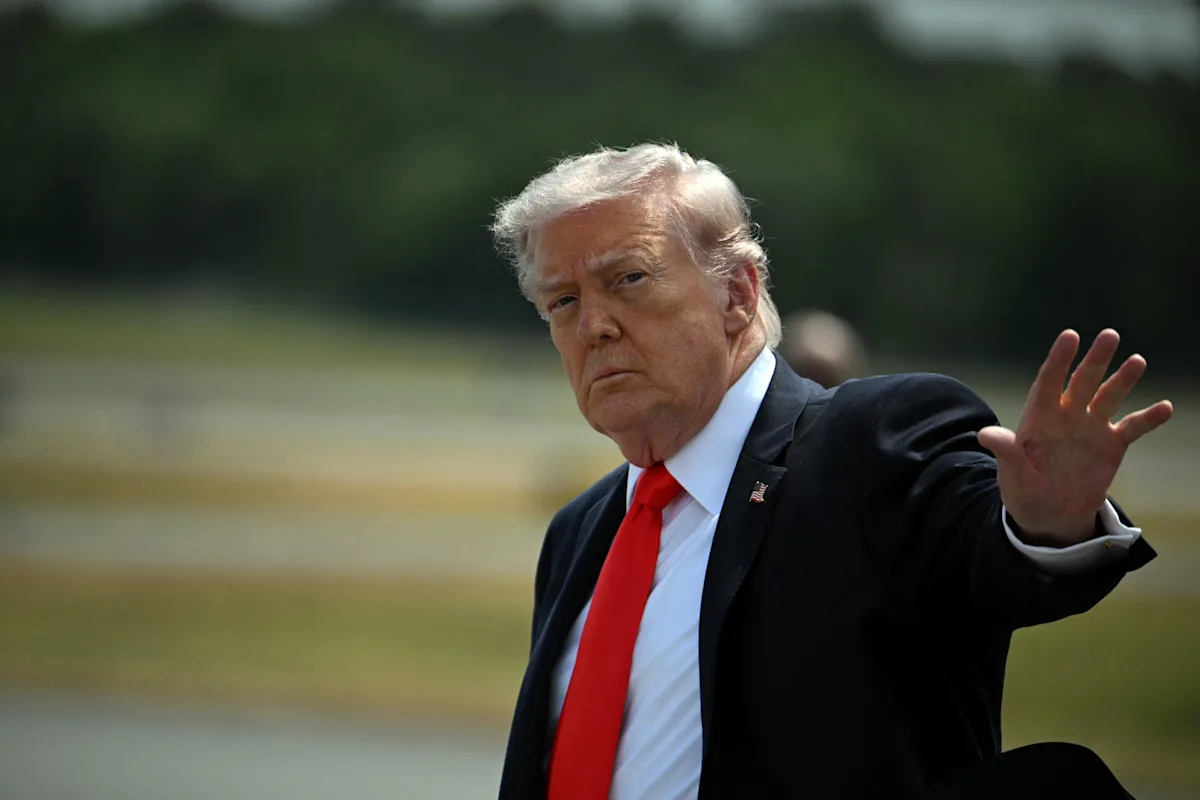
President Donald Trump has been growing increasingly frustrated with European nations, accusing them of ignoring his requests for help in the US war with Iran. Trump has been threatening to reduce the US military presence in Europe, and also announced on Friday that he’s increasing tariffs on cars and trucks from the European Union to 25%, which will have a disproportionate impact on German automakers.
Roger Wicker, the Mississippi Republican who chairs the Senate Armed Services Committee, and House Armed Services Chairman Mike Rogers, a Republican from Alabama, expressed concern about pulling out thousands of troops in a joint statement on Saturday — a notable rebuke from the president’s own party.
“Prematurely reducing America’s forward presence in Europe before those capabilities are fully realized risks undermining deterrence and sending the wrong signal to Vladimir Putin,” the lawmakers said, referring to the Russian president.
“Rather than withdrawing forces from the continent altogether, it is in the US interest to maintain a strong deterrent in Europe by moving these 5,000 US forces to the east,” the pair added, saying they hoped for more details from the Pentagon in the coming days and weeks.
Senator Jack Reed of Rhode Island, the top Democrat on the Armed Services Committee, said in a recent statement that the president “should immediately reverse this foolish decision. Withdrawing thousands of American troops from one of our most important strategic positions in the middle of a war is a serious mistake that will reverberate well beyond this moment.”
Trump’s previous attempt to remove forces from Germany in 2020 was blocked by legislation. This order is likely to face similar opposition in Congress.
The move is Trump’s latest challenge to the NATO alliance, whose other members he’s long accused of not doing enough to pay for their own defense. More recently, he threatened to take Greenland from alliance partner Denmark and blasted allies for not doing more to help in the Iran campaign.
Pentagon spokesman Sean Parnell said in a statement on Friday that Defense Secretary Pete Hegseth had ordered the withdrawal.
“This decision follows a thorough review of the department’s force posture in Europe and is in recognition of theater requirements and conditions on the ground,” Parnell said. “We expect the withdrawal to be completed over the next six to 12 months.”
The Pentagon didn’t respond to specific questions about whether the personnel would be repositioned elsewhere in Europe and if the reduction affected rotational or permanently stationed forces.
The US plans were first reported earlier Friday by CBS News, which cited senior defense officials it did not name. Those officials cast the move as a demonstration of the president’s frustration with European allies who have balked at his calls to do more to assist the US and Israel in their war on Iran, the report said.
Trump on Wednesday had said he was reviewing troop levels in Germany with an eye toward reducing those numbers. That announcement came just days after German Chancellor Friedrich Merz questioned Trump’s handling of the Iran war in unusually blunt terms, saying the administration was being “humiliated.”
Some 35,000 troops — almost half the total of US forces in Europe — are stationed in Germany, where the American command for the region is headquartered. The US has relied heavily on its extensive network of bases and other facilities in Germany, a legacy of the Cold War, to prepare and launch operations against Iran.
Trump has clashed with Merz over the wars in Iran and Ukraine and the future of NATO. At the same time, Merz has led a huge increase in German defense spending, drawing praise from US officials. Still, Merz’s recent comments that the US lacked a strategy for the war drew Trump’s ire, triggering the threat to remove US troops.
German Foreign Minister Johann Wadephul had played down Trump’s earlier warning, saying Thursday that his government would take a “calm” look at the possibility of reducing American forces. “The US needs these bases,” he said, citing key facilities including Ramstein, Landstuhl and Grafenwoehr.
Germany provides rent-free land for the bases and staff to support the American forces.
German Defense Minister Boris Pistorius on Saturday said Europe must assume greater responsibility for security in the region, while emphasizing the continued importance of shared military interests with the US.
The US order was “predictable,” Pistorius told Deutsche Presse-Agentur, adding that “the presence of American troops in Europe, and particularly in Germany, lies in our interest and in the interest of the US.”
–With assistance from Jennifer A. Dlouhy, John Harney, Tony Capaccio and Meghashyam Mali.
(Updates with Polish premier’s warning in third paragraph.)
Most Read from Bloomberg Businessweek
©2026 Bloomberg L.P.


 dailynewsnblog