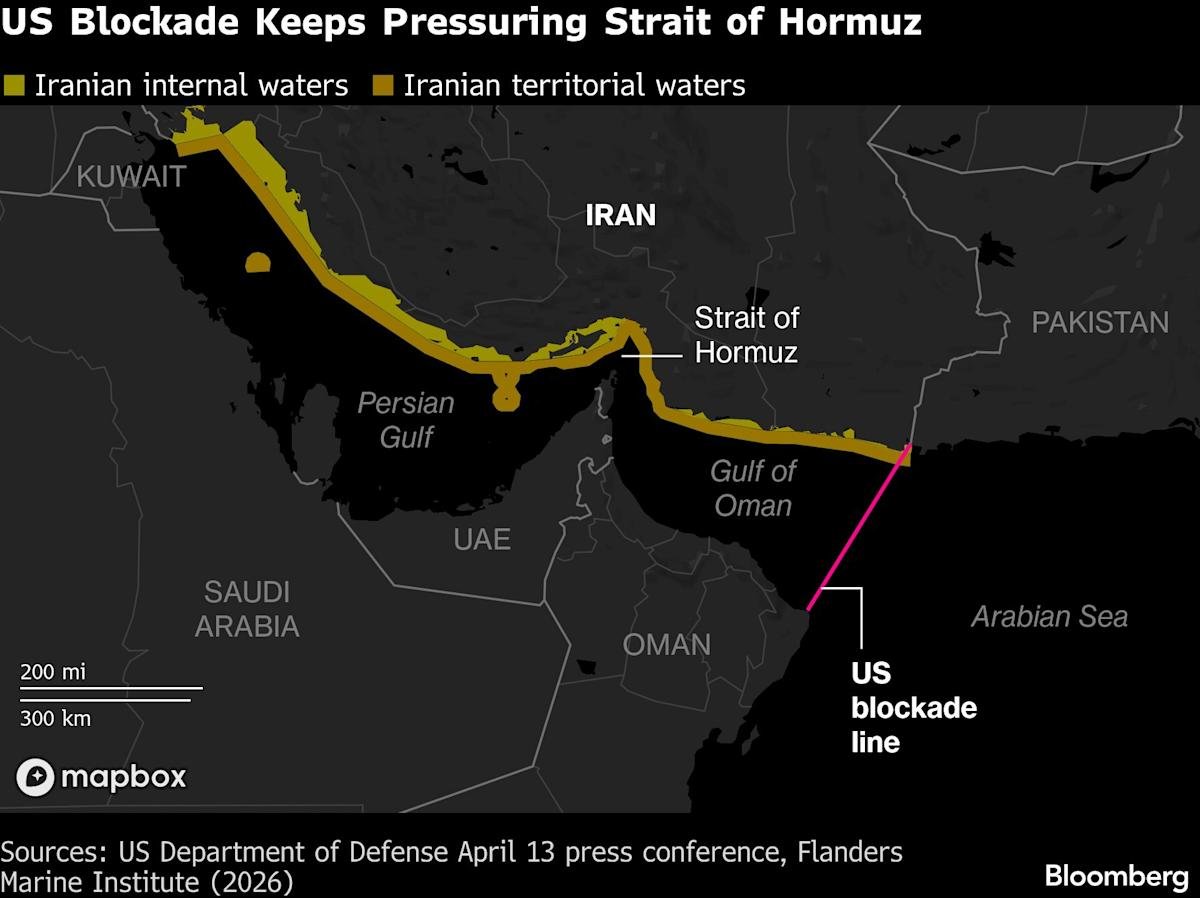
(Bloomberg) — President Donald Trump told his aides to prepare for an extended US Naval blockade of the Strait of Hormuz, the Wall Street Journal reported, as the US looks to intensify economic pressure on Iran as the war enters its third month.
Most Read from Bloomberg
The president, in meetings with top aides, decided to continue putting pressure on Iran’s ability to export oil by stopping any vessel heading to or from the Islamic Republic’s ports, the newspaper reported on Tuesday night. Trump determined that was a less risky option than resuming bombing or extracting the US from the conflict entirely, the outlet said.
The decision suggests that the US could be moving into a lengthy period with the fighting largely halted, but no durable resolution to the conflict, and the status of traffic through the Strait of Hormuz still uncertain.
The US has been blocking ships going to and from Iranian ports to try to squeeze the country of oil revenue, while Iran keeps the strait closed to almost all other traffic.
Trump earlier Tuesday said Iran had asked the US to lift the naval blockade of the strait while the two sides negotiate an end to the two-month war, which has upended global energy supplies.
Tehran wants the critical waterway for oil and gas shipments open “as soon as possible, as they try to figure out their leadership situation,” Trump said on Truth Social earlier Tuesday. Iran has said it’s in a “State of Collapse,” he added.
Iran has signaled it may be willing to accept an interim deal to reopen the strait in exchange for Washington ending its blockade of Iranian ports, while postponing more complex negotiations over the country’s nuclear program. It is insisting on keeping some control over shipping through the strait, which Washington is unlikely to accept.
Trump rejected that offer from Iran, according to the WSJ, and told aides it showed that Iran wasn’t negotiating in good faith. Mediators in Pakistan expect Iran will submit a revised proposal to end the war in the next few days, CNN reported on Tuesday, citing sources close to the mediation process.
Brent crude rose for a seventh straight session to settle above $111 a barrel, as concern grows of a protracted peace process that could keep Hormuz shut for an indefinite period.
The war’s ripple effects were underscored when the United Arab Emirates announced on Tuesday it was leaving OPEC, dealing a blow to the oil cartel and its leader Saudi Arabia. The UAE, which can pump more crude than is allowed under its OPEC quota, has long chafed at the group’s restrictions.
“The decision is taken at the right time in our view because it’s not going to hugely impact the market: the market is undersupplied,” UAE Energy Minister Suhail Al Mazrouei said. Abu Dhabi believes the shortages caused by the war will require agility to respond to market demands, he said.
The warring sides started a ceasefire around April 7 and hostilities may resume if they fail to agree to fresh talks, following an inconclusive first round in Pakistan in mid-April.
Iran’s offer to end the war is “better than what we thought they were going to submit,” Secretary of State Marco Rubio told Fox News. Yet the White House has “questions about whether the person submitting it had the authority to submit,” he said, echoing previous US claims that Iran’s leaders are divided over their negotiating strategy.
The strategic Strait of Hormuz, through which a fifth of the world’s oil and liquefied natural gas flowed before the conflict began, remains at a virtual standstill.
Foreign leaders are increasingly frustrated with the diplomatic impasse and the continued shutdown of the waterway, which has led to fuel rationing across much of Asia and Africa and fears of a global economic slowdown.
Here’s more on the war’s impact:
-
The US Office of Foreign Assets Control issued an alert warning financial institutions about the sanctions risk of dealing with China’s so-called teapot refineries over their role in importing Iranian oil.
-
OFAC separately issued “firm guidance” warning ships about the “significant sanctions exposures related to making ‘toll’ payments to the Government of Iran” or the country’s military for safe passage through the Strait of Hormuz.
-
US Central Command said Marines boarded the commercial vessel M/V Blue Star III in the Arabian Sea on Tuesday, but released it “after conducting a search and confirming the ship’s voyage would not include an Iranian port call.” The ship was suspected of attempting to travel to Iran in violation of the US naval blockade, Central Command said.
-
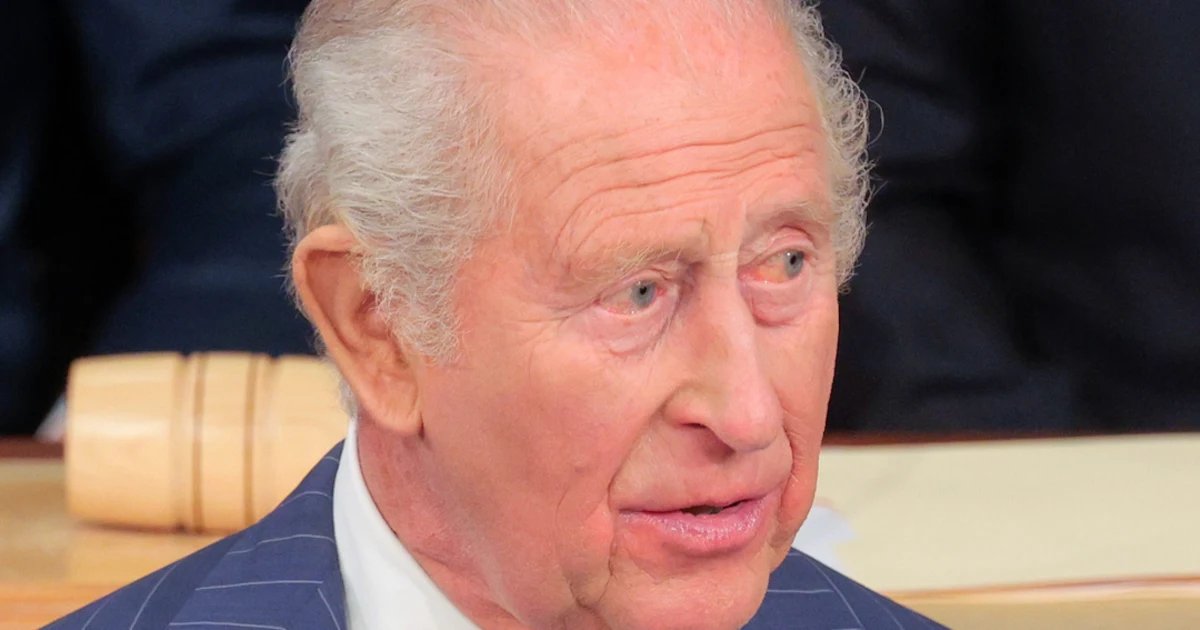
The UK’s new ambassador to the US, Christian Turner, was reported to have said the real “special relationship” was between the US and Israel, not the UK. While the Foreign Office did not dispute the remarks, it said they did not reflect the official position of their government. The comments were first reported by the Financial Times hours before King Charles III was due to arrive at the White House on Tuesday.
-
The ceasefire in Lebanon remains shaky, with both Israel and Hezbollah accusing the other of attacks. The Israeli military said it dismantled two tunnels in southern Lebanon belonging to the Tehran-backed militant group.
–With assistance from John Bowker, Paul Wallace, Devika Krishna Kumar, Laura Davison and John Harney.
Most Read from Bloomberg Businessweek
©2026 Bloomberg L.P.


 dailynewsnblog