dailynewsnblog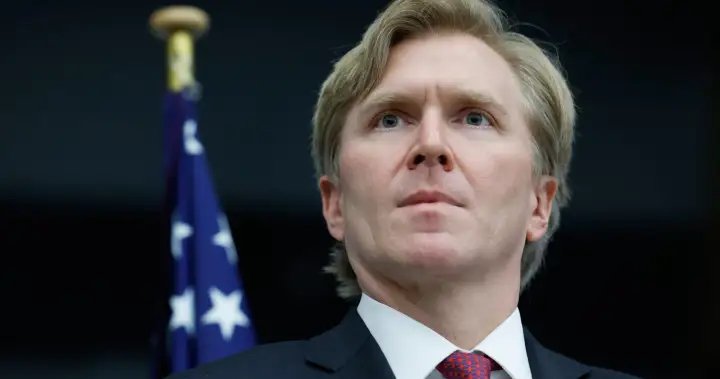
A senior Trump administration official has publicly critiqued global geopolitical discussions about a “middle powers” strategy, calling it a distraction.

In a series of X posts uploaded on Tuesday, U.S. Undersecretary of Defense for Policy Elbridge Colby also rejected the idea that countries may look away from purchasing American military equipment.
“There is a lot of commentary that, due to alleged frustrations with the United States, the American defense industrial base will lose out on the market for weaponry. But this is neither feasible nor accurate,” Colby wrote.
“At DoW [Department of War], we are not concerned that this is a serious possibility. Rather, we are more concerned that a few allies and partners will think it is and waste valuable time, money, and political capital on a distraction.”
“From our point of view, a collective middle powers strategy is based on a faulty understanding of international relations. We are flexible realists. So, we view the international scene through the prism of interest, geography, economics, military power, etc. ‘Middle powers’ don’t have a coherent basis for alignment.”

He also added that access to the U.S. defence industry “is a privilege, not a right.”
“This is not to say allies and partners should give up spending more or investing in their own DIB [defense industrial base]. To the contrary. More spending will help us all, and especially our allies’ own security. And we welcome allies’ investment in their own DIBs, but in ways that are collaborative with America’s rather than trying in vain to replicate or supplant it.”
While Colby did not name any countries or political leaders in his posts, Prime Minister Mark Carney frequently mentioned middle powers in his speech to the World Economic Forum in Davos earlier this year, which focused on nations coming together to advance their interests and avoid being subjugated by global superpowers, which are increasingly volatile.

Get breaking National news
Get breaking Canada news delivered to your inbox as it happens so you won’t miss a trending story.
“Our view is the middle powers must act together because if we’re not at the table, we’re on the menu,” Carney said on Jan. 20.
“But I’d also say that great powers can afford, for now, to go it alone. They have the market size, the military capacity and the leverage to dictate terms. Middle powers do not.”
Carney also mentioned middle powers again in Australia earlier this year.
“Middle powers have more power than many realize,” he said on March 4.
David Lametti, Canada’s United Nations ambassador, said on July 2 that Carney’s speech has already begun to take shape.
“We have set up a number of different kinds of relationships that work for specific issues,” said Lametti. “And that’s precisely the manner in which I think Prime Minister Carney has envisaged this, for areas outside of the UN.”
© 2026 Global News, a division of Corus Entertainment Inc.