dailynewsnblog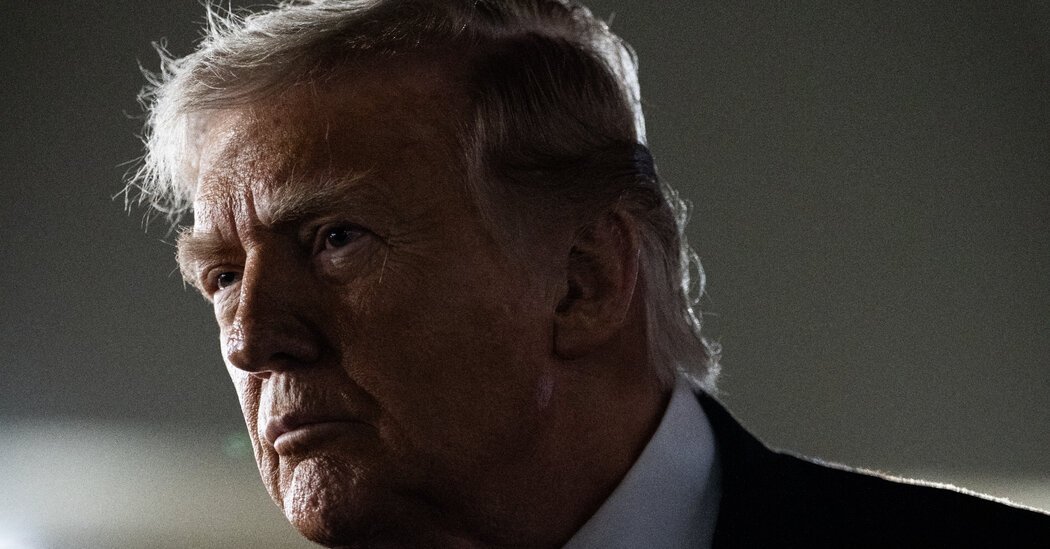
The last time President Trump faced a midterm election, in 2018, congressional Republicans were dragged down by his unpopularity and lost more than three dozen House seats.
But even in defeat, the bottom never truly fell out for the Republicans that year — the party actually gained ground in the Senate — as working-class white voters largely kept their faith in Mr. Trump’s economic know-how.
Today, that once-deep reservoir of good will has largely evaporated.
Blue-collar white voters are, for the first time, seriously doubting Mr. Trump’s handling of the economy. A review of polling by The New York Times shows an extraordinary swing on that issue among white voters without college degrees between his first midterm election and now.
Then, working-class white voters approved of his management of the economy by margins of 30 percentage points or even more. Now, recent polls show them disapproving by anywhere from 14 to more than 30 points.
Mr. Trump’s approval on the economy has dropped across practically every group. But his cratering support among a loyal demographic that has served as the foundation of his political coalition for a decade has the potential to be among the most consequential developments of 2026, according to interviews with strategists in both parties who are involved in the midterms.
Polls now regularly show that a majority of white voters who did not graduate from college no longer approve of Mr. Trump’s handling of the economy. Examples of his low ratings include polls from Fox News (33 percent approval), CBS News (39 percent), NPR/PBS/Marist (40 percent), CNN (43 percent) and The New York Times/Siena College (47 percent).
In other words, he has lost the faith of his most loyal supporters on the year’s most pressing issue.
Mr. Trump’s advisers are actively pressing to shore up support, trying to sell policies in last year’s tax cut package. The Treasury Department this month released a new report detailing how workers benefited from the tax bill. And then this past week, Mr. Trump’s $350 million super PAC, MAGA Inc., put out its very first statement since the 2024 election. The topic was telling: how tax cuts specifically helped the working and middle class.
“It’s working-class voters who are not happy with the Republican Party, and they may not come out and vote,” John McLaughlin, a Republican pollster who has worked for Mr. Trump for years, warned in an interview. He said he had seen backsliding of Mr. Trump’s gains in 2024 among working-class Black and Hispanic voters, too.
At this point, one of the only groups still supporting him on the economy in polls are Republicans.
Democrats are moving to capitalize, drawing up plans to compete in new places that not long ago had seemed too demographically daunting — more white and rural electorates in states such as Iowa that have trended Republican for years.
The Democratic brand, however, remains deeply tarnished among working-class white voters. Polls show many of them have not yet moved all the way toward saying they will vote for Democrats this fall.
Alex Pfeiffer, a MAGA Inc. spokesman, said Democrats would be forced to defend their record on immigration and opposition to the president’s tax bill. “Democrats will have to explain why they voted to take more money from tipped and overtime workers, as well as seniors on Social Security,” he said.
Yet even a more muted turnout from blue-collar white voters, who voted more than two to one for Mr. Trump in 2024, could imperil his party’s chances in November.
“It’s critical,” Mr. McLaughlin, the Trump pollster, said of mobilizing the white working class. “If they don’t, we lose the House and the Senate.”
‘A watershed moment’
Mr. Trump stormed back to power in 2024 promising to stop illegal immigration, tame inflation and rev up the economy. He won 66 percent of white, blue-collar votes, according to exit polling — the exact share he received in his first election in 2016.
Yet in the months since his second inauguration, Mr. Trump’s pursuit of tariffs; persistently high prices for gas and groceries; his focus on foreign affairs, particularly the war in Iran; and ongoing inflation appear to have sapped that support, even as border crossings have plunged.
“The biggest problem is they have been driven — and continue to be driven — by the cost-of-living pressure,” said Robert Blizzard, a Republican pollster. “Prices, stagnant wages and anxiety over when the next shoe is to drop.”
Molly Murphy, a Democratic pollster who worked on former Vice President Kamala Harris’s 2024 campaign, said the change had been striking.
“After he started the war in Iran, people in focus groups who had voted for him and were working class were at a loss for words to try to explain or justify this action — and feel directly impacted by it because of gas prices,” she said. “In the decade of Trump being in our lives, it feels like a watershed moment of them reckoning with him not being the person they thought he was.”
Tim Spencer, a retired tool and die maker who lives in Pella, Iowa, previously voted for Mr. Trump, but higher gas prices are making him feel squeezed. That along with the president’s increasingly erratic behavior have left him no longer supporting Mr. Trump.
The cost of filling his Chevy pickup truck has risen to around $140 from $90, he said. In past summers, Mr. Spencer, 72, and his wife pulled a camper to campsites throughout the Midwest. “With the price of gas now, it’s an Iowa camper,” he said.
Many voters have given Mr. Trump the benefit of the doubt for years, particularly on economic issues. In his first term, they trusted the image he had cultivated as a decisive business executive hosting “The Apprentice.” They fondly remembered the country’s economy under his watch when he ran again in 2024.
Back in 2018, his party’s losses among Trump voters instead were concentrated in other demographic groups, especially more upscale suburban women.
On the eve of the 2018 midterms, Mr. Trump’s approval rating on the economy still stood at 66 percent among white voters without college degrees, according to a CNN poll. That was one reason that, while Republicans lost the House that year, the party still knocked off four Democratic incumbents in the Senate.
This term, Mr. Trump’s approval on the economy — an issue that strategists in both parties agree is the most pressing of the 2026 elections — has plunged even deeper than his approval overall.
Mr. Trump’s disapproval on the economy among those same voters was at 57 percent in CNN’s most recent poll.
Surveys that dive more deeply into questions around inflation or the cost of living are even bleaker for the president.
Among blue-collar white voters, Mr. Trump’s approval rating on the cost of living stood at just 36 percent in the Times survey. Fox News found that just 25 percent approved of his handling of inflation.
“There were certain things that he had made promises on the campaign trail that just didn’t come to fruition,” said Carl Wallnau, 35, who lives outside Fort Worth. He considers himself more libertarian and voted for Mr. Trump in 2024 based on those promises. “He was talking about, you know, lowering gas prices. Gas prices are up.”
Mr. Wallnau has more jobs in the gig economy — as a stagehand, in a comics store and setting up events — but described himself as “struggling to really thrive.” He now plans to vote for a third party in 2026.
“I’m reminded of Bill Clinton,” Mr. Wallnau said. “It’s the economy, stupid.”
‘I don’t think about Americans’ financial situation’
Democrats said they were seeing some early signs of success.
Eva Kemp, a strategist with American Bridge, a Democratic group with a super PAC and research arm, has spent recent years laboring to find disillusioned Trump supporters to feature in Democratic ads.
“It has gotten easier,” she said.
The process involves sitting through focus groups and listening to people air their grievances. “It almost feels more visceral in their disappointment and their willingness to go against President Trump,” she said, adding that women, in particular, have run out of patience. In one recent focus group of working-class white voters in Iowa, nearly all the women gave Mr. Trump a D or an F. The white men graded him higher.
Some Republican strategists, granted anonymity to discuss their party’s vulnerabilities, said they were seeing the same gender phenomenon among white working-class voters.
Democrats don’t need to carry white working-class voters to reclaim power in November. Simply losing them by less could deliver major wins this fall.
In the most recent NPR/PBS News/Marist Poll, 44 percent of white voters who didn’t graduate from college said they were more likely to vote for a Democratic congressional candidate this year — up from a meager 30 percent on the eve of the 2018 midterms.
Mr. Trump is not helping matters with his dismissive talk about the economic concerns of so many Americans. “I love the inflation,” he said in the Oval Office this past week. Previously, he waved off rising gas prices as “peanuts” and said when speaking about the timing of winding down the war in Iran, “I don’t think about Americans’ financial situation.”
The latter quote is already featured in Democratic ads, such as one targeting Representative Rob Bresnahan in Pennsylvania that uses the line three times from three camera angles in the opening 12 seconds, interspersed only with the words “gas,” “groceries” and “utilities.”
Remaking the map for 2026
In 2018, the Democrats’ path to the House majority ran heavily through well-educated and wealthier enclaves of the country. The party picked up four seats in Orange County, Calif., as well as seats outside Chicago, Minneapolis, New York, Atlanta and Washington, D.C.
“You could basically sort a list of districts by college education, and the higher up you were on the list, the more likely you were going to vote for a Democrat,” said Mike Smith, who heads the top super PAC for House Democrats.
But 2026 allows Democrats to compete in areas the party has left fallow for years.
“The Senate map is made up of white working-class voters,” said Ms. Murphy, the Democratic pollster. “You just aren’t going to win in Iowa, Texas, Ohio and Maine without making inroads with white working-class voters.”
Mr. Trump’s transformation of the Republican Party to be more blue collar means those voters have been inspired to vote for him, said Mr. McLaughlin, the Trump pollster. The problem, he noted, is that the president is no longer on the ballot.
“He took the country club Republican Party and gave it to the caddies,” Mr. McLaughlin said.
Ultimately, the party’s chances will live and die with Mr. Trump’s ability to reconnect with his disillusioned white working-class base, said Neil Newhouse, a veteran Republican pollster.
“The one guy who can energize them is the reason why they’re not energized right now,” he said. “Which is Trump.”
Ann Hinga Klein contributed reporting from Pella, Iowa.