dailynewsnblog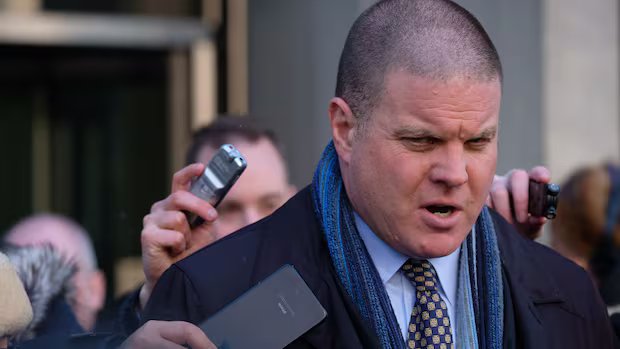
WARNING: This story contains offensive language.
Toronto police officials say they are reaching out to a high-ranking former officer who this week made explosive allegations of antisemitism, racism, and corruption in the service’s senior ranks.
Retired homicide inspector Hank Idsinga made the claims in an interview with CBC News and other news outlets surrounding the release of his new book.
Speaking at an unrelated news conference Thursday, Deputy Chief Robert Johnson told reporters the service is looking to talk with Idsinga “so that we can investigate these serious allegations.”
“I hope that he … takes the opportunity to sit with our folks to provide that information so that we can get to the bottom of it,” Johnson said.
For years, Idsinga was one of the most well-known officers in Toronto thanks to cases like that of now-convicted serial killer Bruce McArthur. Idsinga retired in 2023 after 34 years in policing, and his new book, The High Road, releases this month.
In an interview with CBC News chief correspondent Adrienne Arsenault released Wednesday, Idsinga describes a wealth of dysfunction in the force’s senior ranks.
“There’s a real problem with the culture of the police service from top to bottom,” he said.
Allegations of antisemitism
The former inspector, whose grandfather was a Holocaust victim, outlines in the interview a series of antisemitic encounters with a senior officer whom he has not named.
In one instance, Idsinga alleged the officer referred to a kosher barbecue as a “Jew-cue.” In another, Idsinga said the same officer was watching an internal service video that featured a different officer, paused it, and said to him, “The only reason he gets away with this is because he’s a f–king Jew.”
“That blew me away,” Idsinga said.

After more than three decades with the Toronto Police Service, the head of the homicide unit is stepping down. Insp. Hank Idsinga has received multiple awards and led investigations into some of the city’s most notorious killers, including Bruce McArthur. CBC Toronto News at 6 host Dwight Drummond spoke to Idsinga about his career in crime.
Months later, Idsinga alleges, that same officer was with him on the way to a meeting with a lawyer, who is Jewish.
“And that senior officer said ‘I can’t believe we have to pander to this f–king Jew,'” he said.
“And that really was a seminal moment, when I said, ‘OK, you know what? I was pretty sure you were a Jew hater, now I’m positive you’re a Jew hater.'”
Idsinga makes other allegations in the interview including corruption in the promotions process, and describes an instance of anti-Black racism where a senior officer summoned two Black homicide officers into their office and “tore a strip off them,” but didn’t do so for other officers, even when he says it was justified.
Questions around duty to report
Asked if he believes that the officer who was allegedly antisemitic would take that sort of behaviour into the public realm, Idsinga told CBC News that senior officers typically have very little interaction with the general public.
But he also said he “absolutely” believes that antisemitic senior officers were in charge of deployment decisions surrounding years of pro-Palestinian protests on Toronto streets in the wake of the war between Israel and Hamas.
Protesters at these demonstrations, meanwhile, have said they are trying to draw attention to a legitimate humanitarian crisis, and that limiting protests threatens a Charter-enshrined right to free expression.
“If you look at those senior officers, who are still in control when we have our post-October 7th protests going on, and everyone’s scratching their head and saying, ‘Why aren’t the police doing anything here? Why are we not seeing a response when it’s this particular community that’s being victimized?'” Idsinga said.
“And that very well might explain some of it right there and then.”

Richard Robertson, B’nai Brith Canada’s Manager of Research and Advocacy, told CBC News in an interview that Idsinga’s claims are incredibly serious, and warrant an investigation.
“What really stands out about the claims made by inspector Idsinga is that they have the propensity to undermine the public trust in police, and have potentially even impacted the way in which police have interacted with the Jewish and other communities.”
Johnson, for his part, said Thursday that he finds it “a bit odd” that someone like Idsinga — who would often appeal to the public to come forward and help police solve serious crimes — wouldn’t have flagged these issues himself.
“I think he had a duty and a responsibility to make the organization aware through mechanisms that we have in place so that we can deal with this,” Johnson said.

When asked about filing formal complaints about these instances, Idsinga told CBC News that often it is “friends” of the police chief who get promoted into senior roles at Toronto police, and therefore the person who is making a complaint will likely face repercussions.
“Without getting into specifics about what I was willing to do and what I wasn’t willing to do, suffice to say, I didn’t do nothing,” he said.
Patrick Watson, assistant professor of criminology at the University of Toronto, told CBC Radio’s Metro Morning Thursday that he wasn’t surprised by Idsinga’s allegations, but he was surprised that the former homicide inspector was one the one making them.
Idsinga was seen as a “company man” who was the face of the service for a time, he said, and carries a stellar reputation.
“I think his comments should be taken quite seriously,” Watson said.
Idsinga’s claims come on the heels of a sweeping, ongoing Toronto police corruption probe dubbed “Project South.”