dailynewsnblog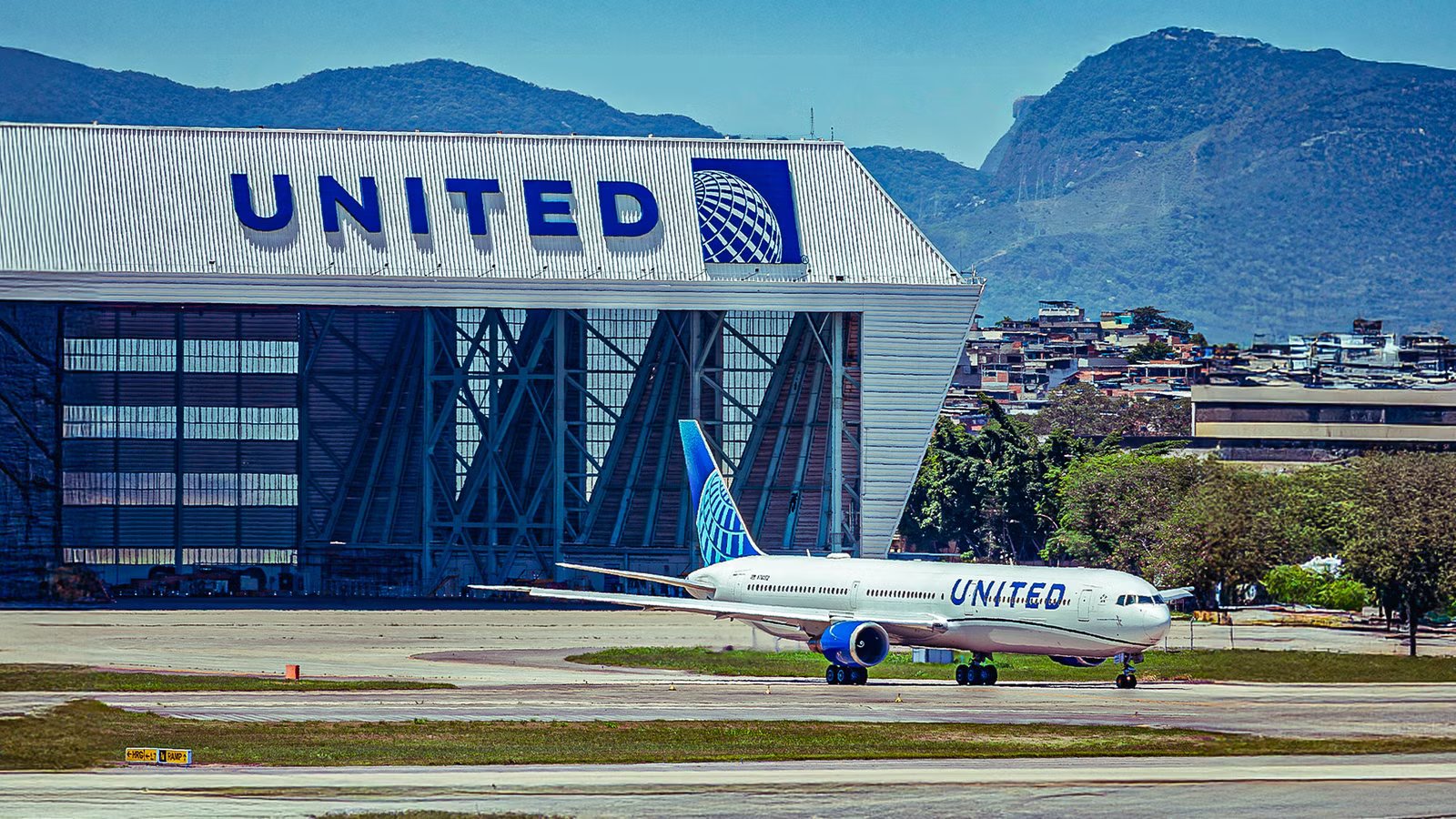
In a dramatic case of dangerous airfield operations at  Newark Liberty International Airport (EWR),
  United Airlines Flight 169 struck a light pole as well as a truck crossing the New Jersey Turnpike. Initial reports indicate that the driver of the truck, Warren Boardley, was fortunate to sustain only minor injuries from the nearly catastrophic accident.
There were reportedly zero injuries aboard the widebody Boeing 767-400ER that was carrying 221 passengers as well as 10 crew members. United has removed the flight crew from service pending a rigorous safety review after the alarmingly dangerous landing.
A Rough Landing In New Jersey For United 169

The Boeing 767-400 was on final approach from Venice International (VCE) when its landing gear collided with the Schmidt Bakery truck driving under its flight path, as shown in the dash cam video from Breaking911 on X. The Federal Aviation Administration and the National Transportation Safety Board have both launched investigations into why the aircraft was flying low enough to strike two objects so close to the ground.
Flying debris from the pole strike, and potentially the aircraft’s wheel, were also said to have struck a northbound tractor-trailer. Despite the collision, Flight 169 landed safely and taxied to the gate normally. The plane sustained minor damage and was taken out of service for evaluation.
The truck being driven by Boardley was bound for a New Jersey bakery depot from Baltimore. Publicly available information at this time indicates that his only injuries were from broken glass to the arm and hand. He was treated at a local hospital and later released. ABC7 News reported this statement from United:
“Our maintenance team is evaluating damage to the aircraft and we will investigate how this occurred. We will conduct a rigorous flight safety investigation into the incident and our crew has been removed from service as part of the process.”
Is New York Under Hazardous Airspace?

The three major hubs in and around the New York City area have seen a dangerous spike in ground and air incidents over the last two years. The issues that have caused the increase in mishaps, including fatal accidents, as well as close calls and near misses range from pilot negligence to air traffic control blackouts.
Thankfully, UA169 did not result in any fatalities or serious life-threatening injuries to anyone involved in the mishap. However, this accident comes just over a month after Air Canada Express Flight 8646 collided with a fire truck at LaGuardia Airport (LGA) just after touchdown, killing both pilots. Again, just two weeks ago, there was a close call recorded at John F Kennedy International Airport (JFK) between an American Airlines jet and another AC Express aircraft performing parallel landings.
Newark experienced one of the most high-profile ATC breakdowns in the recent history last year. A series of total communication shutdowns in Spring of 2025 and the disruption caused a massive number of delays and canceled flights. The Secretary of Transportation and other lawmakers became involved to resolve the crisis.
While flying remains the safest way to travel in the world, the FAA and airport authorities later assigned the blame for this chain of events to aging technology and neglected telecommunication infrastructure. New York is currently experiencing what could be described as a ‘perfect storm’ of staffing shortages in control towers compounded by aging ground equipment.
Keeping America’s Skies Safe: Finding The Root Cause

Investigators from the NTSB and FAA have previously determined during the investigation of other mishaps that a critical shortage of controllers has led to overwork and fatigue, which experts worry is making the system more vulnerable. A nationwide shortage of roughly 3,000 controllers has led to grueling workloads and high call-out rates.
In the case of AC8646, investigators have already determined that the Airport Surface Detection Equipment, Model X, which is designed to track aircraft and ground vehicles and warn of potential conflicts, never generated a visual or audible alarm. It was also found that a number of the vehicles in the emergency convoy at the time, including the truck that was hit by the regional jet, did not even have a transponder compatible with the system.
It is still true that there is very little danger of a crash occurring on a commercial flight to or from New York City. One very real problem, however, is the impact that systemic issues have had on timeliness. There are much longer security lines today than in the past, often exceeding two or three hours, and there’s a very real possibility of flight schedule reduction at Newark, JFK, or LaGuardia if Federal Aviation authorities determine it is unsafe to operate at full capacity.