dailynewsnblog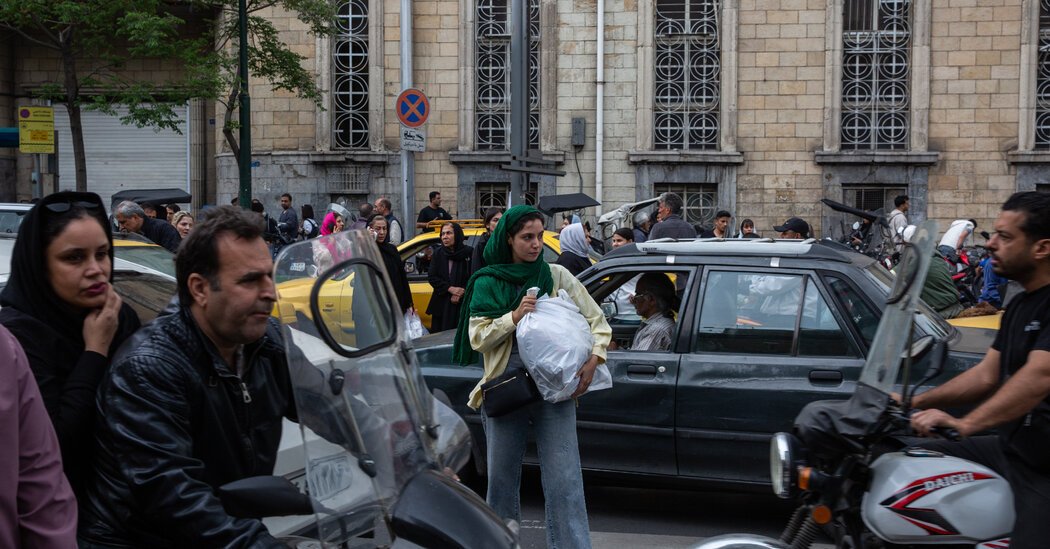
In the days before proposed talks aimed at ending the war between them, President Trump and Iran’s leaders exchanged a barrage of threats and insults that played out like a high-stakes game of chicken.
In the end — at least, from Iran’s perspective — Mr. Trump blinked first.
Late on Tuesday, with neither Iranian nor American mediators having traveled to Pakistan for a second round of peace talks, Mr. Trump announced an indefinite cease-fire with Iran. He said it was to give Iran’s leadership time to submit a response to American demands and would last until “discussions are concluded, one way or the other.”
For Iranian leaders, that result will most likely validate their conviction that their readiness to endure the pain of the war is higher than Mr. Trump’s.
Despite the vast destruction caused by U.S.-Israeli strikes on their country, they believe that they can withstand the increasingly costly U.S. blockade of Iranian ports longer than Mr. Trump is willing to countenance Iran’s effective closure of the vital Strait of Hormuz.
“The Iranians measure the timeline in months for themselves, and in weeks for the Trump administration and the global economy,” said Ali Vaez, the Iran project director for the International Crisis Group. “They think Trump can’t tolerate the strait remaining closed for another three weeks.”
Since the war began, Iran has been blocking most of the shipping traffic that previously moved about one-fifth of the world’s oil and a substantial amount of natural gas supplies through the strait. The impact was felt around the world, not just in rising oil prices, but in fertilizer and gas shortages. Rising gas prices in the United States also create a domestic problem for Mr. Trump in a crucial midterm election year.
After a first round of talks between Iranian and American negotiators in Islamabad, Pakistan, ended without results, Mr. Trump imposed a retaliatory U.S. naval blockade to try to prevent vessels heading to or from Iran, blocking their ability to continue the oil exports that underpin their economy.
The reasons for the collapse of the talks remain unclear. Mr. Trump has blamed it on a “seriously fractured” Iranian leadership, unable to agree on its position before negotiations. Iranian officials argue that it is because Mr. Trump had refused to lift the U.S. blockade before talks, with American forces also seizing an Iranian-flagged ship over the weekend.
“Blockading Iranian ports is an act of war and thus a violation of the ceasefire,” Iran’s foreign minister, Abbas Araghchi, wrote on social media late on Tuesday, as it became apparent that no one was heading to Islamabad. “Striking a commercial vessel and taking its crew hostage is an even greater violation,” he continued. “Iran knows how to neutralize restrictions, how to defend its interests, and how to resist bullying.”
Throughout the war, Iran has used mocking memes and videos to try to convey superiority and indifference in the face of Mr. Trumps threats. Early on Wednesday in Iran, after Mr. Trump said the cease-fire would be extended, many Iranian semiofficial news sites posted the same mock video of an angry Mr. Trump, threatening to bomb Iran, and his American mediators sitting in an empty negotiating room. The Iranian counterparts, who never arrive, instead deliver a piece of paper that reads: “Trump, shut up.”
Abdolrasool Divsallar, an Iran expert at the Catholic University of Milan, said the major impediment to negotiations restarting was the same as it was before talks began — both countries see themselves as having the advantage and being able to dictate terms.
“The Iran side views their ability to prevent the U.S. operation from achieving its objectives as a victory,” he said. “They assume the Trump administration may not have any other good alternatives and that time will favor them if they hold on in this status quo.”
While Iran’s leadership may be able to survive the standoff with Washington, its economy may not, analysts warn. Iran’s economy was already in deep crisis before the war, causing suffering that set off a huge nationwide protest movement in January that was crushed in a deadly crackdown.
Even if Iran’s leaders can push through the economic pain, it will come at a huge cost to its people. On social media, Iranians post daily about immense job layoffs, and about fears over medicine and plastic shortages after U.S.-Israeli strikes hit critical infrastructure.
“The Iranian regime only cares about its survival, not about its people suffering, and it does still see this as an existential battle with the United States,” said Mr. Vaez of the International Crisis Group. “And that’s why it’s not going to blink, regardless of how much the Iranian people suffer.”
Sanam Mahoozi contributed reporting