dailynewsnblog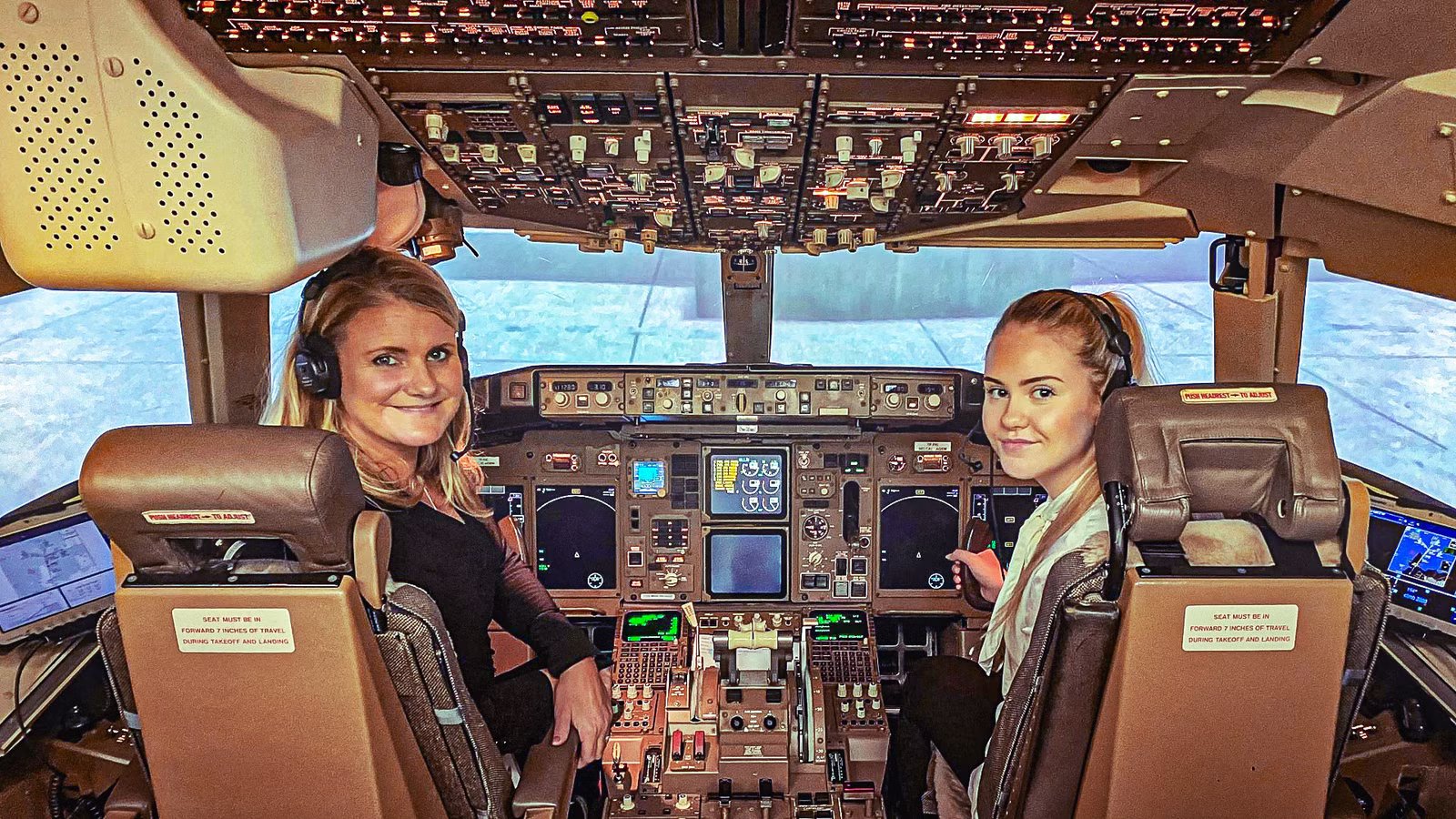
Linda Gunnarsdóttir is the chief pilot at Icelandair and leads a team of approximately 620 pilots. Female pilots make up 14% of the carrier’s flight crew, which is one of the highest percentages among major airlines. In recent years, her daughter, Birna Katrin Gunnlaugsdóttir, joined the team and is piloting a Dash 8. It had been a dream of hers for a long time and was inspired by her mother. Linda’s father, Gunnar Þorvaldsson, was a pilot too, and she dreamed of following in his footsteps, but did not feel like it was an option.
Finding A Role Model

Linda and her team encourage women to strive to meet their goals. Simple Flying interviewed Linda, and this is the advice she shared with us.
She admits that her biggest challenge regarding her professional career was to overcome the thought that women didn’t become pilots. Female role models were also very lacking.
When Linda was pursuing her career as a pilot, she understood the importance of such role models. Indeed, Icelandair’s first female pilot was Sigríður Einarsdóttir, who retired after a 38-year career in 2022. Linda flew to Akureyri one day and Sigríður was flying that day. Seeing her made her realize that her dream was still possible. For Sigríður’s final flight, several female pilots at Icelandair formed a guard of honor.
“When I was traveling one day and saw a female in the cockpit of a domestic flight here in Iceland, who was actually the first woman to join Icelandair, I realized this was something I could pursue as a career.”
Linda was hired by Icelandair in 1996 and at that time, there were only three female pilots in the company. She was the fourth female pilot at the airline. A report from 2018 showed that Iceland is the most gender-equal country to date and is committed to fully closing the gender gap. The ratio of female pilots on their team is more than double the average of most commercial airlines.
Leadership And Breaking Stereotypes

Leadership can be difficult, especially in aviation, where the industry is dynamic and constantly changing. A chief pilot’s duties include managing the organization’s flight operations, overseeing pilots, scheduling, training, safety, and compliance with aviation regulations. The role acts as a link between the flight crew, the management team, and the authorities. It is a strategic leadership position in the airlines, ensuring safe, efficient, and compliant flights.
Linda says that: “To be a good leader, you have to be surrounded by a good team.” Aviation runs on good communication and teamwork, and that is critical for safe and efficient flights. She also shares that “To be a good leader, you don’t put people around you who think like you. You put people around you who don’t think like you, because that gives you the synergy you need in a team.” As chief pilot, Linda was leading a team of 580 pilots last year, enough, she says, to be a small village in Iceland. Today, she leads 620 pilots at Icelandair.
“Leadership is not about being the most intelligent one or always having the best ideas. It’s about leading a group of people who can bring something to the team.”
There are many stereotypes in aviation, and although many of them have changed over the years, there can still be issues. The pilot role is still predominantly male and the cabin crew role is still predominantly female, although much has improved over the last fifty years. FAA Aeronautical Center statistics from 2024 show that of all 848,770 pilots in the US, only 91,694 were female, a ratio of 10.8%. Icelandair in 1999, on Women’s Rights Day, operated a flight with an all-female crew for the first time. Two years later, they reversed roles, and a flight took off, with a female flight crew and an all-male cabin crew.
“I understand much better what diversity means and what it brings to a team. It’s not about gender or color – it’s much more about diversity in opinions. Very often your background and who you are is what creates that diversity.”

Alaska Airlines Has Operated Its 1st Flight With A Mother-Son Pilot Team
The mom-son duo flew from Seattle to Kahului, Maui.
Challenges As A Woman In The Cockpit

According to the Journal of Air Transport Management, challenges for women in the cockpit include gender discrimination and prejudice from colleagues. There is sometimes training bias, where females do not get as much support as males, therefore hindering career progression. There are unequal opportunities, and in management positions, females are more intensively observed.
The work-life balance can be difficult too, due to a lack of part-time options and expectations of family members. Career breaks and unpaid leave often have to be used. The financial burden of training can cause issues as well as opposition from family, in a very male-dominated role.
How did Linda deal with this? She said that after she started working as a pilot, it took her some time to understand that she could be herself. She believed that she needed to fit in with the male pilots, dressing more masculine, not using cosmetics and trying to look the same. Later, she realized that this was not necessary and that was when she was noticed more.
“At first, I thought I needed to fit in with the guys – dress like a man, not use makeup, try to be the same image as they were. That didn’t change anything. It took me time to understand it was much better for me just to be myself, and that’s probably when I got recognized by the group.”
Her Journey Into Aviation

Growing up in an aviation family, Linda learned at an early age that aviation is an exciting and challenging field to work in. She traveled all over the world with him and learned a lot about life’s experiences. Later, she would once again follow in his footsteps to not only become a pilot, but to become a chief pilot and part of the management team.
“My father brought us all around the world with him, so at a very early, age I got to experience things that other children in my class were not able to do. He was a pilot and also part of the management team of an airline in Iceland, later co-founding another airline and even introducing the first Airbus into service in the country.”
She pursued her dream of a career as a professional pilot. Linda attained her pilot license in 1993, having studied both in Arizona and in Iceland. She began her career flying domestic and regional routes for Islandsflug, operating aircraft such as the Beechcraft 99, Dornier 228, and Fairchild Metro. Linda eventually moved to Icelandair, where she initially flew the Fokker 50 and Boeing 737-300/400.
In 2005, she became a captain on the Boeing 757/767 and has since held instructor and examiner roles for these aircraft. Alongside her aviation career, she holds a bachelor’s degree in business administration from the University of Reykjavík. Outside of her professional life, Linda is a proud mother of three and enjoys traveling with her family both locally and around the world. At the Global Aviation Summit in 2018, she said, “I never regretted the path I took.”

How A Single Flight Changed The Course Of My Life Forever: Introducing Captain Chris
From delivering newspapers to captaining long-haul flights, this pilot’s journey is one of perseverance. How did he overcome the odds?
Like Mother, Like Daughter

Birna Katrin Gunnlaugsdóttir knew at the age of five that she wanted to become a pilot, just like her mother. At kindergarten one day, she made a business card with her name on it, and it said she was a pilot. Linda says that Birna decided this on her own and how she was going to achieve her degree.
“I actually tried to keep my daughter out of this business, but she was very determined that this was going to be her line of work.”
On motherhood, sacrifices made and perspective, Linda reflects that she was not able to be the same mother as most of Birna’s friends had, who were always home when they came back from school. Instead, Birna got the opportunity to spend a lot of time with her dad. She said, “Sometimes, when mothers are not able to be there all the time, it creates opportunities for fathers to get closer to their children.”
Birna flies the Dash 8 on domestic and regional flights. Icelandair is one of the few airlines in the world to have a mother and daughter duo. With Linda’s father also being a pilot, Birna is the third generation of the family to take to the skies.
Further Advice

Linda says that she is lucky to be in Iceland and have the chance to pursue her career as a pilot, whereas in nearby countries, you see women getting fired when they get pregnant. She says that there have been improvements and positive developments as regards female pilots. She and her team actively encourage women to pursue a career as a pilot and it is refreshing to see both Linda and Birna in the cockpit, pursuing their dreams.
“We try to provide this job as a good opportunity for females as well as males. Let’s inspire young girls with stories of successful women in aviation and give them a chance to get the enthusiasm needed to build a career in aviation.”
She also advises that: “You should not start a career in aviation if you are not genuinely interested in aviation and you are aware of all the hours you have to spend away from your family, all the hours you have to spend at work when everybody else is not working, like at Christmas or during the night. But if you are genuinely interested in this career, nothing should stop you.”
Not a truer word said. Indeed, aviation doesn’t stop, and that is one of the many challenges that face those working in the aviation industry. But it is also true that many people in aviation do have a passion for it and a genuine interest and will always try and further progress in their careers. It is not for everyone, and it takes serious commitment (and finances) to become a pilot, but as this interview shows, if you have that dream, it is certainly possible.