dailynewsnblog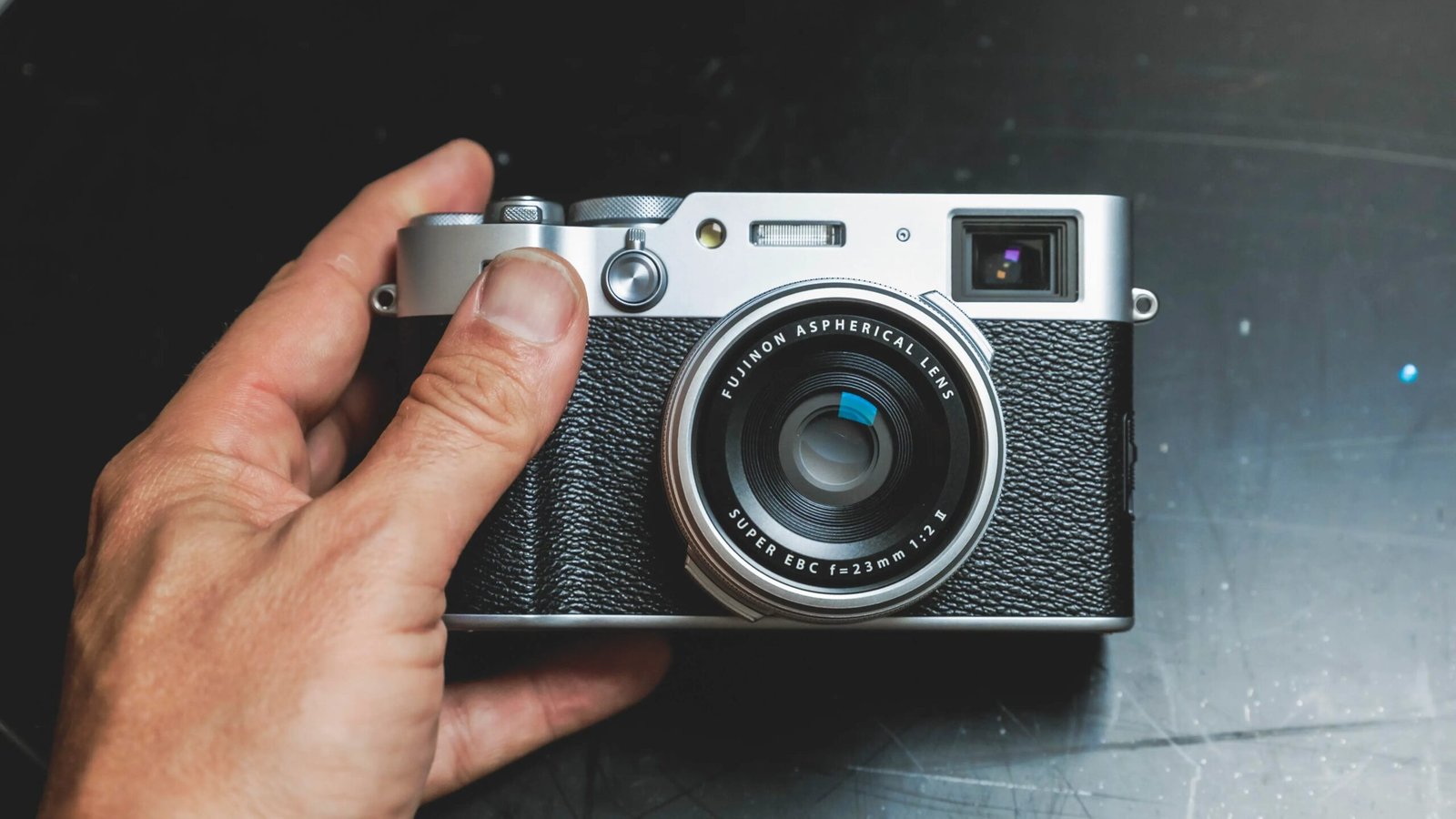
When I first raised the viewfinder to my eye, I didn’t realize that once I started taking photos, I wouldn’t want to stop.
The cinematic gold recipe that I’d preprogrammed into the Fujifilm X100VI lent a distinct radiance to my shots of the scene before me. The tubular mountains of Zhangjiajie Forest Park, which inspired the landscapes of the Avatar movies, glowed in the early morning light on my camera screen. Not only did the X100VI capture the majesty of the view, it also created an ethereal, vintage effect that celebrated the forest’s warmth and timeless beauty.

As someone who’s almost exclusively used a phone to take photos for well over a decade, I found this camera a revelation. The excitement I used to have about not just capturing a scene as a record of having been there, but creating an image as a piece of art came rushing back. Because I’m not new to photography as an art form, just distinctly out of practice.
I got my first camera – a Sony Cybershot, exact model forgotten – for my 16th birthday, ahead of a school trip to Russia (it was Europe in the early ’00s – a different time). The photos I captured with it largely ended up on pre-Facebook-era social media. A second, pink Sony Cybershot DSC-W610 followed. It was small enough to fit in a clutch bag on my university nights out, and I used it to document the good, the bad and the ugly – this time for Facebook-era social media.
It was only when I was running a semi-successful travel blog in the early 2010s that I started to take photography seriously. I started out using a Panasonic Lumix GF1, graduating to an Olympus OM-D E-M10 System camera. It was fun and I enjoyed the artistic challenge of taking photos, but in all honesty, I never loved the technical post-processing element that came with shooting in raw on this kit. Sitting down at my laptop to edit in Lightroom – software that I never had full mastery of anyway – felt too much like work.
Around the same time, phone cameras were becoming exponentially better – and as a tech journalist, I always had access to the best. As I stopped blogging about travel and once again started to take photographs primarily for social media and my own memories, I also stopped taking my camera out of my bag.
Eventually, I just started to leave the camera at home. Why bother when I had an iPhone that was so much lighter and more compact, and took beautiful photos that I could upload straight to social media without the rigmarole of exporting them to my laptop and then to my phone?
I discovered mobile editing software – Snapseed and Darkroom in particular – and found it infinitely quicker and easier to use than Lightroom. It gave me all the control I needed to make speedy tweaks to shots for a little zhuzhing up on the fly.
A popular camera, for all the right reasons
It was CNET Editor at Large — and professional photographer — Andrew Lanxon who suggested that, while on my recent trip to China to cover the Honor Robot Phone launch, I might get the most out of my time by taking a camera with me. And not just any camera, but a camera beloved by many CNET writers and TikTok creators, who post both photos and recipes, alike: the Fujifilm X100VI.

As soon as I took that first shot of the Avatar mountains, I knew he was right. Over the next week in Zhangjiajie and the megacity of Chongqing, I took around 1,000 photos on the camera. This time, it was my phone that languished at the bottom of my bag.

Perhaps the most fun part of it was playing with the camera’s built-in film simulations and the “recipes” I’d added – presets that let me shoot different scenes with different looks. All of these simulations and recipes gave my photos their own distinct aura, usually with a slight graininess that made them look as though they’d been shot on rolls of film.

Finding the right look for each shot slowed me down in a good way. It forced me to be intentional about the aspect of the scene I wanted to focus on and the mood I most wanted to evoke. I loved being able to do this in-camera and be in the moment, rather than coming back to it later in Lightroom.
The X100VI is popular among street photographers, a genre I hadn’t dabbled in before. The combination of the camera and the street scenes of Chongqing and most people’s comfort with being photographed, however, made me want to experiment, and I found the in-built Classic Negative film simulation to be the perfect look for this kind of photography.
Once upon a time, I wanted as few random people in my holiday snaps as possible. Now I started to feel that my best photos included human figures – bringing places to life in more of a documentary style. It felt like I was capturing the soul of a living, breathing city.

The thrill of the challenge
I expected the fixed 35-millimeter focal length to be limiting in the shots I wanted to take, but I was surprised at how much more fun it added to the process. The phones I’ve shot on over the past few years have all had two, if not three, cameras, which offer all of the focal lengths I could possibly need (and more) all in one device.
The X100VI didn’t offer that flexibility, but this actually made it more fun to experiment with. No matter the scope of the scene in front of me, I would need to look through the same-sized window every time and find the photo within it.

On rare occasions — when I found myself standing at the base of Zhangjiajie’s towering pillars and Chongqing’s skyscrapers, for example — the X100VI simply wasn’t the right camera for the job. There was no hope of capturing everything in a single image. But in most situations, it challenged me to consider my framing, my own positioning and my reason for wanting to take each and every photo.

By the end of my trip, I felt my photography had improved, and I was actively chasing the rush of capturing a shot I could be proud of and excited to share with those back home. But in spite of that progress, I still have so much to learn about the X100VI.

I still haven’t mastered the knack of taking photos with it at night. Chongqing is nicknamed “the cyberpunk city” due to its multilayered, neon cityscape, and I only managed to grab a few nighttime shots that I actually like. Some of my best efforts, I later noticed, were out of focus. Maybe this is a limitation of the camera’s low-light autofocus, or perhaps my own inexperience (more likely a combination of the two), but it showed me I still had some learning to do.

Unfortunately, my steep learning curve has hit a ceiling for now, as the X100VI I have on loan from Fujifilm is due to be returned imminently – a shame given the trips to Berlin and Hawaii I have coming up next month, both of which are rich pickings for keen photographers. But much like Geoffrey Morrison, who reviewed the camera for CNET two years ago, I’m now hoping to buy my own for $1,800 as soon as possible.

One snag could be that this perennially popular piece of kit is frequently sold out. But I can be patient; the Fujifilm X100VI has rekindled a passion for photography that I’d forgotten about. I’m not about to let that flame dwindle again.

Editors’ note: Katie Collins’ travel costs for the Honor event were covered by Honor. The judgments and opinions of CNET are our own.

See full bio