dailynewsnblog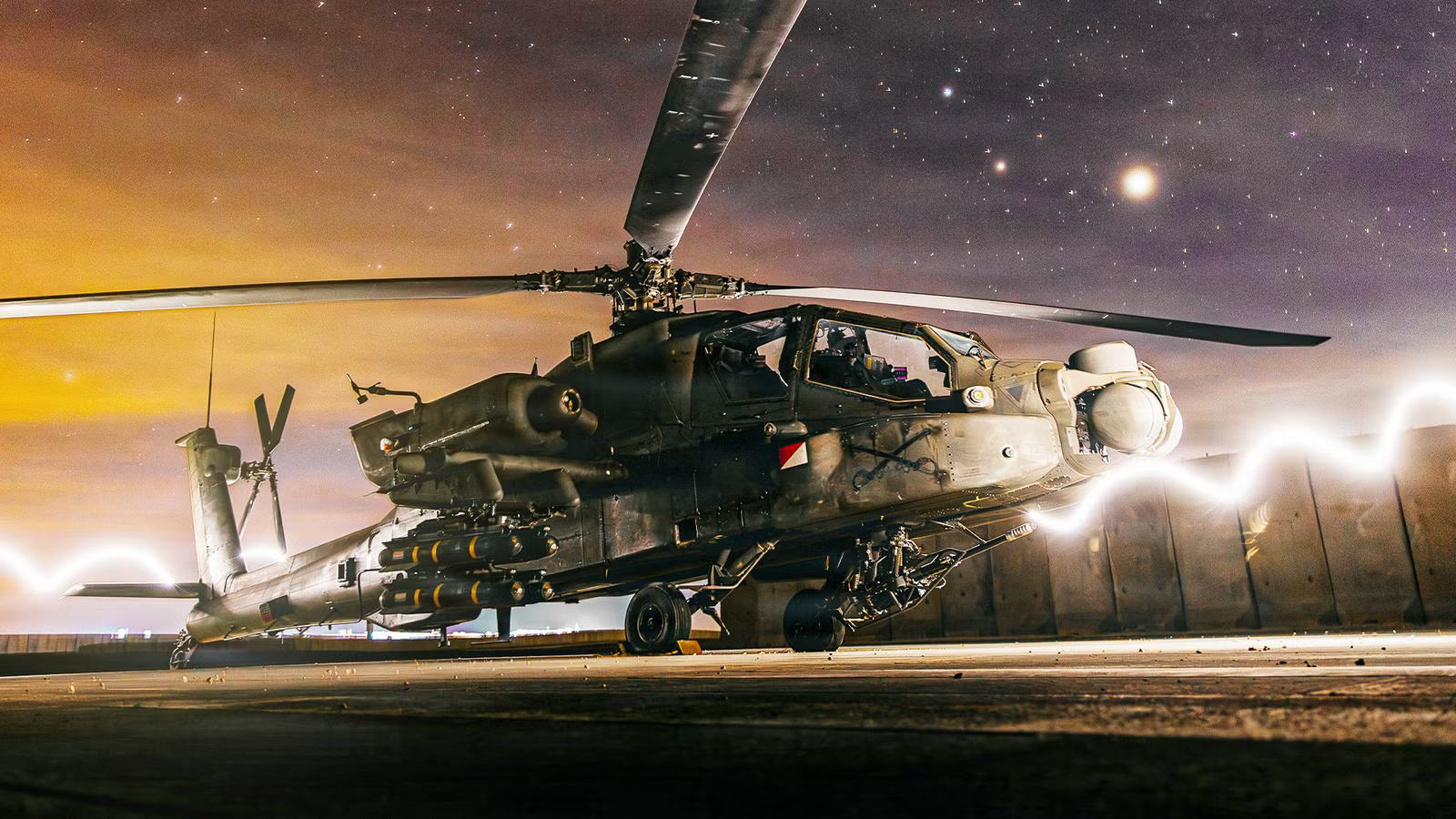
In the spring of 1978, the United States Air Force set out to prove something it already believed: that a modern jet fighter could sweep an enemy attack helicopter out of the sky without much of a fight. Eighteen months and six test phases later, the results said the opposite. At close range, fighting with guns, attack helicopters shot down fighter jets at a rate of five to one, and more than one fighter pilot landed back at base having no idea he had ever been “killed.” The program responsible for that reversal has a name almost nobody outside the defense community recognizes today: J-CATCH.
Reading this article, you will follow J-CATCH from its origins and early simulator trials through the live engagements that pitted attack helicopters against McDonnell Douglas F-4 Phantom II, Ling-Temco-Vought A-7 Corsair, Fairchild A-10 Warthog, and McDonnell Douglas F-15 Eagle, and discover why the exercise produced results nobody expected.
The Helicopter NATO Didn’t Fully Understand

By the mid-1970s, Soviet Frontal Aviation had fielded the Mil Mi-24A, the original production Hind-A, and Western intelligence did not quite know what to make of it. Nothing in NATO’s inventory combined its armor, speed, and ability to carry up to eight fully equipped troops into battle, all while fighting like a flying tank once it arrived.
The Hind-A’s glazed “greenhouse” cockpit sat over a manually aimed 12.7 mm machine gun, and its stub wings could carry 57 mm S-5 rocket pods or AT-2 Swatter anti-tank missiles, all mounted on an airframe that could push past 205 knots (380 km/h), faster than most attack helicopters of the era, and protected by armor plating that let it shrug off rifle and machine-gun fire that would have gone straight through a Huey or a Cobra, according to a specifications breakdown published by Military Factory. That combination was unfamiliar, and unfamiliar, in Cold War terms, meant frightening: a single airframe that could outfly a Western troop transport, out-fight a Western gunship, and shrug off the kind of small-arms fire that would down either one, all at the same time, appearing in growing numbers along the inner German border with no Western equivalent to measure it against.
The type did not stay still for long, either. Within a few years, the tandem-cockpit Mi-24D, or Hind-D, replaced the Hind-A’s nose gun with a turret with a four-barrel 12.7 mm Yak-B Gatling gun and became the definitive silhouette of Warsaw Pact helicopter aviation, while the Mi-24V, or Hind-E, later added the longer-ranged AT-6 Spiral anti-tank missile. NATO planners in 1978 were not just trying to counter one helicopter. They were trying to counter one that kept getting harder to fight.
That uncertainty is what actually triggered J-CATCH. According to We Are The Mighty’s account of the program’s origins, it was the Hind’s sudden arrival in Warsaw Pact service, not a routine training requirement, that pushed the Army and Air Force to finally test an assumption both services had been repeating for years without evidence: that Western air superiority alone would keep Soviet gunships pinned to the ground before they ever got close to friendly lines.
Nobody had actually tested, in a live exercise, whether a fast jet fighter could reliably find, chase down, and kill a helicopter flying low and fast through broken terrain, rather than simply assuming it, the way most Cold War planning documents did on both sides of the Iron Curtain. The fear the Hind had generated was about to be tested against the aircraft NATO had always assumed would erase it.
Building An Enemy Trained To Fight, Not Flee

The US Army and Air Force ran J-CATCH across six phases, opening with simulator trials at NASA’s Langley Research Center in Virginia in May 1978, according to a contemporaneous account published in TAC Attack. The simulator data then fed into live flying at Fort Rucker, Alabama, home to the 20th Special Operations Squadron, nicknamed the Green Hornets, whose lineage as a unit gave the program aircrews already comfortable operating low, fast, and unseen.
Fort Rucker’s Red Force flew six Bell UH-1N Twin Hueys and Sikorsky CH-3E helicopters, armed with 7.62 mm machine guns and unguided rocket pods, standing in for the Hind. Facing them on the Blue Side were three Bell AH-1S Cobras and two Bell OH-58A Scouts, giving the exercise a mixed helicopter-versus-helicopter opening act before a single fighter jet ever showed up to test the Pentagon’s central assumption about air superiority over the battlefield.
Crucially, the Green Hornets crews were briefed on Warsaw Pact air-to-air tactics drawn from real intelligence sources and trained to navigate as low as 25 feet (7.6 meters) above the ground, hugging terrain the way an actual Hind crew would rather than flying a predictable, easily tracked pattern, according to The Aviation Geek Club’s account of the program. This was a Red Force built to fight, not to run, a detail that would matter enormously once the fighters finally arrived for Phase III, the part of J-CATCH the entire program had really been designed around.
Four very different fighters, each given roughly a week of engagements, were about to find out whether the aircraft type NATO feared most on paper, flown by crews trained to fight rather than flee, was really the easy kill everyone in the program had assumed it would be, a question SlashGear’s overview of the exercise frames as the moment J-CATCH stopped being theoretical.
The Scoreboard Nobody In The Pentagon Expected

When the F-4s, A-7s, A-10s, and F-15s rotated through Phase III, the result inverted the premise on which the entire program had been built. At close range in gun battles, the attack helicopters achieved a five-to-one kill ratio against the fighters, and fighter pilots repeatedly returned to base unaware they had ever been engaged. A program designed to prove fighters could dominate attack helicopters had instead demonstrated the opposite, in front of exactly the officers who most needed convincing that low-altitude combat was not a fighter pilot’s natural habitat.
The physics behind that scoreline are close cousins of the physics that still shape debates over why the US Air Force leans so heavily on stealth technology today, as covered by Simple Flying: a fast-moving jet’s radar struggles to pick a slow, low helicopter out of ground clutter, and a pilot scanning the horizon at several hundred miles an hour has only a split second to spot a Hind-sized target hovering against a tree line, according to The National Interest’s analysis of fighter-versus-helicopter engagements. Low-altitude survivability, not raw speed or altitude, decided who actually won these fights.
That imbalance between a fighter’s natural strengths and a helicopter’s ability to hide forced the Air Force to confront an uncomfortable question: if speed and altitude weren’t winning the fight, what would the new doctrine actually tell a fighter pilot to do differently the next time he faced a low-flying helicopter?
The Doctrine That Flipped Overnight

J-CATCH’s official conclusions ran directly against what the program had originally set out to prove. Rather than validating fighters as the answer to Soviet attack helicopters, the exercise produced doctrine instructing Air Force pilots to stay high and stay away from low-altitude, close-range engagements with helicopters, since that low-level environment was precisely where a fighter’s usual advantages in speed, altitude, and missile range disappeared against a target that could hide, hover, and wait for the fighter to come to it.
The Army’s own attack-helicopter doctrine, later codified in Field Manual 1-112, formalized the terrain-flight and nap-of-the-earth technique the Green Hornets crews had already used to beat the fighters at Fort Rucker. Years later, as mentioned by Simple Flying, aircraft like the F-15 Eagle that flew in J-CATCH’s Phase III are still flying combat air patrols today partly because that same logic, trading a low-level knife fight for altitude and stand-off range, remains central to how the US Air Force decides when, and when not, to engage a low-flying threat.
That doctrine only mattered if it survived past the paperwork stage. The next question was whether the US Army would actually build the lesson into hardware, not just circulate it as a memo fighter pilots were expected to remember under fire.
How Fort Rucker’s Lesson Got Built Into The Next Attack Helicopter

Nap-of-the-earth flight works because it exploits a hard physical limit rather than a training preference. A pulse-Doppler radar separates a moving target from the ground by measuring the difference between the target’s velocity and the surrounding terrain’s radar return, and a helicopter flying within about 25 feet (7.6 meters) of that terrain, weaving through the same ridgelines and tree lines the radar is already bouncing off, produces a return that is difficult to distinguish from ground clutter. A pilot’s eye has the same problem: a helicopter parked against a tree line at that altitude occupies only a split second of a scan that is sweeping a much larger sky. Fighting close to the ground does not just hide a helicopter physically. It hides it from the two detection methods a fighter actually has.
That principle, improvised by Green Hornets crews in 1978, was designed directly into the aircraft that replaced the AH-1S Cobra. The Army’s AH-64 Apache, which entered service in 1986, was built around a mast-mounted Target Acquisition Designation Sight and Pilot Night Vision Sensor that let the crew keep the airframe behind a ridgeline or tree line and expose only the sensor mast long enough to find and lock a target, then drop back down before a threat could return fire, turning the pop-up-and-hide tactics the Green Hornets crews improvised at Fort Rucker into a standard engagement procedure rather than a pilot’s individual judgment call.
Institutionalizing a helicopter’s ability to hide answered the question J-CATCH raised in 1979. It did not answer a newer one: what happens when the low, slow, hard-to-detect threat hiding in the terrain is no longer a helicopter at all, but something far cheaper that nobody has to train to fly?
What The Warthog’s Second Career Says About J-CATCH’s Legacy

The gap J-CATCH exposed in 1979, fast jets struggling against low, slow, hard-to-detect threats, is the same gap the US military is now trying to close against a very different adversary: cheap, propeller-driven attack drones flying at treetop level over the Middle East and Ukraine, exploiting the same terrain-masking logic the Green Hornets used against F-15s and A-10s nearly fifty years earlier. Defense Statecraft’s retrospective on the program makes a similar point: the airframes have changed almost completely since 1979, but the underlying tactical problem, a fast platform trying to find and kill something small, slow, and low, has not.
One of the very aircraft types that flew in J-CATCH’s Phase III has ended up back on that low, slow battlefield. As covered by Simple Flying, the A-10 Thunderbolt II’s loiter time and low-altitude handling have made it a surprisingly effective drone hunter, a role credited with pushing back its planned retirement from 2026 to 2030 as it takes on exactly the kind of target its fighter contemporaries were built to avoid engaging up close back in 1979.
J-CATCH never set out to prove that helicopters could beat fighters. It set out to prove they couldn’t, and the doctrine written in its aftermath still shapes how the US Air Force decides when to fight low, and when to stay well out of reach. Fifty years on, the fear the Hind once inspired is still, quietly, writing the rules for the wars everyone is watching now.