dailynewsnblog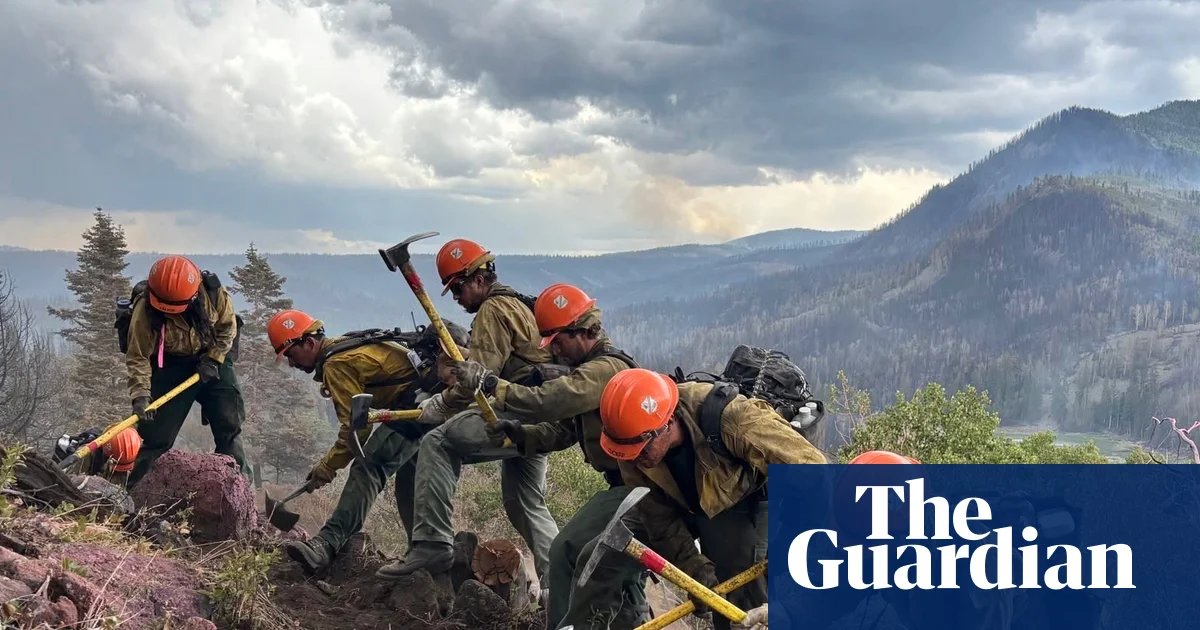
Three firefighters were killed and two others were hurt while responding to wildfires along the Colorado-Utah border, the US Wildland Fire Service announced on Sunday.
The agency, which was established in January to coordinate wildfire suppression and prevention efforts across public lands, said the firefighters were involved in a joint response to the Knowles and Gore fires on Saturday.
“The US Wildland Fire Service stands united with the USDA Forest Service in grief and in our unwavering support for the loved ones left behind,” it said in a statement on Facebook. “Their bravery, dedication, and sacrifice will never be forgotten.”
Wildfire activity has continued to increase across the western US after several days of hot, dry and windy weather fueled fires in Utah, Arizona and other parts of the region while additional blazes ignited.
In Utah, hundreds of firefighters have been working to contain a wildfire that by Saturday had expanded another more than 20,000 acres (8,000 hectares). State officials said low humidity and strong winds contributed to the rapid growth of the fire.
The Cottonwood fire began on Monday in Fishlake national forest in central Utah. According to the US Forest Service, it grew overnight from about 70,000 acres to more than 92,000 acres by Saturday morning. The National Interagency Fire Center at the time said the fire remained 0% contained and was the largest active wildfire in the US.
Officials in Beaver county started working with firefighting teams on Saturday to evaluate the damage, although no estimates were immediately available.
Additional firefighters have been deployed to the dry state to combat both newly ignited fires and existing blazes that have continued to spread because of what forecasters described as critical fire weather – including extremely low humidity, high temperatures and strong winds.
Nearly 3m acres have burned across the country since the beginning of the year, exceeding the 10-year average. Utah has been facing an even greater wildfire threat during the year due to its record-low snowpack and the warmest winter ever recorded.
Earlier in the week, Spencer Cox, the Utah governor, declared a state of emergency because of the severe fire conditions and authorized a statewide fireworks ban ahead of the Fourth of July holiday. The emergency declaration comes as Utah experiences one of its most severe wildfire seasons in recent history, driven by historic drought.
Colorado’s governor, Jared Polis, also declared a state of emergency on Saturday and approved the deployment of the national guard to assist with firefighting efforts.
In recent days, the National Weather Service has issued red flag warnings across a broad section of the west, including California, Arizona and New Mexico.
Power shutoffs have become increasingly common throughout the US west as wildfire danger has grown. Utilities typically use them only as a last resort after evaluating conditions such as sustained winds, wind gusts, available vegetation and terrain.
With extreme wildfire conditions continuing in Utah, Rocky Mountain Power shut off electrical lines serving Beaver county and surrounding areas.
As this summer could become the hottest on record, wildfires continue to pose a growing challenge.
Areas across the American Great Plains that are typically green by mid-spring instead experienced fire rather than rainfall this season, leaving more than 1m acres scorched and barren.
Outbreaks of extreme weather – including conditions that are ripe for wildfires – are symptomatic of the world’s ongoing climate crisis, which is primarily driven by carbon emissions from the burning of fossil fuels.
The Associated Press contributed reporting


![American Airlines Unveils New 9.5-Hour Nonstop Airbus A321XLR Flights [Map]](https://dailynewsnblog.com/wp-content/uploads/2026/08/american_airlines_a321xlr_1920x1080.png)