dailynewsnblog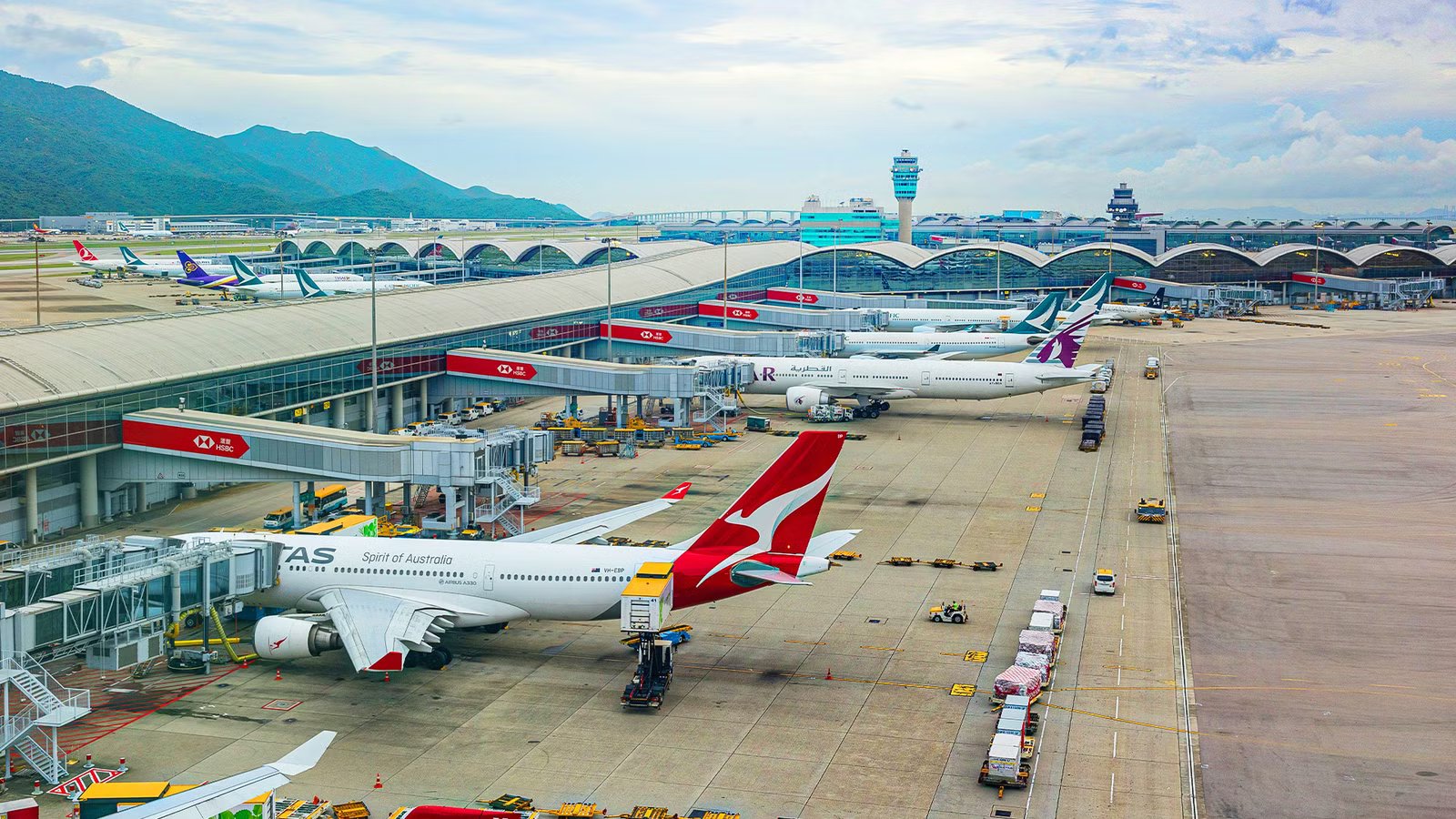
While passenger traffic often dominates aviation headlines, the global air cargo industry remains one of the most important components of modern air transport. Every day, millions of packages, industrial components, pharmaceuticals, electronics, and perishable goods are transported by air across continents. This allows businesses to maintain increasingly complex supply chains and consumers to receive products faster than ever before.
Behind this vast logistics network are a handful of airports that have established themselves as the world’s leading cargo gateways, handling extraordinary volumes of freight each year. According to the latest Airports Council International world traffic rankings, global air cargo volumes reached nearly 130 million metric tons in 2025.
This reflects strong growth driven by international trade and expanding e-commerce demand. The five busiest cargo airports collectively handled almost 20 million metric tons of freight during the year, highlighting their central role in connecting manufacturing centers, distribution networks, and consumer markets around the globe.
5
Louisville Muhammad Ali International Airport (SDF)
3.15 million tons

Louisville Muhammad Ali International Airport (SDF) ranked as the world’s fifth-busiest cargo airport in 2025 after handling more than 3.15 million metric tons of freight. This airport also recorded one of the strongest growth rates among the world’s top cargo hubs, posting an increase of more than 15% compared with the previous year and moving up one place in the global rankings. The airport’s success is closely linked to its role as the global hub for  UPS Airlines.
The carrier operates its massive Worldport sorting facility at Louisville, which serves as the centerpiece of one of the world’s largest package delivery networks. Every night, hundreds of flights arrive and depart from the airport as shipments are sorted and redistributed to destinations across North America and international markets.
The operation has become one of the most sophisticated logistics systems in the aviation industry, capable of processing hundreds of thousands of packages every hour during peak periods. Louisville’s location also provides a significant strategic advantage, as its position near the center of the eastern US allows UPS Airlines to reach a substantial portion of the country’s population within a relatively short flight time.
This geographic advantage has helped transform Louisville into one of the most important express cargo centers in the world, supporting both domestic deliveries and international freight movements. Over the years, substantial investment in cargo infrastructure has enabled the airport to accommodate growing freight volumes while maintaining high levels of operational efficiency.
Dedicated cargo ramps, advanced sorting technology, and extensive warehouse facilities have all contributed to Louisville’s rise among the world’s leading air cargo hubs. While passenger traffic remains relatively modest compared with major international gateways, the airport’s importance within global logistics far exceeds its role as a passenger facility.

How Much Do Airlines Make From Cargo?
In the post-pandemic world, there is a lot of money to be made from cargo.
4
Ted Stevens Anchorage International Airport (ANC)
3.7 million tons

Handling approximately 3.7 million metric tons of cargo during 2025, Ted Stevens Anchorage International Airport (ANC) retained its position as the fourth-busiest cargo airport in the world. Unlike many of the airports appearing near the top of global rankings, Anchorage’s success is not primarily driven by local economic demand or a large population base. Rather, its strategic geographic location has made it one of the most important cargo transit points in international aviation.
Situated between Asia and North America, Anchorage serves as a natural stopping point for freighter aircraft operating transpacific routes. Cargo airlines routinely use the airport for refueling, crew changes, maintenance activities, and cargo transfers before continuing onward to destinations across the US, Canada, Asia, and beyond. This unique role has allowed Anchorage to become a critical link in global supply chains despite being located in one of the most remote regions of the US.
Today, the facility is a major hub for both UPS Airlines and Fedex Express, with the carriers serving destinations including Seoul Incheon International Airport (ICN) and Singapore Changi Airport (SIN). The airport is particularly attractive to cargo operators because it offers extensive operational flexibility.
Furthermore, freighter aircraft can take advantage of around-the-clock operations, relatively low congestion levels, and infrastructure specifically designed to support high cargo volumes. These characteristics enable airlines to minimize delays and maximize aircraft utilization, both of which are critical considerations within the competitive cargo sector.
Recent changes in global trade flows and airline route planning have further reinforced Anchorage’s importance. As carriers adapt to geopolitical developments, airspace restrictions, and evolving logistics requirements, the airport has continued to provide a valuable intermediate point for cargo services connecting major international markets. Its ability to efficiently handle some of the world’s largest freighter aircraft ensures that Anchorage remains a vital component of global cargo transportation.
Catch what other flight trackers miss
Emergency squawks, holds, NOTAMs — live signals, no signup.
Open tracker
Catch what other flight trackers miss
Emergency squawks, holds, NOTAMs — live signals, no signup.
Open tracker
3
Memphis International Airport (MEM)
3.75 million tons

Memphis International Airport (MEM) ranked third globally in 2025, processing approximately 3.75 million metric tons of cargo during the year. For decades, Memphis has been synonymous with air freight operations, and despite changes in global rankings over time, it remains one of the most influential cargo airports anywhere in the world.
The airport’s cargo dominance is driven primarily by FedEx Express, which operates its global SuperHub in Memphis. The facility serves as the central hub of the company’s worldwide network, connecting thousands of communities across more than 200 countries and territories. Every night, aircraft arrive from throughout North America, Europe, Asia, Latin America, and other regions before shipments are sorted and dispatched to their final destinations.
The scale of operations at Memphis is difficult to comprehend. During overnight sorting periods, hundreds of aircraft can be seen arriving and departing in carefully coordinated waves designed to maximize efficiency and minimize transit times. The airport’s cargo facilities include extensive sorting centers, aircraft parking positions, warehousing space, and support infrastructure developed specifically to accommodate the demands of express freight transportation.
Memphis also benefits from its central location within the US transportation network, as in addition to strong air connections, the city offers access to major interstate highways, rail networks, and inland waterways, creating a highly integrated logistics environment. This combination of transportation assets has helped establish Memphis as one of North America’s most important distribution centers.
Although Shanghai Pudong International Airport (PVG) narrowly surpassed Memphis in the latest rankings, the Tennessee airport remains a cornerstone of the global express delivery industry. The reliability and speed of the FedEx network continue to depend heavily on the airport’s ability to process enormous cargo volumes every day, ensuring that Memphis remains one of aviation’s most significant freight gateways.

The 10 Largest Airline Megahubs In 2025
How many of the airports on the list do you know?
2
Shanghai Pudong International Airport (PVG)
3.78 million tons

 Shanghai Pudong International Airport (PVG) climbed to second place in the global cargo rankings during 2025 after handling approximately 3.78 million metric tons of freight. The airport recorded close to 10% year-on-year growth, reflecting both the strength of China’s export sector and Shanghai’s position as one of the world’s leading commercial centers.
As the primary international gateway serving China’s largest city, Shanghai Pudong International Airport plays a crucial role in connecting manufacturers and businesses with markets around the world. The airport handles a diverse range of cargo, including electronics, automotive components, pharmaceuticals, industrial equipment, and consumer products.
Many of these shipments originate from the densely industrialized Yangtze River Delta region, which remains one of the most productive manufacturing areas on the planet. The airport’s extensive cargo infrastructure supports operations by numerous international and domestic airlines, freight forwarders, and logistics providers.
Specialized handling facilities allow the airport to process time-sensitive and high-value shipments efficiently. Meanwhile, strong connections to surrounding transportation networks facilitate the rapid movement of goods between factories, distribution centers, and export markets.
Shanghai’s importance has grown significantly alongside the expansion of e-commerce and global supply chains. Companies increasingly rely on rapid transportation services to move products between production facilities and consumers, creating sustained demand for air cargo capacity. Pudong’s ability to accommodate these requirements has helped the airport strengthen its position among the world’s leading freight hubs.
The airport’s rise to second place also reflects the broader shift toward Asia as a center of global trade and manufacturing. As international commerce continues to evolve, Shanghai Pudong International Airport is likely to remain one of the most important cargo gateways connecting Asian production centers with destinations across Europe, North America, and beyond.

The Aircraft Replacing The McDonnell Douglas MD-11
The MD-11s are approaching their operational life, and newer, more efficient types are taking over their role.
1
Hong Kong International Airport (HKG)
4.94 million tons

 Hong Kong International Airport (HKG) once again secured the title of the world’s busiest cargo airport in 2025 after handling approximately 4.94 million metric tons of freight. The achievement marked the latest chapter in a remarkable record of cargo leadership, with the airport having occupied the number-one position numerous times over the past two decades. Several factors contribute to Hong Kong’s dominance.
The airport serves as a major gateway between mainland China and international markets, providing access to one of the world’s most significant manufacturing regions while benefiting from Hong Kong’s long-established status as a global trade and logistics center. This combination has attracted a vast network of cargo airlines, freight forwarders, and logistics companies that rely on the airport’s extensive infrastructure and connectivity.
The airport’s largest cargo operator is, perhaps unsurprisingly, Cathay Pacific Cargo, the freighter arm of the popular  oneworld carrier. Cargo operations at Hong Kong are exceptionally diverse, with the airport handling everything from consumer electronics and e-commerce shipments to pharmaceuticals, perishables, luxury goods, and industrial equipment. Dedicated cargo terminals and specialized handling facilities allow operators to process a wide variety of freight efficiently while meeting strict requirements.
The airport has continued investing heavily in capacity expansion and operational improvements. The introduction of Hong Kong’s three-runway system has enhanced aircraft movement capabilities, while additional cargo facilities have increased the airport’s ability to accommodate future growth. These developments are particularly important as international trade volumes and e-commerce demand continue to expand.
Hong Kong International Airport recorded cargo growth of more than 14% during 2025, outperforming many competing airports and widening its lead over other major freight hubs. With nearly five million metric tons of cargo passing through its facilities during the year, the airport remains the undisputed leader in global air freight operations and one of the most strategically important logistics centers in the aviation industry.