dailynewsnblog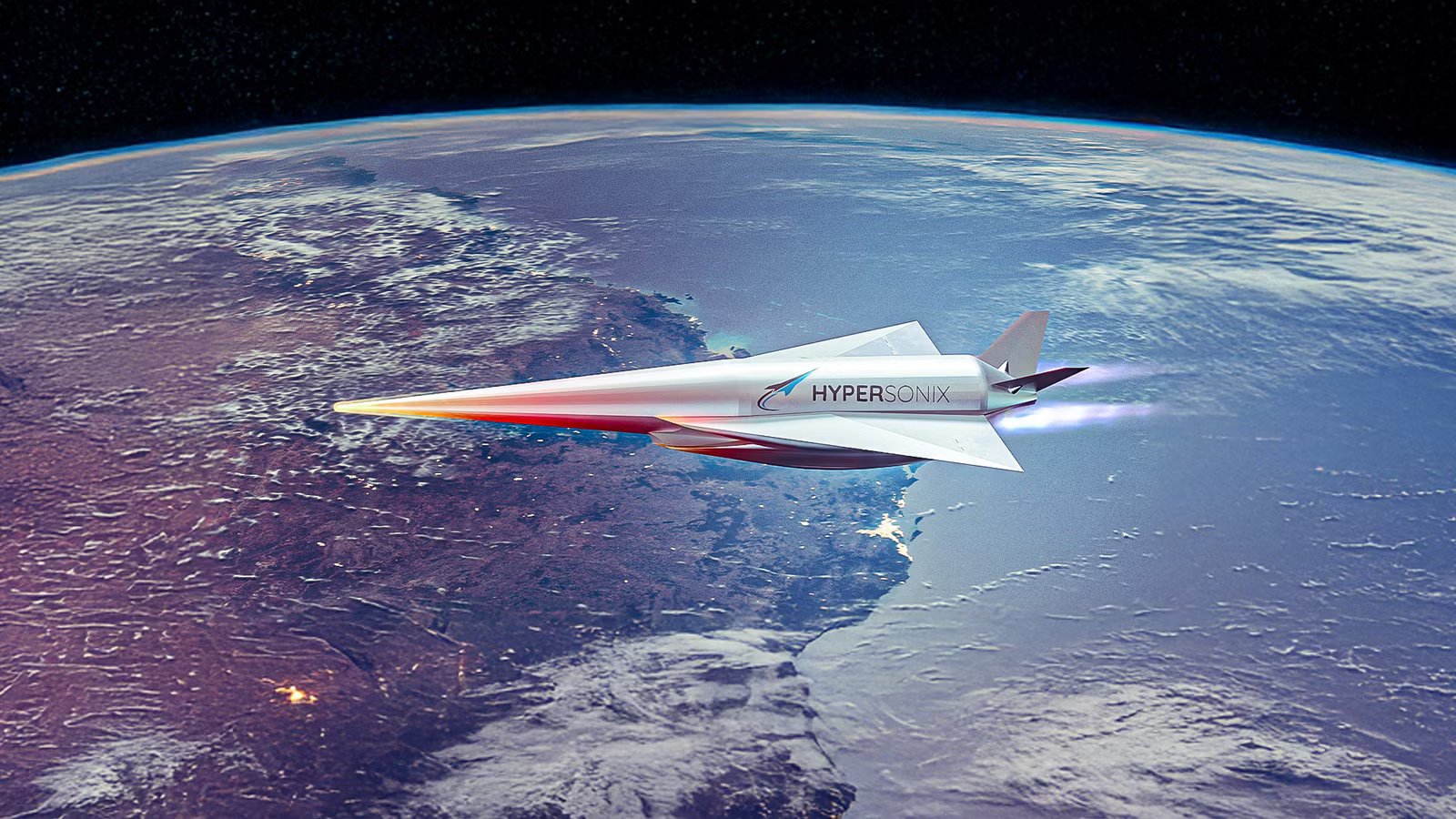
Hypersonix Launch Systems is an Australian start-up that is turning heads in the hypersonic sector. Its current portfolio includes its uncrewed DART, VISR, and Delta Velos demonstrator vehicles, all powered by its innovative hydrogen-powered Spartan scramjet engines. For now, the company is working to develop uncrewed vehicles in partnership with allied militaries and NASA, although it also aims to bring hypersonic travel to commercial passenger aviation down the road.
Separately, the hypersonic Lockheed Martin SR-72 spy plane in the works, successor to the Blackbird, is thought to be uncrewed. There are plenty of other companies working to develop hypersonic hydrogen-powered aircraft. France’s Destinus Aerospace and the US’ Hyperion Aerospace HYPERLiner, and the European Space Agency’s Invictus program are three examples. Meanwhile, the fastest commercial airliner in a reasonable state of development is the Boom Supersonic Overture, with an expected cruise of Mach 1.7.
The Dream Of Hypersonic Flight

The 1960s were a time when aircraft had become progressively faster and larger. It seemed that they would continue to get faster and larger, and supersonic seemed to be the next stage. Boeing and Lockheed developed their own blueprints for supersonic jets, but that was not to be. Instead, the industry focused on fuel efficiency instead of speed.
The Soviet Tupolev Tu-144 was the first passenger supersonic airliner to take flight as the Soviets rushed it into the air before the Anglo-French Concorde. However, the Tu-144 turned out to be a failure that only flew a very few commercial passenger flights. Only 14 serial production Concordes were produced, with the last retiring in 2003. Now, the world is returning to supersonic travel as a niche in modern air travel.
Boom Supersonic is working to develop a supersonic passenger airliner called Overture. The company is in the process of building the prototype. Other companies are also working on supersonic passenger aircraft, from Spike Aerospace with its business jet to the Chinese company COMAC. However, some companies are even more ambitious and would like to see hypersonic travel, which is traveling over Mach 5.
Are Airlines Considering Hypersonic Travel?

Numerous companies are currently working on hydrogen-powered hypersonic aircraft. One of the leaders is Australia’s Hypersonix Launch Systems. Hypersonix is a small start-up company in Brisbane, Australia, that employs around 45 engineering, testing, and advanced manufacturing staff. The company has drawn the attention and investment of the Queensland state government, NASA, and the US military.
Hypersonix says that global interest in hypersonic technology is growing, but not only for military and uncrewed uses. The company says industry players are receiving orders from “major carriers such as American carriers, United Airlines, and Virgin Atlantic.” It says that hypersonic passenger travel is expected to become a reality in the 2030s. It is also predicting investments in hypersonic technology to grow from around $5.4 billion to almost $13 billion by 2031.
While hypersonic passenger travel is technically possible, it will take an enormous amount of engineering to create an aircraft that is safe for passenger travel. Meeting aviation safety/regulatory standards is extremely difficult. As such, hypersonic systems will likely see uncrewed uses as missiles, reconnaissance aircraft, and the like, long before they are used for commercial passenger flights.
Military Investment

Like many emerging commercial technologies, development and investment often come from the military. One ongoing example is the California startup, JetZero. It is planning to build a mid-sized blended-wing-body commercial aircraft, although much of the development expenses are being funded by the US Air Force. JetZero is developing a full-scale demonstrator for the US Air Force with an aim for a first flight in 2027.
Hypersonix has been selected by the US Defense Innovation Unit, and NASA has backed the launch of Hypersonix’s DART AE. It is an 11.5-foot hypersonic demonstrator powered by the Spartan scramjet. The flight is expected to be taken from NASA’s Wallops Flight Facility in Virginia and will be the first sustained hypersonic flight powered by green hydrogen if it succeeds. Hypersonix is also working with Kratos Space & Missile Defense Systems, which is a leader in developing advanced autonomous aircraft.
In 2024, Hypersonix received a contract from the UK Ministry of Defence to assist in the development of hypersonic missiles for the United Kingdom. It should be noted that Hypersonix views its technology as relevant to more than just passenger travel and military applications, stating that it has applications across the entire aerospace sector.
The Spartan Scramjet Engines

At the heart of Hypersonix’s innovation are its scramjet engines, which will be able to operate between Mach 5 and Mach 12. It says that its “scramjet engines and hypersonic vehicles are designed and engineered to disrupt the global market with New Space best practices.” While there are over 100 small launch vehicle companies in development around the world, only a few use green hydrogen as their fuel, and none use scramjet technology for small satellite launches. Notably, these scramjet engines are produced using 3D-printed components.
Hypersonix says of its scramjet engines that “SPARTAN is the world’s first entirely 3D-printed scramjet engine, delivering performance, reliability, lead time and cost advantages over more bespoke manufacturing methods.” These are air-breathing engines featuring 3D printed high-temperature alloys. They are designed to be reusable and fuel-efficient, and as they use hydrogen as their propulsion fuel, they only produce water vapor exhaust.
Hydrogen is seen as the fuel of the future, although significant engineering challenges remain to be overcome. It is expected that the price of clean hydrogen will decrease to between $2 and $4 per kilogram by 2030. Various companies are working to make hydrogen fuel a reality. One of the issues that remains is finding a way to efficiently transport hydrogen, which is why the US-based H2 Clipper Inc. is working to develop an airship to be the hydrogen ‘pipeline of the skies.’
Hypersonix’s Three Current Vehicles

DART is a three-meter-long (10-foot) single-use scramjet technology demonstrator. It is the world’s first entirely 3D printed hypersonic airframe composed of high-temperature alloys. It is intended to have a range of around 600 miles and achieve Mach 7. VISR is a larger reusable multi-mission hypersonic vehicle specifically designed for defense applications. It is being designed to accelerate from Mach 5 to Mach 10 and land on conventional runways. The aircraft is intended to provide the military with a rapidly deployable test and an ISR platform.
Hypersonix describes Delta Velos as a fully reusable system with a payload of 110 lbs. It is able to fly into space under scramjet power, “allowing access to any orbit, from any launch site.” While many comparable systems may take months to launch, this aims to cut time-to-launch down to just days. A fourth aircraft is the virtual HyperTwin X. This allows mission planners, engineers, and battle management system planners to simulate hypersonic concepts in the virtual world before building and flying them in the real world.
Hypersonix’s current inventory (per Hypersonix) | DART | VISR | Delta Velos | HyperTwin X |
|---|---|---|---|---|
Speed | Mach 7 | Mach 10 | Mach 12 | n/a |
Length | 10 feet | 20 feet | 39 feet | na/ |
Role | Technology demonstrator | Defense | Small satellite launches/other | Virtual flight tests |
These hypersonic vehicles are designed to be lightweight as well as resistant to extreme temperatures. They are built from high-temperature materials like ceramic matrix composites. Additionally, hypersonic aircraft like these need more than a single propulsion system. As scramjets do not work at slow speeds, Hypersonix is working to use a rocket boost or rocket-assisted launch to get the aircraft up to an altitude and speed where the scramjet can operate.
Hypersonic Passenger Travel Is Technically Possible

One day, Hypersonix or another company may be able to introduce hypersonic passenger travel to the commercial market. However, this will likely be after technology matures in the military and uncrewed sectors. It would be very optimistic to expect passenger flights in the 2030s. More likely, it would not be until the 2040s. With that being said, the rivalry between the United States and China is spurring rapid development of hypersonic technologies, and this should allow the technology to mature faster.
Hypersonix is one of the more concrete examples of a hypersonic start-up company explicitly talking about passenger flight as one of its ambitions. Even so, for now, the company is focusing on missiles and satellite launches, with notable funding coming from defense.
If and when hypersonic travel does become reality, it will be initially focused on a limited niche of high-paying passengers on select routes. This is the story of the aerospace sector from the first passenger Zeppelin airships to Pan Am’s Clippers to Concorde. This is also the path being taken by Boom Supersonic. It is planned for Overture to fly on select trunk routes between major cities, carrying high-paying business and other clients.