dailynewsnblog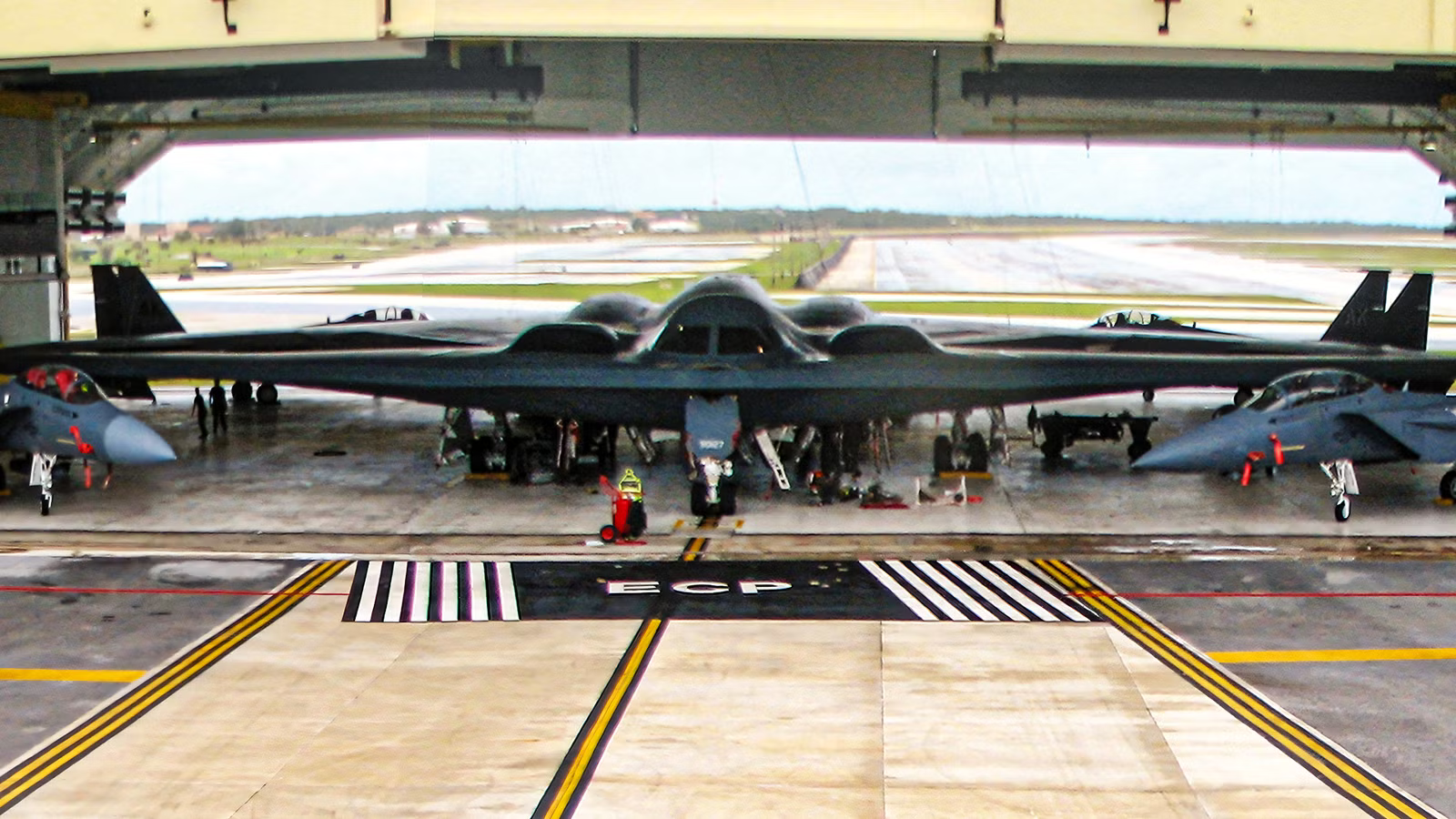
On September 8, the US Air Force (USAF) awarded a split contract worth up to $149 million to four small steel companies, according to Defence Blog. The list reads: Superior Forge and Steel, Ellwood National Forge, Faxon Machining, and Grand Valley Manufacturing. Their task is to manufacture the hardened outer shell casings of the GBU-57 Massive Ordnance Penetrator, or MOP.
The MOP is the largest “bunker buster” bomb ever produced, weighing in at 30,000 lb (13,608 kg). For 18 years until now, it was exclusively made by aerospace giant  Boeing. While the amount of money is relatively small compared to many headline military contracts, the program itself is highly significant in the history of the US defense-industrial complex.
The diversification represents the first intentional effort to break up a so-called ‘Prime’ company’s total control over one program. In this case, the MOP is the most powerful non-nuclear weapon in the American military inventory. So why did the Air Force choose this moment to break up procurement of a weapon always treated as too specialized to share?
Four Forges, One Contract, No Prime

The official announcement of the contract was straightforward. The four companies, located in Ohio and Pennsylvania, each received a flexible agreement for what the military calls large penetrator warhead case production.
The Air Force provided just some cash upfront at the signing, which is a standard placeholder amount for contracts where the government buys and pays for items in small batches over time rather than paying the full amount at the start. None of the four companies are well-known ‘Primes’, which are generally considered to consist of: Boeing, Lockheed Martin, Northrop Grumman, Raytheon (now RTX), and General Dynamics.
That is exactly the point. A specialized weapons team at Eglin Air Force Base managed the competition, reviewing all bids before selecting the winners. The work is scheduled to run through September 2033 if the Department of Defense decides to keep the program going.
Eighteen Years Of A Single Vendor

Boeing was originally given the exclusive right to supply the US Air Force with the GBU-57 bomb for the last 18 years because a service declared that they had the expertise required in order to deliver. Recent years have shown the Boeing defense sign consistently falls well behind schedule and far over budget. Some of the most notorious examples include the next-gen Air Force One and the KC-46 Pegasus tanker.
This exclusive arrangement went beyond building the weapon. The USAF’s terms also included the rights to technology. Compounding the recent poor track record of the legendary builder, Operation Epic Fury consumed a vast amount of specialized munitions in a short time frame. The huge expenditure of critical missiles and other ordnance has inspired urgency at the Pentagon to start pursuing alternative procurement methods, according to CSIS.
Boeing owned the designs for the bomb’s steering tail kit. That created a situation where the government could not buy parts from other companies even when it desperately needed to increase production. This shortage was so severe that engineers had to borrow and modify a component from the Army’s Patriot missile program just to keep production moving.
The intensive air campaign against Iran by joint US and Israeli forces was just one side of the OEF’s burdensome military cost. Missile programs like The Patriot, Terminal High Altitude Air Defense, Standard Missile Two and Six, as well as others, are all experiencing production crunches. Estimates currently project it will take several years to fully restock the weapons used in the months that have passed since the OEF began. That made the current MOP assembly line an unsustainable model.
A Return To Arms With A Hefty Cost

Looking back on recent events, the GBU-57 sat in storage for over a decade without ever being dropped in anger. That was interrupted for the first time in recent history on June 21, 2025. During Operation Midnight Hammer, seven B-2 stealth bombers flew an 18-hour round trip from Missouri, according to Air & Space Forces Magazine. The strike force dropped 14 of the massive bombs on Iran’s Fordow and Natanz nuclear facilities.
Reports showed that six bombs struck each of Fordow’s two ventilation shafts, while two more hit Natanz. The MOPs caused severe damage to the underground sites. Yet, the combat debut left a massive hole in the military’s stockpile. The Air Force tried to restock in February by awarding Boeing a sole-source contract worth over hundreds of millions of dollars. That was based on the premise that Boeing was still the only company capable of making the weapon.
The plan to continue with ‘business as usual’ was derailed in early April during another large-scale OEF air raid against Iran. The bombers launched another strike against an underground command bunker near Tehran, dropping even more MOPs during a critical mission to rescue a fighter pilot who was shot down behind enemy lines. Defense analysts estimated that the military only had about 30 of these nearly $22 million bombs in its entire inventory before OEF.
Why A Missile’s Shell Is A Strategic Bottleneck

The critical component at the center of the September contract award is not the smart guidance electronics or the explosive material inside. Instead, it is the massive steel shell that must survive the intense impact of the mission before any of those other systems can work. The Air Force explicitly looked for suppliers capable of crafting metal parts on a massive scale. Today, there are few heavy manufacturing companies in the United States that can actually handle such work.
The bomb’s casing is made from a specialized, high-density steel alloy developed by military scientists, which allows the weapon to punch through a thicker sheet of solid concrete than almost any other US munition, according to Global Security. A smart fuse then detects when the bomb has broken through into an underground room and triggers the explosion.
Mass-producing this heavy shell is not a matter of delicate electronics manufacturing but instead an undertaking of heavy-duty industrial power. This specific type of manufacturing capability shrank dramatically in the decades following the Cold War, leaving only a tiny handful of American factories capable of doing this work at all.
By expanding the group of suppliers from two companies to four, the Air Force is not just creating backup options. It is adding much-needed manufacturing power to an industrial sector where a lack of commercial support and skilled labor pool, rather than a lack of funding, has been the real bottleneck.
One Contract For Two Bomb Programs

To succeed the MOP, the Air Force is currently developing a successor weapon called the Next Generation Penetrator. One firm has already won the initial prototyping contract for this new weapon as well, though Boeing remains involved as a partner to build the guided tail kit.
The upcoming bomb is being designed with a maximum weight of 22,000 lb (9,979 kg), making it lighter than the current thirty-thousand-pound GBU-57. The lighter weight is a deliberate choice, so the new weapon can fit inside the bomb bay of the upcoming stealthy B-21 Raider. While the older B-2 bomber can carry two massive bunker busters at once, the newer Raider is expected to have a maximum payload that would only allow it to carry one MOP.
The older B-2 remains the best plane capable of delivering the GBU-57, but the Raider will eventually inherit both the current weapon and its future successor as it takes over deep-strike missions. By qualifying four factories to build cases for any parts weighing over 20,000 lb (9,072 kg), rather than focusing strictly on the older bomb’s exact size, the Air Force is laying the foundation for a flexible network.
In the future, the group of suppliers is hoped to have established the capacity and skill to shift between making the current weapon and its future replacement. This avoids the cost of rebuilding the supply chain all over again and gives the Air Force a redundant supply chain with future-proof capability.
A Procurement Pattern, Not An Isolated Fix

The contract award for the MOP casings did not happen as an isolated solution. It arrived as part of a much broader effort by the military to eliminate single points of failure across the entire weapons manufacturing industry. This push has only grown more dire after the recent attack against Iran.
A defense research group estimated that inventories of Patriot missile interceptors fell by more than half from pre-war levels. Even after partial restocking, supplies remained dangerously low. In response, the military is actively searching for second and third factories to build equipment long dominated by a single company.
It remains to be seen whether four regional factories can actually produce enough hardened GBU-57 casings by 2033 to make a difference in a future crisis. At the same time, Boeing’s role is far from over, given it still builds the steering tail kits and handles the guidance systems.
Still, a major shift has occurred in the US defense-industrial sector. For the first time since the heavy bomb entered service, the giant corporation that built America’s only proven answer to deeply buried facilities is no longer the only company that can.