dailynewsnblog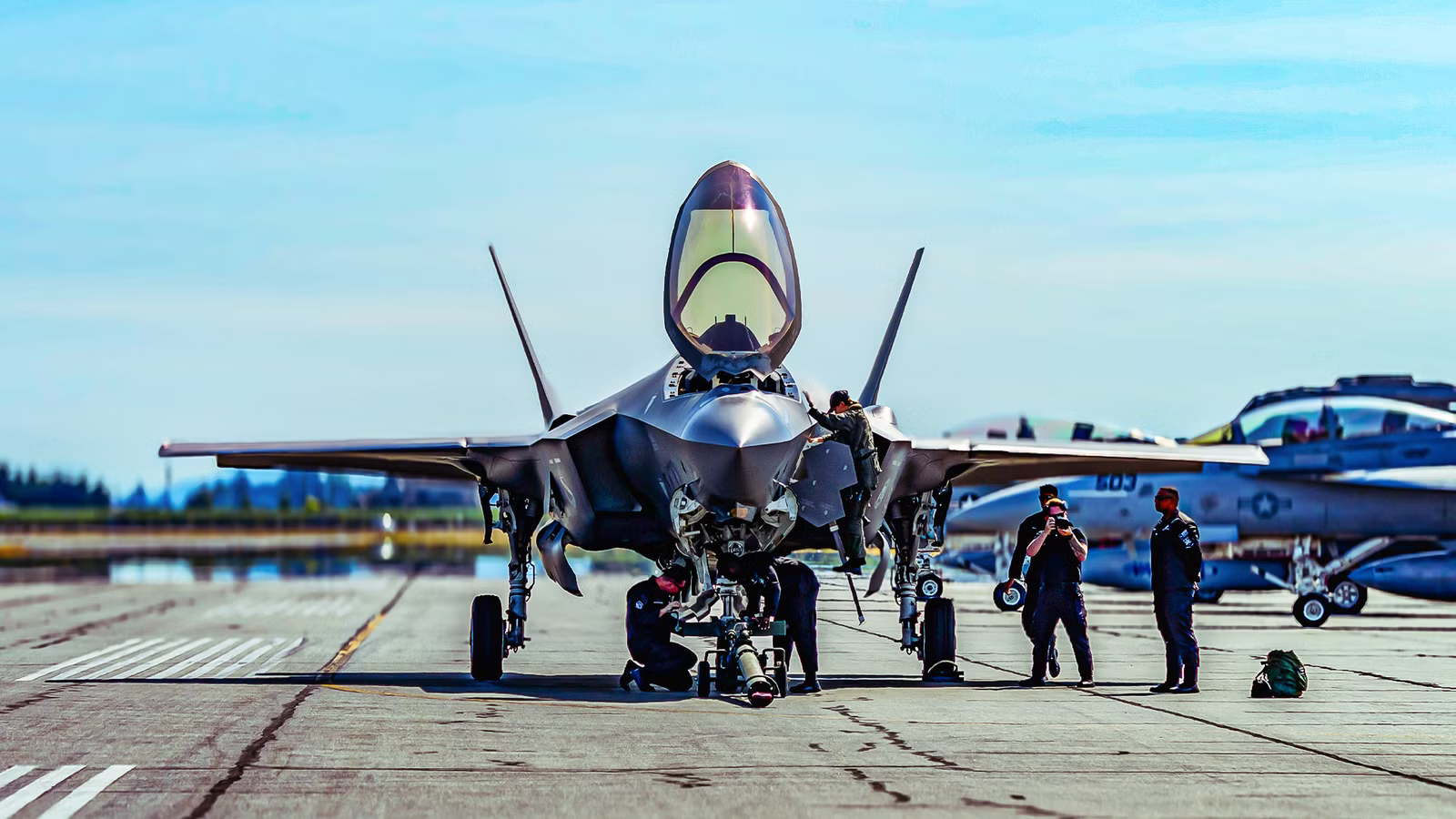
Head of the Canadian Defense Investment Agency, Stephen Fuhr, has a strained relationship with the Royal Canadian Air Force over the procurement of the Lockheed Martin F-35 Lightning II. Called Sign Picasso, he was a CF-188 fighter pilot and, according to CBC, was mocked for opposing the purchase of the F-35 Joint Strike Fighter after retiring from the armed forces in 2009. He drew ire from service members for his remarks in a 2011 television interview.
He now heads a body Prime Minister Mark Carney created to speed up military acquisitions, and it could decide the fate of the F-35 in Canada. Under his watch, Saab’s GlobalEye surveillance aircraft has already displaced Boeing’s Wedgetail as Ottawa’s preferred airborne radar platform. That deal was worth more than $5 billion, and his department is now studying the possibility of a mixed fleet including JAS 39 Gripen E fighters alongside the F-35.
His history of opposition to buying the high-priced American stealth fighter has led many to speculate that the F-35 is as good as dead. The RCAF has committed financially to at least some of its original order for 88 airframes, but it could still replace about 70 with the cheaper, simpler, more rugged Swedish Jets.
Institutional Tension: The Mandate Of Stephen Fuhr

Fuhr’s unique background introduced an unusual political dynamic to a procurement program that is already notorious for controversy. Following his military service, he spent years campaigning publicly against the F-35 acquisition selected by Stephen Harper’s administration. He argued that the JSF program consistently failed to meet its projected financial and scheduling benchmarks despite the superior tactical qualities of the fifth-generation stealth fighter.
According to CBC, former military colleagues and associates noted that he focused on the aircraft’s development flaws. He frequently referenced American program records to highlight that the F-35 missed almost every major milestone during its initial phases and has continued to struggle even now. Fuhr went to provide strategic consulting services for Boeing, which was at the time the chief rival in Canada’s 2021 fighter modernization competition, but ultimately lost out.
The current opportunity for a course change came when Mark Carney appointed him to lead procurement in May of last year. This has created institutional tension between his department and the RCAF. Fuhr is now legally charged with objectively deciding the ultimate operational fate of a frontline fighter platform he spent most of his post-military career actively opposing.
Further complicating the matter, the DIA he commands was established specifically to bypass traditional, slow-moving Canadian procurement bureaucracies. Although the F-35 is the incumbent, ongoing production delays due to technological deficiencies mean the JSF fleet will not be fulfilled for as many years as the RCAF originally expected when it first chose the Skunk Works plane. This makes the argument for switching to a simpler fighter from Saab with a quicker stand-up phase a realistic competitor.

The fighter jet question remains unresolved, and no amount of speculation will deliver an answer before the announcement is made. However, looking at the competition between the Boeing E-7 Wedgetail AWACS and the Saab Globaleye provides strong insight into the probable decision. That procurement cycle ended when Carney announced at the CANSEC defense exposition in May that Canada selected GlobalEye over the E-7 and L3Harris’s Aeris X.
The decision initiated formal negotiations for an acquisition program valued at over $3.6 billion dollars, according to Defense News. Not only are the manufacturers similar, with Saab competing against another one of America’s juggernaut prime defense contractors, but the aircraft themselves also parallel the current consideration for the next-gen fighter jet program.
The GlobalEye is a lighter-duty, more rugged, simpler to maintain, and lower-technology solution compared to the E-7. At the same time, the Saab is much cheaper to procure and sustain over its lifetime, which not only makes the initial flyaway cost more palatable, but conserves funding that could otherwise be drained on a risky investment in an ‘exquisite’ airplane packed with unproven technology.
The financial split between the Boeing E-7 Wedgetail and the Saab GlobalEye tracks the exact same high-low cost pattern as the F-35 and Gripen fight. Boeing’s E-7 carries a base purchase sticker price of roughly $400 million per aircraft, which looks competitive when factoring in the commercial 737 airframes it is built on and the host of advanced electronics on board, as well as software. The GlobalEye costs around $350 million upfront, but because it is built on a lighter Bombardier business jet, the long-term operational savings are immense. Flying the heavy E-7 Wedgetail costs an estimated $25,000 to $30,000 per hour, while the lean GlobalEye operates at a fraction of that at roughly $6,000 to $9,000 per flight hour. Over a standard 30-year lifetime, owning and fueling a fleet of E-7s costs a nation billions more than running the GlobalEye.
The Numbers Game: Scaling The Fleet

This brings us directly to the parallel comparison with the fighter jet program, where the exact same financial math repeats itself. Lockheed Martin’s F-35A costs $92 million to buy right out of the factory, compared to the Saab Gripen E, which costs $85 million. Just like the radar planes, the real financial divergence happens the moment they take off.
The stealth F-35A requires an astronomical $38,000 to $44,000 per flight hour to maintain its special coatings and electronic brains. The rugged Gripen E costs between $4,700 and $9,900 per flight hour because it was built for simple, low-cost maintenance in freezing climates.
When you look at the total 30-to-40-year life of these aircraft, the economic parallel becomes completely identical. A single F-35A will eat up $453 million in total lifetime sustainment and fuel costs, whereas a single Gripen E costs just $240 million over that same lifespan.
By buying GlobalEye, Fuhr showed his preference for the cheaper, more efficient Swedish radar platform to save billions in daily operations rather than buying the highest-performance equipment available. Splitting the fighter fleet follows that exact logic, allowing Canada to buy some expensive $44,000-an-hour F-35s for high-end warfare, while letting the sub-$10,000-an-hour Gripen do the heavy lifting for daily domestic defense.
Cold War Scale: The Mixed-Fleet Blueprint

Currently, only 16 F-35As are legally bound by firm, paid contracts. National Defense continues funding long-lead production components for an additional 14 aircraft. Consequently, the remaining 58 to 72 airframes from the original 88-jet acquisition strategy remain uncommitted. The historical precedent to take this opportunity to create a mixed fleet dates back to Canada’s Cold War fleet structure. Fuhr is highly likely to advocate this strategy, so the RCAF’s history only bolsters that position.
In the past, the RCAF flew three distinct fighter fleets at the same time, matching specific planes to specific missions. Back then, the military used the CF-101 Voodoo strictly for domestic interceptions and the CF-104 Starfighter for high-end NATO strike missions, proving that Canada has a successful track record of managing a split fleet to balance cost and capability.
Making the transition to a fleet of 138 CF-188 Hornets was meant to improve capability while also simplifying maintenance and keeping costs low with one airframe. The problem with replacing this jet today is the evolving nature of next-gen air defenses and tactical airframes around the world. The US Air Force is even building its own ‘high low’ fleet to balance this same doctrinal dilemma.
The NORAD Mission And Real World Requirements

Among the many reasons why it is speculated that Fuhr is likely to decide on a mixed fleet is the fact that it would provide a cost-effective way to meet the country’s obligation to the North American Aerospace Defense Command with the US. An all-stealth fleet makes this incredibly difficult because the F-35A requires intense maintenance that leaves fewer planes ready to fly on any given day.
In a real crisis, a mixed fleet allows the RCAF to deploy a layered defense. The small, elite fleet of F-35As can act as the high-end punch, using advanced radar-evading technology to sneak past enemy lines and take out advanced threats. At the same time, the larger fleet of Gripens acts as the high-volume backbone, handling the vast geographic patrolling and intercepting incoming targets.
By introducing the Gripen E, Fuhr can leverage a fighter built for quick turnaround times and harsh winter conditions. A Gripen can be refueled and rearmed in just 10 minutes by a small crew of mobile mechanics on a frozen runway. This means Canada can maintain constant, daily domestic air defense deployments across the Arctic at a very low cost, keeping its pilots trained and active without draining the military budget.
The Bas 90 Blueprint: Dispersed Arctic Strategy

Sweden designed the JAS 39 Gripen specifically to thrive under its Bas 60 and Bas 90 highway air base systems. During the Cold War, Sweden knew its main air bases would be destroyed instantly in a war. To survive, they engineered the Gripen to disperse and operate from ordinary, public snowy highways. Canada faces this same logistical nightmare in its high north. The Canadian Arctic has massive distances with very few proper, secure military runways.
The Gripen can deploy to a remote northern strip with just a single transport plane of basic tools and a handful of technicians, making cold-weather deployments fast and incredibly cheap. Unlike the F-35, which requires large and costly logistics training to keep it operational in Arctic conditions. Then there is the political consideration of the JSF’s lifetime sustainment.
Relying entirely on the F-35 means Canada’s daily national security is tied to Washington’s strict control over classified ‘black box’ components, as well as the source code software itself, which can ‘brick’ a jet on the runway. If Canada wants to change a weapon or tweak a radar setting for the Arctic, it must ask permission from the Pentagon.
Although many say that the concern over the ‘kill switch’ is a false flag, political volatility in such a costly defense program is still a major concern for any procurement of this scale. The Gripen offers total sovereign autonomy. By scaling back the F-35 buy and introducing 60 to 72 Gripens, Canada potentially achieved a perfect strategic compromise. At the moment, it appears the future of the RCAF currently rests on the shoulders of Fuhr and Fuhr alone.
Catch what other trackers miss
Emergency squawks, holds, NOTAMs — live signals, no signup.
Open tracker
Catch what other trackers miss
Emergency squawks, holds, NOTAMs — live signals, no signup.
Open tracker