dailynewsnblog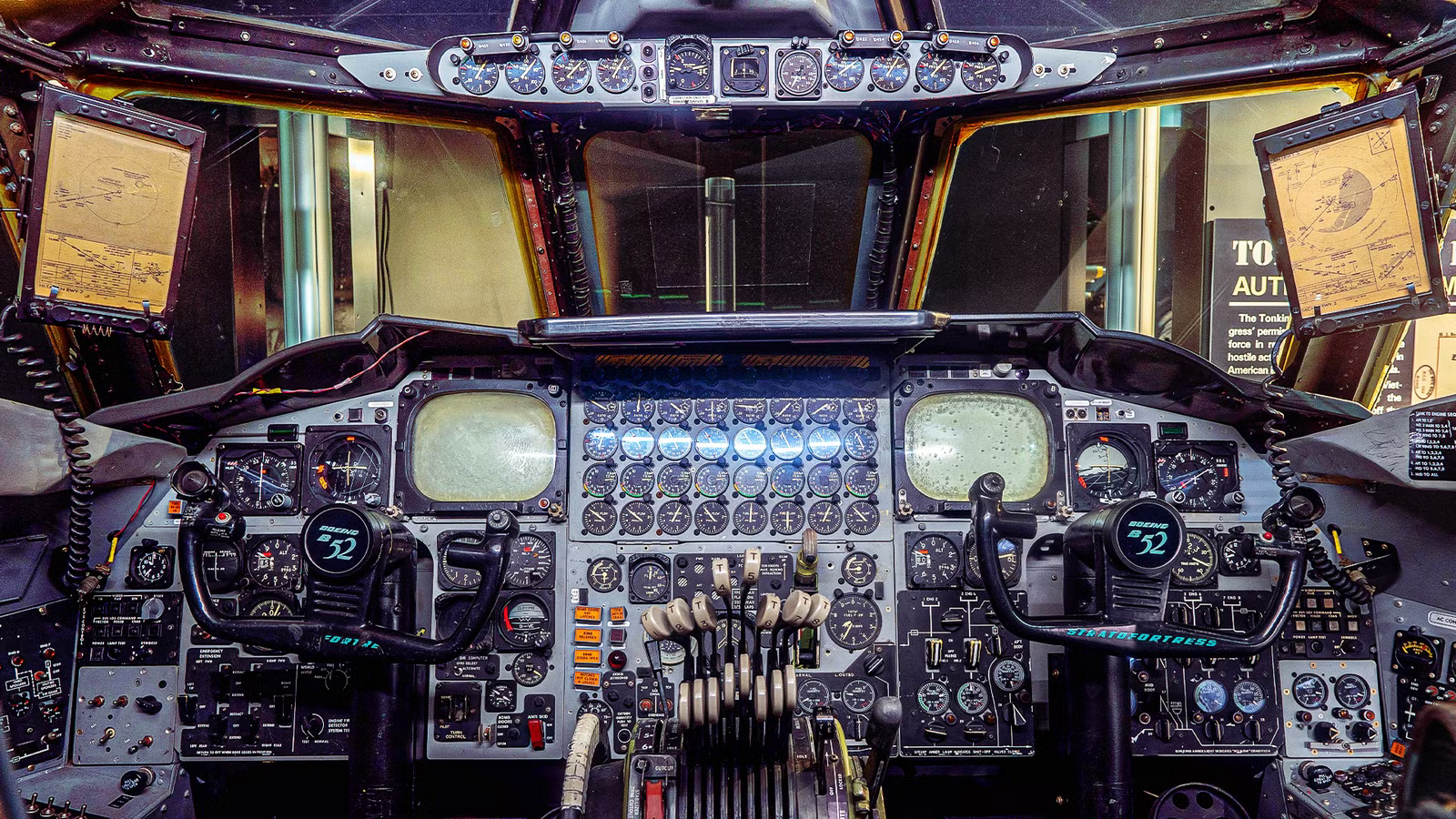
On August 25, the Department of Defense announced $766 million in new contracts to keep modernizing the B-52 Stratofortress’s radar. That includes $603 million to Raytheon for the AN/APQ-188 itself and $163 million to  Boeing for the airframe upgrades that support it. The question the new money raises is not whether the United States Air Force (USAF) still wants a modern radar on its oldest bomber, but whether the acquisition strategy meant to control that program’s cost and schedule is actually working, or whether the August contracts are simply locking in a program that has already redefined what on budget means.
Even as the Air Force has begun stripping capability out of the design to hold the line on further overruns, the BUFF’s radar program has already breached the Nunn-McCurdy cost-growth law. Since its inception, the plan has ballooned more than 30% to over $2.9 billion, and slipped its combat-ready date by three and a half years, according to Air & Space Forces Magazine. The Raytheon award is not a fixed-price purchase of finished radars. It is an indefinite-delivery/indefinite-quantity contract with a $603 million ceiling, awarded sole-source, that runs through August 2031 and covers both production and long-term sustainment.
Air Force Global Strike Command and the program office moved in late 2024 to trim the AN/APQ-188’s performance requirements from 25 down to 20, explicitly branding the reduced set a minimum viable product meant to field usable capability while deferring the rest to later increments, according to Air & Space Forces. The latest contracts also arrive under a dark cloud, nine weeks after the program’s dedicated flight-test aircraft crashed on takeoff from Edwards Air Force Base, killing all eight crew aboard.
MVP: Shifting To A Minimum Viable Product

The BUFF’s legacy, AN/APQ-166, that the new radar replaces, is a mechanically scanned system whose lineage traces to the B-52’s original 1960s-era avionics, still doing the work of navigation, weather avoidance, and ground mapping on an aircraft the Air Force intends to fly for another quarter-century.
Its replacement, dubbed the Bomber Modernized Radar System, is an active electronically scanned array built by Raytheon and derived substantially from the AN/APG-79 radar flown on the Navy’s Boeing F/A-18E/F Super Hornet, drawing further on shared technology with the Boeing F-15EX Eagle II’s APG-82.
Unlike the APQ-166’s rotating mechanical antenna, the AESA’s solid-state array steers its beam electronically, letting it track multiple moving air and surface targets simultaneously, cue individual transmit/receive modules for electronic-warfare functions, and render weather returns in color-coded detail rather than the legacy set’s ambiguous green-scale display.
The upgrade was originally bundled with two large-area touchscreen cockpit displays, dual display-sensor-system processors linking the radar to other B-52 systems. Critically, it also pairs with a wideband nose radome purpose-built to optimize the AESA’s wider field of view and expanded frequency bandwidth.
Catch what other flight trackers miss
Emergency squawks, holds, NOTAMs — live signals, no signup.
Open tracker
Catch what other flight trackers miss
Emergency squawks, holds, NOTAMs — live signals, no signup.
Open tracker
That radome has a significant influence on the new radar’s performance depending on its final shape. Now with the narrower project scope, the USAF aims to save money by using the existing radome on the nose of the B-52 and not redesigning it for use with the replacement radar array.
The Multi-Billion-Dollar Alarm Bell

The estimated cost of the Radar Modernization Program has climbed steadily and crossed the threshold Congress set in the Nunn-McCurdy Act, which requires the Pentagon to formally notify lawmakers at 15% above original figures. The B-52 radar has increased from $2.3 billion in 2021 to roughly $3.3 billion, which constitutes roughly 30% growth.
The Government Accountability Office has attributed the overrun to a combination of significant design changes, contractor performance problems, and installation complexity greater than originally scoped. Those factors are allegedly also compounded by radar deliveries and integration-lab components arriving later than planned. The GAO was blunt about the trade-off in its July report.
“In this case, after contract award, the Air Force will receive less capability while paying more for the program.”
Per-aircraft upgrade costs have risen, with the price to upgrade each of the Air Force’s 76 B-52Hs climbing from roughly $30.8 to $33.9 million by GAO’s accounting. Even after the USAF trimmed scope, the schedule kept sliding: planned production start moved more than two years to the right, and the radar’s initial operational capability is now projected for the third quarter of fiscal 2030, three and a half years behind the program’s original timeline.
The Crash That Cut The Test Fleet In Half

On June 15, a B-52H assigned to the radar’s flight-test program crashed shortly after takeoff from Edwards Air Force Base, killing all eight people aboard, a mix of Air Force personnel, government civilians, and contractors, including two Boeing employees. The aircraft, tail number 60-0061, was the first B-52 fitted with the AN/APQ-188, ferried from Boeing’s San Antonio facility to Edwards in December 2025 specifically to carry out the radar’s ground and flight-test campaign feeding a production decision.
Flight-tracking data reviewed after the accident showed the bomber beginning a sharp turn to the northeast immediately after takeoff before descending at a rate of roughly a mile a minute. Edwards’ 412th Test Wing said the investigation could take up to six months and closed the base’s airfield to air operations in the immediate aftermath, while the Air Force emphasized there was no evidence tying the crash to the new radar itself.
Independent of the crash, GAO’s July 2026 review raised a structural concern about how the Air Force plans to prove the radar works before building it in volume. Production of the AN/APQ-188 is slated to begin with only about two months of flight testing completed out of 18 months planned. The Watchdog agency asserts that such limited flight testing exposes the program to exactly the kind of design-flaw discoveries that force costly retrofits after hardware has already left the factory floor.
The BUFF’s Ongoing Budget & Overrun Pressures
GAO’s audit of all 13 programs that make up the roughly $21 billion B-52 modernization effort found that 10 are experiencing some combination of cost growth, schedule delay, or performance shortfall. The Radar and the Commercial Engine Replacement Program (CERP) together account for $18.3 billion, or more than 88%, of the total projected investment.
To address the ballooning costs of integrating modern systems into the 70-year-old airframe, AFGSC drastically reduced its immediate performance metrics. Instead of waiting for a fully optimized system that could derail the budget permanently, the Air Force is employing an iterative improvement plan. The current priority is getting the basic AESA array physically installed onto the airframe to replace the critically obsolete, mechanically scanned radar.
Advanced tracking, high-resolution mapping, and enhanced electronic warfare software modes were originally meant for the first package but are now expected to fully mature in subsequent software blocks. A redesigned radar will also be introduced later on in a ‘spiral update’ when additional funding can be allocated to complete the full overhaul. Despite the downscaling, the Department of Defense is moving forward to keep the BUFF lethal as a part of its consolidated two-type bomber fleet of the future.
Why An Eisenhower-Era Bomber Outranks Its Own Replacements

The B-52 modernization effort is not happening in isolation; it is the long-endurance half of a deliberate two-bomber force design in which the stealthy, in-production B-21 Raider penetrates contested airspace while the upgraded B-52J operates as a standoff missile truck launching from outside an adversary’s air-defense envelope. AFGSC describes the pairing with the B-21 acting as the hammer over enemy airspace while the B-52J is the anvil that provides standoff firepower.
The B-52’s airframe has the payload and range best suited to the stand-off missile role the Air Force wants to fill, while the aging Northrop Grumman B-2 Spirit and Rockwell B-1 Lancer airframes are showing their age much more severely. Additionally, the 76-strong fleet size is a good match for the roughly 100 B-21s currently funded, which could potentially be increased to 145 or even 185 airframes.
The Air Force is choosing to spend $21 billion rebuilding a 1960s-vintage bomber’s core systems rather than accept a bomber-force gap while the B-21 ramps toward its planned 2027 first deliveries to Ellsworth Air Force Base. Set against that backdrop, the radar and engine overruns look less like isolated acquisition failures and more like the cost of that strategic bet. That bet has already shown strain in day-to-day readiness. The GAO found the B-52 fleet’s mission-capable rate fell below 54% in 2024.
Yet, despite the budget cuts and delays with the MVP approach, it is still considered the best available strategic path for the Air Force’s bomber fleet modernization strategy. The Pacific theater demands massive missile capacity over vast distances. The MVP radar gives the B-52J the baseline navigation and targeting data needed to act as a long-range maritime ‘missile truck,’ launching hypersonic and cruise missiles from outside advanced air defense bubbles without waiting years for perfect software.
Agile Combat Employment requires maximum aircraft availability. And it will also demand dynamic electronic protection patches and target-tracking updates to the aircraft digitally while deployed at forward operating locations to stay ahead of evolving threats. The iterative approach gets the physical radar hardware installed quickly, keeping the maximum number of bombers active and deployed across distributed Pacific islands. In the long view, the B-52J will be the exact solution that the Air Force needs. The concern today is whether or not it survives the procurement cycle to realize its full potential.