dailynewsnblog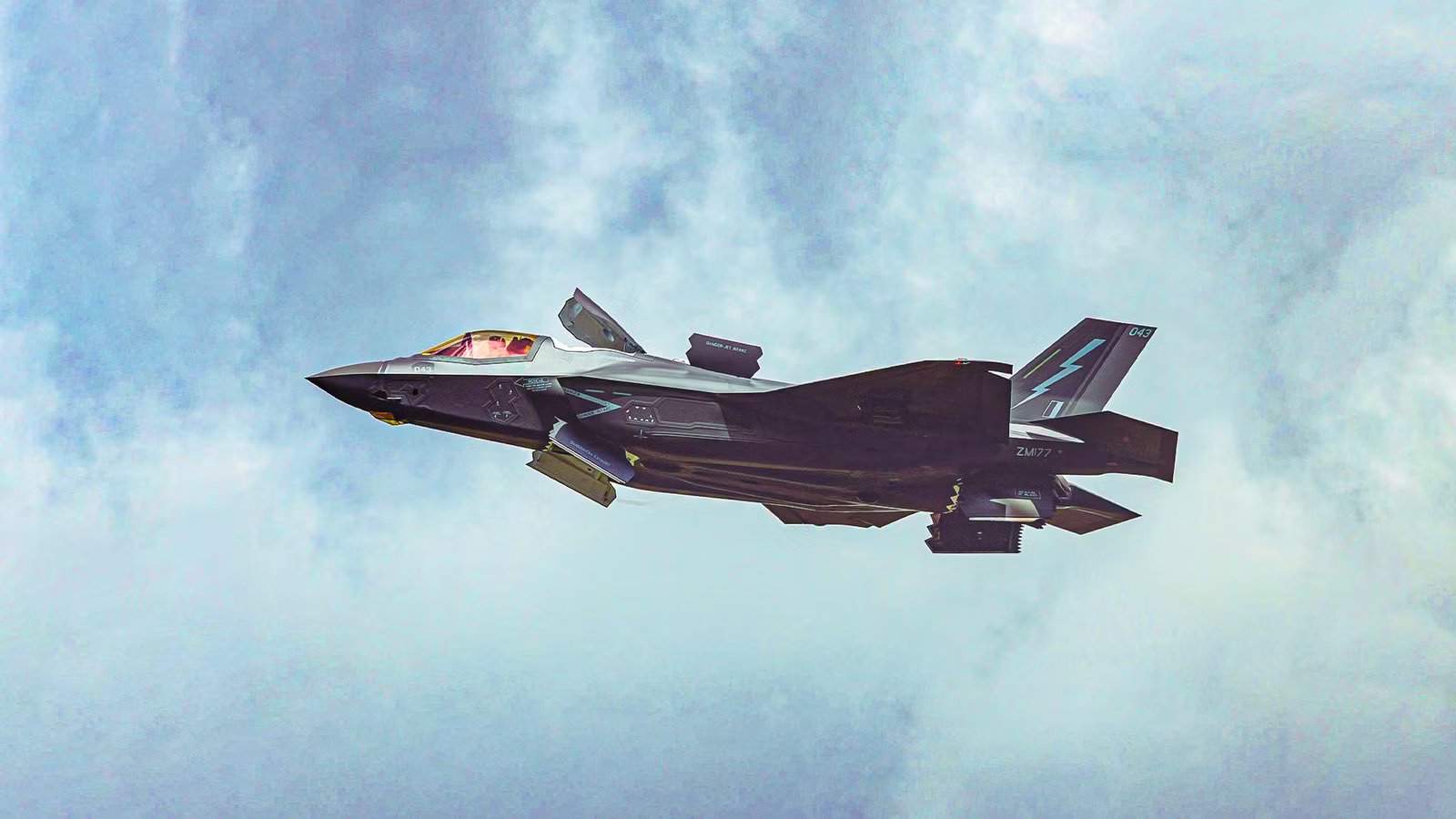
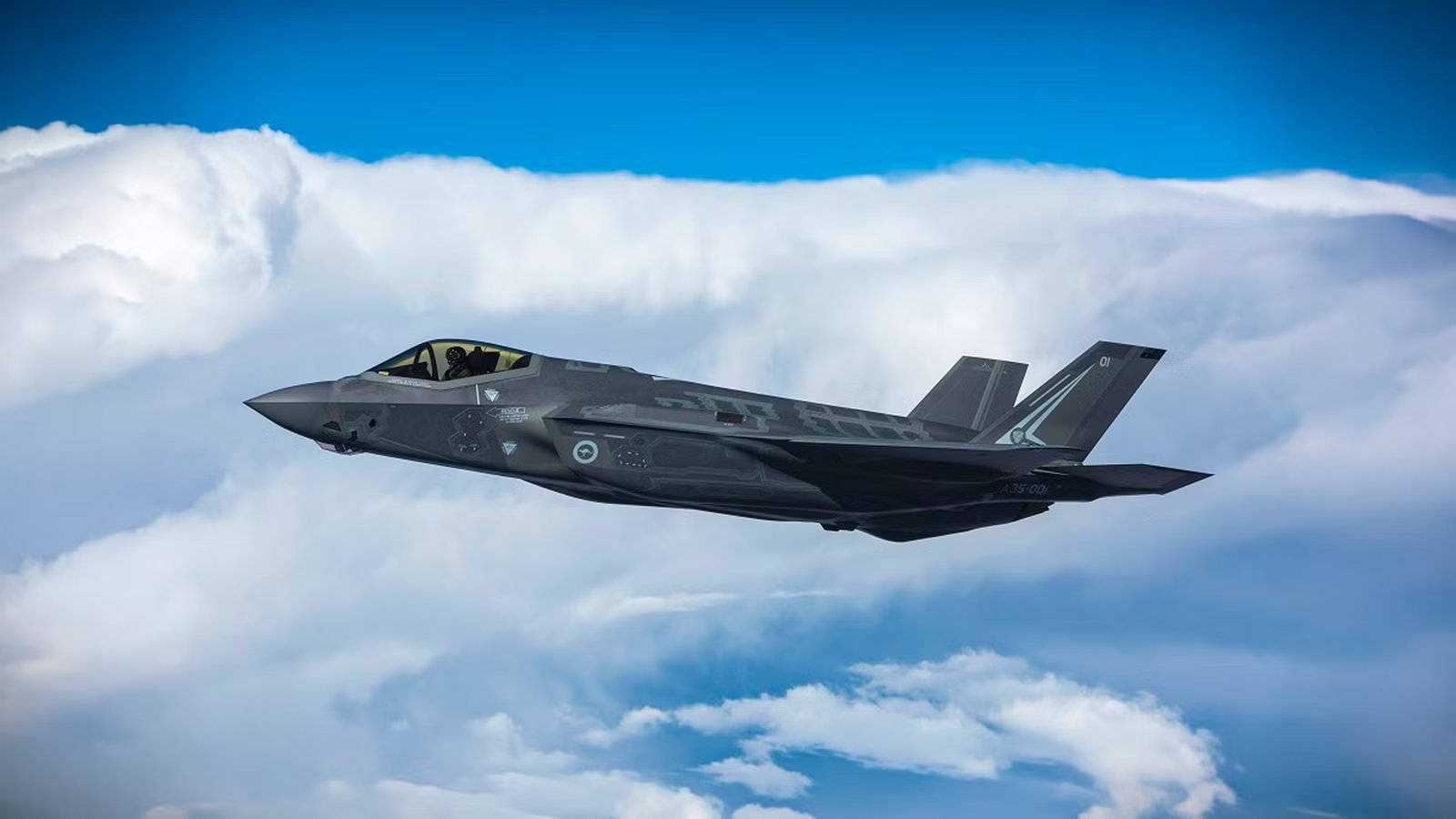
Due to severe worldwide backlog pressures within the F-35 Joint Program Office and a strategic procurement delay by the Ministry of Defense, the United Kingdom will not receive any new Lockheed Martin F-35 Lightning II jets from its enlarged fleet order until the early 2030s. The upcoming batch introduces the F-35A variant to the UK fleet for the first time, intended to fulfill NATO nuclear-sharing missions.
The next lot of 27 aircraft consists of 12 conventional F-35A and 15 F-35B jump jet variants of the Joint Strike Fighter. The UK’s decision to delay its next F-35 delivery block until 2030 acts as a highly strategic buffer period. It provides the Royal Air Force with the crucial time and budgetary relief needed to rebuild the second pillar of its nuclear defense. The UK has lacked this ability since it retired the WE.177 bomb in 1998, carried by the V-Force of strategic bombers.
Yet, integrating British weapon systems like the Meteor and SPEAR-3 missiles relies heavily on stabilized future software versions, which are not expected to be fully operationally mature until closer to 2027 or later. Delaying the deliveries until Lot 23 prevents the UK from spending millions retrofitting older, delivered aircraft with these necessary capabilities.
The F-35’s Upcoming Role In Strategic Deterrence

The UK’s decision to rejoin NATO’s Airborne Nuclear-Sharing Mission is motivated by the desire to strengthen geopolitical ties with the US and NATO allies, restore a strategic ladder of escalation, and confront years of consistent aggression from Russia. The purchase of twelve F-35As, first announced at the NATO Summit in June 2025 and formalized in the 2026 Defense Investment Plan, enables the UK to field Dual Capable Aircraft.
Rejoining the shared air mission allows the RAF to signal a direct, visible, and localized countermeasure to Russian posturing. The 2030 timeline aligns the arrival of combat-ready Block Four F-35As directly with the completion of these heavy-duty base upgrades at RAF Marham. Hosting or operating aircraft for NATO’s nuclear-sharing mission requires meeting stringent, non-negotiable security protocols mandated by the United States and NATO.
The F-35A DCA upgrade comes at a cost that frees up the military budget to fund the £64 billion refurbishment of the Dreadnought-class nuclear submarines. Operating an airplane that transports US-owned weaponry integrates the US more firmly with European defense infrastructure. Thus, while addressing concerns about America’s long-term commitment to European defense, volunteering for the DCA mission clearly responds to US demands that Europe bear more of the alliance’s nuclear burden.
Laying The Foundation For Shared Defense

A crucial decision in the F-35 saga came in 2025 when the UK opted to rejoin the North Atlantic Treaty Organization’s Airborne Nuclear Burden Sharing Mission. Last year, the UK chose the F-35A to carry out this nuclear deterrence duty as part of its Strategic Defense Review. The F-35A is certified to carry the B61-12 nuclear gravity bomb; however, the F-35B is not. This is the strategic value difference between the two airplanes.
Because of the lift fan, the F-35B’s inner weapons storage is significantly smaller, allowing for short takeoff and vertical landing capabilities. It is the only one of the three models with a second engine dedicated only to vertical lift. The UK’s 12 A-variants will bolster its existing fleet of 48 F-35B Joint Strike Fighters. Adopting this aircraft also aligns the RAF with the seven other NATO nations that will use the F-35A to carry out the same role in the case of a ‘doomsday’ scenario.
Vice-Marshal Jim Beck recently said at the Global Air & Space Chiefs’ Conference that the first 12 planes will be utilized solely for pilot conversion training, not for live nuclear missions. Pushing frontline delivery to 2030 gives the RAF the full window to convert pilots from the B to the A model, refining conventional land-based flight dynamics before assuming the massive administrative load of a live nuclear alert posture.
The UK Defense Investment Plan

The UK is the only tier-one partner in the JSF program and has completely fulfilled its initial order of F-35B jets. Although the original goal has not officially been changed, the total lifetime cost of the fleet has tripled to over £71 billion. The existing fleet of 47 jets is already struggling with low availability, and on top of that, there aren’t enough people to fix them. The de facto cap at 75 aircraft, combined with the delivery pause, creates a critical capability gap.
While the original goal of 138 jets was meant to provide a massive, dedicated force pool, capping the fleet at 75 planes dramatically limits the teeth of the Carrier Strike Group. HMS Queen Elizabeth and HMS Prince of Wales are designed to comfortably carry up to 36 F-35Bs during a strike deployment. Under the fleet cap, only 63 will be the carrier-capable F-35B variant; the other 12 are land-based F-35As.
According to reports from the National Audit Office, the UK’s existing Lightning fleet suffers from poor availability rates, often sitting below 60% due to chronic shortages in engineers, instructors, and spare parts. Out of the 63 planned F-35Bs, only about 21 jets will be front-line deployable at any given moment. Compounding a small fleet cap with low availability means a single combat loss or a string of maintenance issues directly threatens the viability of an active carrier deployment.
Aiming For Next-Gen Air Power

The financial breaking point is driven by the F-35’s staggering sustainment costs. According to U.S. Government Accountability Office data, flying a single F-35 costs between $34,000 and $44,000 per hour. This is far above the program’s original $25,000 target and significantly higher than legacy aircraft. This financial strain is compounded by a massive software and hardware crisis known as Technology Refresh Three.
The delivery delay is directly tied to severe bottlenecks in the TR-3 hardware and software suite, which serves as the mandatory computing gateway for the Block Four modernization program. TR-3 was designed to give the F-35 the necessary computing power to run its next-generation Block Four weapons and radar updates. Instead, TR-3 has suffered from years of developmental delays, software stability glitches, and hardware bottlenecks.
Because TR-3 software stability has been plagued by delays, full Block Four operational combat certification is not expected until at least 2027, and a full rollout of capabilities has slipped into 2031–2032. Due to development issues, manufacturer Lockheed Martin began shipping F-35s with an incomplete, truncated TR-3 software package. These jets are restricted to training and are not fully combat-rated.
The real-world consequence of these software failures is a devastating drop in aircraft availability. Recent auditing reports revealed that the F-35 fleet’s full mission-capable rate dropped to just 25%. Buying F-35s now would mean accepting them with incomplete capabilities, requiring millions of pounds in future hardware and software overhauls.
By pushing future deliveries to 2030, the UK is pausing fleet growth until Lockheed Martin can deliver fully mature, combat-capable Block Four aircraft. When they finally resume buying American jets, they will receive the modernized Lot 23 variants. This also gives the UK time to lay the foundation for the global combat air program.
The Next Era In Air Warfare On The Horizon

The UK is one of the founding members of GCAP, which aims to introduce a next-gen air superiority stealth fighter by 2035. The tri-national initiative with Japan and Italy to build a 6th-generation fighter has entered its most intensive phase. Rather than being stalled by F-35 software bottlenecks, the UK is leveraging this bridge period to establish its sovereign manufacturing capability, locking in billions in funding and moving from concept drawings to physical assembly lines.
Developing a sixth-generation fighter from scratch is an incredibly front-heavy, expensive endeavor. The UK had to commit billions of pounds in upfront funding to design facilities, prototype testing, and industrial contracts with Japan and Italy. The UK, Japan, and Italy are using this developmental window to potentially expand the alliance, which helps distribute the immense financial burden of a 6th-generation program.
Because the UK Ministry of Defense has frozen F-35 procurement for the rest of the decade, it avoids sinking billions into immediate aircraft purchases that would only require millions more in future retrofits. This contributed to the recent increase in GCAP funding by $6.1 billion through Edgewing, as The Times of India reported. Edgewing brings together major aerospace makers including BAE Systems, Leonardo, and JAIEC/Mitsubishi Heavy Industries. The UK is not alone in pushing back F-35 acquisitions due to rising costs and unstable software.
The growing skepticism among global operators over the F-35 program, highlighted by severe delays and cost overruns, has inadvertently given the UK a strategic window of opportunity. Since the faltering of the Future Combat Air System, it has already gained Canada as its first official observer under the umbrella of the program. GCAP may also bring on other partners like Germany, Spain, or even India. By strategically utilizing this forced delivery pause, the UK can position itself as a global leader in independent, next-generation aerospace technology.