dailynewsnblog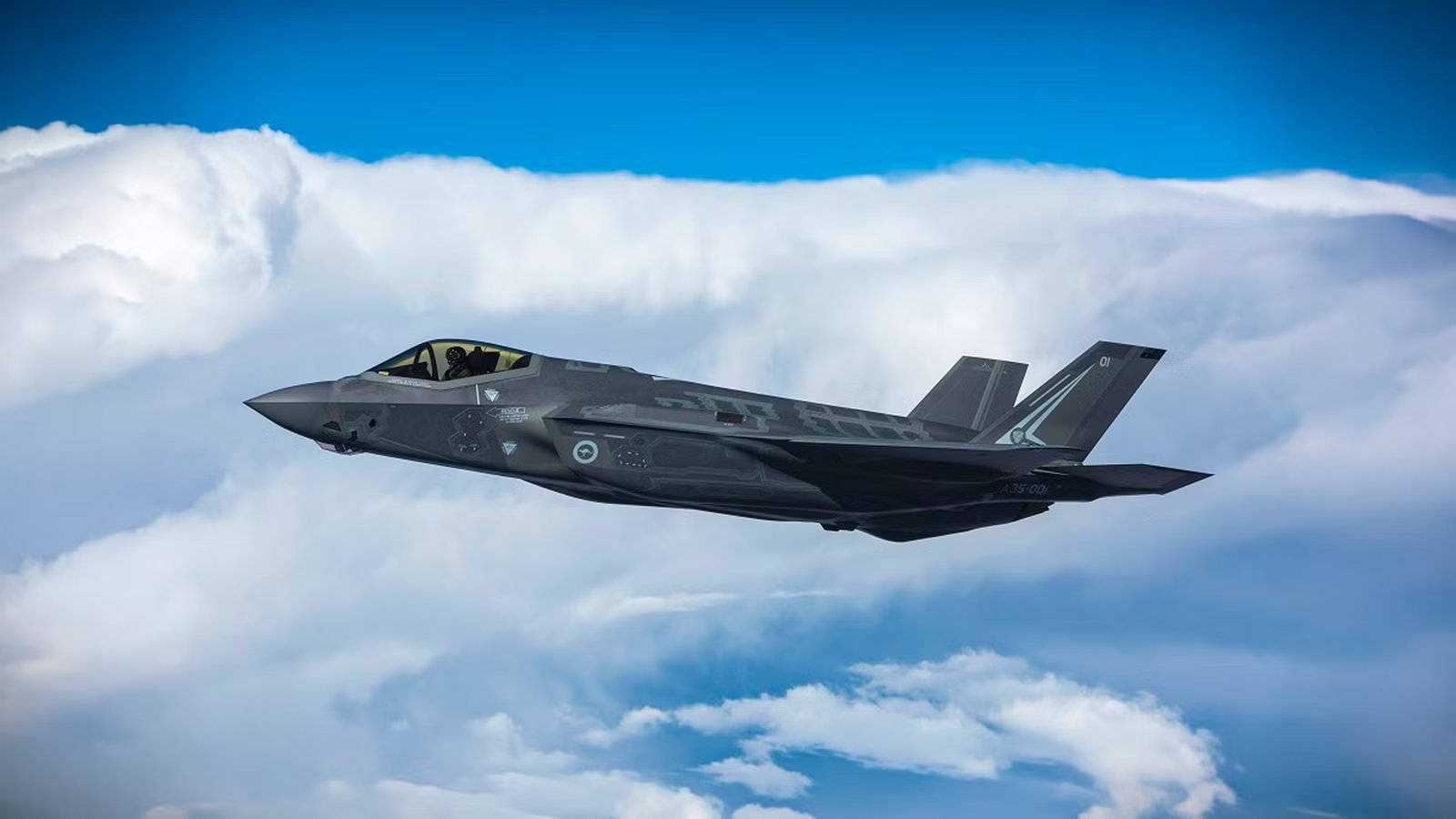
The Australian Department of Defence has formally engaged industry to replace its aging BAE Hawk 127 fleet with an estimated $3.4 billion program budget. Project AIR 6002, Australia’s program to deliver a Future Lead-In Fighter Training System, is facing a complex intersection of budget constraints, trainer fleet fatigue, and strategic pacing that complicates the full growth of the Royal Australian Air Force Lockheed Martin F-35A Lightning II procurement schedule.
The RAAF’s 33 Hawk 127 aircraft have been flying for a quarter of a century. Yet, the RAAF still needs to downselect between 3 contestants that are currently up for consideration: the  Boeing T-7A Red Hawk, KAI T-50 Golden Eagle, and Leonardo M-346 Master. Since this has not yet happened, the RAAF has pushed out emergency funding of around $1 billion to keep the Hawk flying until at least 2031.
Ultimately, the diversion of funding away from other modernization programs is not only detrimental to the acquisition of equipment and material, but retaining an obsolete training platform also slows down and complicates the pilot pipeline. The aging software and flight characteristics of the 25-year-old Hawk cannot fully replicate the high-end sensor fusion, electronic warfare environment, and fifth-generation data link focus of the F-35A Joint Strike Fighter.
The Trouble With Australia’s LIFTS

The delay in choosing a winner for Australia’s Project AIR 6002 stems from a mix of shifting strategic priorities, delayed foreign programs, and a fundamental recalculation of what a modern training ecosystem requires. The release of Australia’s National Defence Strategy and updated Integrated Investment Program (IIP) forced massive budgetary reallocations. High-priority programs like AUKUS nuclear-powered submarines and long-range strike capabilities squeezed available funding, pushing the formal timeline for a multi-billion dollar trainer replacement into the 2030s.
The Boeing T-7A Red Hawk, which is highly favored due to its digital open architecture and alignment with the US Air Force, has suffered significant testing and production delays in the US. Australia could not commit to a down-select for a platform whose baseline configuration and production timelines were still unstable. Furthermore, the RAAF must consider that it is not just purchasing a replacement airplane but rather the vessel for which it will train future fighter pilots how to operate a complex, data-heavy fighter jet like the F-35A.
With the AIR 6002 down-select effectively frozen, the RAAF faced a catastrophic gap: the Hawk 127 fleet was rapidly approaching its original retirement date. This massive injection of funding was required to address the technical gap through critical upgrades. The funding covers upgrading the fleet to the Rolls-Royce/Turbomeca Adour 951 engine. It is also paying for airframe structural testing to ensure that the planes will not fail under the fatigue of their extended service lives.
As a bridge to the future training platform, the funding being invested in the Hawk fleet will also include mission system upgrades that cover emulator radar systems, virtual electronic warfare training suites, digital mapping, as well as ground collision avoidance systems. These upgrades simulate fifth-generation tactical environments inside a legacy airframe, buying the Australian government the necessary time to safely conduct industry engagement and eventually down-select the true trainer of the future.
Budget Cuts Cap The Fighter Fleet

Despite originally expecting to procure 100 examples of the F-35A JSF, the diversion of funding to the AIR 6002, Hawk 127s, and other defense programs appears to have forced the Department of Defence to reduce its total fleet to 72. This essentially eliminated a fourth squadron from the plan and freed up $1.5 billion that could be reallocated to other initiatives.
Some of that funding will be used for entirely unrelated requirements, but one of the ways in which the RAAF has made this funding cut work is by extending the service lives of its existing platforms. Rather than replacing the F/A-18F Super Hornets and EA-18G Growlers with the fourth F-35 squadron, the RAAF is extending the operational life of the Super Hornets. This move functionally removes the immediate requirement for additional F-35As. While the funding shift saved money on buying new F-35As, delaying the AIR 6002 trainer down-select severely impacts the readiness and operational costs of the existing 72-jet F-35A fleet.
Since the 25-year-old Hawk 127 cannot emulate fifth-generation tactical systems, RAAF student pilots cannot complete advanced tactical training before graduating to the frontline jet. Consequently, basic conversion and advanced tactical drills must be flown on actual F-35As. This burns through the finite flight-hour life of Australia’s multi-million dollar stealth assets at a significantly faster rate.
For this reason, and many others, the opposition Coalition within the Australian Parliament has pledged to restore funding that will bring the fighter fleet up to full strength. However, the Labor government successfully won the re-election in the last cycle, which casts a long shadow of doubt about whether or not Australia will ever actually procure more F-35s. Because the ruling party retained government, the Coalition’s plan to initiate F-35 deliveries within five years has been shelved so far.
Up-arming Australian Fighter Jets

The ruling government of the Australian Parliament permanently paused the 100-jet order because it fundamentally shifted how the RAAF should project power. Instead of buying 28 more stealth fighters, the government redirected billions toward an advanced long-range missile inventory. The logic dictates that a smaller fleet of 72 jets equipped with long-range, high-end anti-ship and strike missiles offers greater strategic utility in the Indo-Pacific than 100 jets with shallow weapon magazines.
The government chose to delay the retirement of the RAAF’s F/A-18F Super Hornets and EA-18G Growler electronic attack aircraft. By keeping these highly capable 4.5-Gen+ platforms flying longer alongside the 72 F-35As, they argue the RAAF maintains a highly effective combat mix which still makes the immediate purchase of a fourth F-35 squadron unnecessary. Instead, redirecting that funding into the Guided Weapons and Explosive Ordnance Enterprise makes every F-35 more effective by investing in better weapons instead of simply more planes.
Another benefit is that by not binding Australia to a F-35 scale-up right now, the RAAF keeps its fiscal options open for the late 2030s. The weapons being procured under the GWEO program include missiles that can also be carried by the legacy Super Hornets to effectively create a ‘high-low’ fleet mix like the US Air Force is pursuing.
The AGM-158C long-range anti-ship missile and Joint Air to Surface Standoff Missile will make all of the aircraft in the RAAF dramatically more combat effective on the 21st-century battlefield. The financial freedom could also potentially open the door to a sixth-generation fighter jet program like the Global Combat Air Program that is progressing through a multinational consortium of the United Kingdom, Italy, Japan, and now Canada in observer status.
Maximizing The Most Important Equipment: The Pilot

Even with the moves being made to maximize the RAAF tactical air fleet, the trainer program needs to be modernized in order to ensure that aircrew can use their new ‘exquisite’ stealth fighters to their greatest potential. Modern air combat is no longer about dogfighting; it is about managing data. An F-35A pilot acts like a quarterback in the sky, filtering massive amounts of data from satellites, ships, and radars while managing long-range missiles.
A modern trainer like the T-7A or M-346 features reconfigurable digital cockpits. They can beam virtual threats, fake radar targets, and simulated long-range missile profiles directly onto the student’s screens while they are in flight. The current Hawk 127 belongs to a different technological era. It cannot adequately simulate the high-threat electronic warfare environments, stealth tactics, or sensor-fusion management that pilots face the second they step into an F-35A.
Because the Hawk fleet is aging and limited, the RAAF has to push basic tactical conversion onto frontline F-35As. A modern lead-in fighter trainer can handle up to 60% to 70% of the advanced tactical syllabus at a fraction of the cost. By offloading complex training scenarios to a cheaper, modern trainer fleet, the RAAF protects its 72 frontline F-35As from unnecessary wear and tear. This ensures those stealth jets are fresh and available for actual combat or deterrence missions.
The Downside Of Learning The Hard Way

Stepping straight from a legacy trainer into a fifth-generation fighter is a massive cognitive leap. When student pilots transition from a basic aircraft directly into a data-heavy environment like the F-35, the sudden influx of information can be overwhelming, often described as ‘trying to drink from a firehose.’ Even though a trainee pilot might be highly skilled, the gap between these two generations of aircraft is so wide that it creates a punishing learning curve.
In the Hawk 127, the pilot’s brainpower is largely consumed by the mechanical act of flying. The F-35 practically flies itself. A modern training ecosystem bridges this gap gradually. It allows pilots to master advanced tactics, high-G maneuvers, and synthetic weapon deployment safely in a trainer jet. By the time they graduate to the F-35, the cockpit feels familiar, which drastically reduces training failures and builds a much sharper, deadlier pilot corps.
Students can practice flying with critical telemetry, flight paths, and targeting symbology projected directly onto their visors. Before a student even graduates from the training squadron, they learn how to manage, swipe through, and prioritize massive amounts of data on a large screen. This builds the muscle memory of a “data manager” early, ensuring the F-35 cockpit feels familiar rather than overwhelming.

![Only 84 Miles: American Airlines Launches New Extremely Short Route [Map]](https://dailynewsnblog.com/wp-content/uploads/2026/08/american-airlines-jet-tails-at-the-gate-chicago-o-hare-airport.jpg)