dailynewsnblog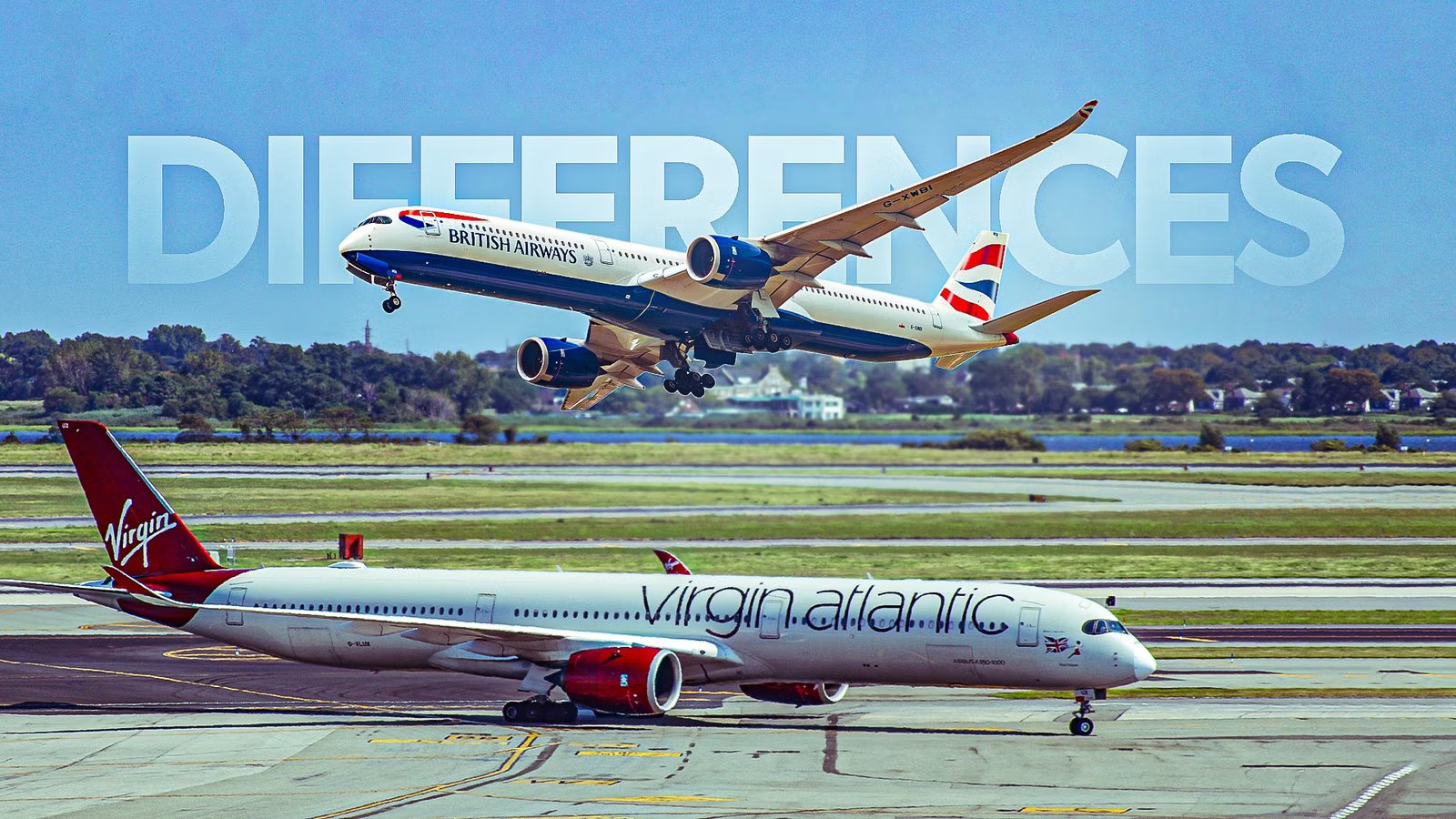
 British Airways and Virgin Atlantic, both UK-based full-service carriers, are major operators of the Airbus A350-1000. However, you would be forgiven for thinking that they have boarded two entirely different aircraft when they got on board each carrier’s respective model, as the two do aim to prioritize different things in their Airbus A350 operations. British Airways, for starters, treats the aircraft as a flagship workhorse for long-haul flying, built around ensuring maximum privacy and a broadly consistent, corporate-leaning premium experience.
Virgin Atlantic, by contrast, uses the aircraft to develop its premium brand further, but in a more subtle manner through mood lighting and its trademark lounge-style social spaces. These choices are evident in nearly every element of the design process, with the carrier emphasizing seat counts, cabin zoning, and even what it considers dead space in the cabin
British Airways aims to create an exceptionally high-yielding business class cabin, with Club Suites as the centerpiece of its offerings, while Virgin deliberately gives up a small amount of real estate to create lounges for premium fliers. Both strategies offer significant potential for revenue generation, improved overall loyalty monetization, and pricing power.
An Overview Of The Airbus A350 And The Purpose It Serves

Airbus launched the A350 family to target a sweet spot in the long-haul market. Widebody range with meaningfully better fuel burn, maintenance, and passenger comfort than older-generation aircraft brings a lot to the table for operators. The Airbus A350-900 and the Airbus A350-1000 share a common platform and cockpit, but the A350-1000 is a stretched, higher-capacity variant. The jet is primarily designed to replace large Boeing 777-300ER-type services while offering significant cargo capacity.
From a technical perspective, the A350 is built around advanced materials. More than 70% of the airframe is built primarily using composite materials, titanium, and modern aluminum alloys. Composites alone account for around 53% of that, offering impressive weight savings. Operators can also enjoy lower maintenance costs, as corrosion resistance reduces operating weight per seat and results in fewer corrosion-driven maintenance tasks. Airbus markets the jet as offering a roughly 25% advantage in fuel burn, operating costs, and carbon emissions.
Category | Specifications (Per EASA) |
|---|---|
Maximum takeoff weight | 623,908 lbs (283,000 kg) |
Range | 9,600 miles (15,750 km) |
Service ceiling | 43,100 feet (13,100 meters) |
For passengers, the Airspace cabin is a core selling point. A quieter twin-aisle operating environment, larger overhead bins, a high ceiling, and full-LED lighting, alongside advanced air filtration systems, all make the passenger experience onboard this type of aircraft significantly more enjoyable than previous-generation jets. The aircraft’s 221-inch (5.6-meter) cabin allows airlines to offer wider seats than on some competing models, making the aircraft more comfortable.
An Overview Of The British Airways Airbus A350

The British Airways Airbus A350-1000 is deliberately the modern flagship for the British legacy carrier. The aircraft offers the long-haul capacity to serve trunk routes with a simplified three-class cabin and the carrier’s newest hard product. The airline currently has 18 Airbus A350-1000 aircraft in service, each with 331 seats. It is also the aircraft that debuted the airline’s Club Suite. British Airways’ network still offers first class seating on other widebodies, but the Airbus A350-1000 instead leans more into business class and premium economy.
The airline’s standard layout includes 56 Club Suites, 56 World Traveller Plus seats, and 219 World Traveller seats, all so that premium cabins can take a larger share of the overall footprint than on many legacy widebodies. The Club Suite is ultimately a key differentiator for the airline. British Airways markets the aircraft’s premium cabin as offering a fully flat bed with direct aisle access for every passenger, as well as a privacy door, offering a clear break from the airline’s older Club World layout.
Reviews typically emphasize strong personal storage and the value of a privacy door on long-haul overnight flights. The aircraft’s lack of a first class cabin is noteworthy, and it showcases British Airways’ ability to focus on serving the highest end of the premium market with a single product.
Sister Variants Examined: The Major Differences Between The Airbus A350-900 & -1000
These two aircraft differ in some key ways.
An Overview Of The Virgin Atlantic Airbus A350

The Virgin Atlantic Airbus A350-1000 is both a tool for long-haul comfort as well as it is just another widebody in the airline’s network. Virgin Atlantic has 12 Airbus A350-1000s, each wrapped in the airline’s newest cabin, with layouts that lean significantly more toward leisure travel. In one layout, there are just 335 seats, spread across a 44-seat Upper Class cabin, a 56-seat Premium cabin, and a 235-seat economy cabin. However, some have a denser configuration, with 16 Upper Class, 56 Premium, and 324 economy seats.
The airline’s Upper Class cabins are built around a suite concept that features window-facing seating, mood lighting, enhanced privacy, and substantial storage. Independent reviews also note that the cabin is arranged in a 1-2-1 pattern with fully flat beds that offer enough space for even tall individuals to relax comfortably. This outward-angled seat design provides a significantly more open feel than most herringbone cabins.
Where Virgin Atlantic truly diverges is when it comes to cabin real estate. On many Airbus A350s, the carrier replaces the traditional onboard bar with its unique Loft, an informal lounge area designed for grabbing a drink, chatting, or watching content on a large screen. The aircraft also features The Booth, a two-person nook designed for dining or a simple change of scenery. These are product choices that ultimately prioritize brand differentiation and the social energy of a cabin over squeezing in extra seats to generate revenue.
What Kinds Of Routes Do Both Of These Aircraft Serve?

Both of these airlines traditionally base the Airbus A350-1000 flying out of  London Heathrow Airport (LHR), with the clearest contrast ultimately being how the two carriers choose to deploy the model. British Airways tends to spread out the model across a wider set of long-haul markets, while Virgin Atlantic tends to use the jet to serve just a few high-profile trunk routes.
British Airways rotates the aircraft across a handful of leisure and business travel destinations. Over the winter, airports that saw the dynamic long-range model included Dallas/Fort Worth International Airport (DFW), Indira Gandhi International Airport (DEL), and Hong Kong International Airport (HKG). This summer, destinations that will see the Airbus A350-1000 include Austin-Bergstrom International Airport (AUS) and Vancouver International Airport (YVR).
Virgin Atlantic’s filings, by contrast, highlight increased concentration of the aircraft on some high-profile routes, including services to Lagos and Los Angeles, as well as more infrequent deployments to San Francisco, Washington Dulles, and Toronto. Virgin Atlantic has traditionally used the aircraft type heavily on routes from London Heathrow to John F. Kennedy International Airport (JFK) as a flagship aircraft, offering the airline’s highest-yielding, top-of-the-market products.
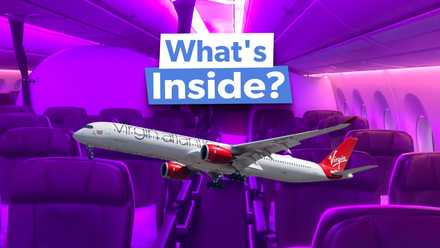
Virgin Atlantic’s 2 Different Airbus A350-1000 Cabin Lay-Outs: Compared
Virgin Atlantic operates a fleet of 12 Airbus A350-1000s.
Financial Considerations For Both Airlines

On paper, the Airbus A350-1000 is already a financial upgrade over earlier-generation models. European aerospace giant Airbus positions the type as offering roughly a 25% improvement in fuel burn and operating costs over previous-generation competitors, and the aircraft’s composite-heavy structure supports longer maintenance intervals and less corrosion-related work. This gives both British Airways and Virgin Atlantic a strong platform margin to play with, as well as a cabin strategy that helps determine how the aircraft’s economics are monetized.
British Airways equips its jets with a deliberately premium-heavy configuration, with these seats accounting for more than 30% of the aircraft’s overall capacity. This makes the aircraft especially valuable on high-yielding routes. The absence of first class cabins helps reduce overall complexity while keeping a flagship feel onboard. In some slot-constrained markets, this mix can boost overall revenue per available seat mile without requiring higher-frequency services.
The Virgin Atlantic 335-seat configuration tilts the balance slightly more towards a boutique product meant for higher-end leisure travelers. The airline also chooses to use some of its floor space for unique areas, sacrificing incremental per-seat revenue in favor of overall brand differentiation and a better Upper Class experience.
The Bottom Line

Both British Airways and Virgin Atlantic lean heavily on their fleets of Airbus A350-1000 jets. These aircraft serve destinations across the globe and are rainmakers for both airlines, albeit in slightly different roles. The airlines each want to make the most of their A350-1000s, but, given operational constraints, they serve very different roles.
British Airways offers a flagship, next-generation business class product onboard its Airbus A350-1000s that one can expect as the standard onboard an international legacy airline. The carrier struggles with product consistency across its fleet, with different aircraft fitted with very different business class cabins that serve different purposes and cater to different kinds of customers.
Virgin Atlantic is increasingly trying to build a Delta Air Lines-style brand image that revolves not just around a premium offering but a premium identity. This strikes right at the heart of what the airline is trying to achieve.