dailynewsnblog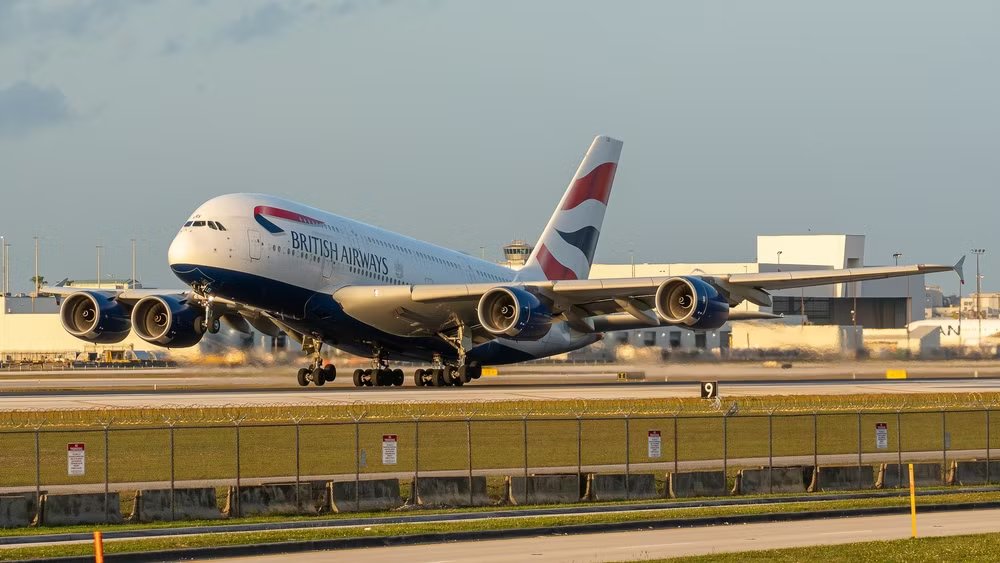
When paying cash, premium economy has become the attractive sweet spot for fiscally responsible passengers who also wish to escape the discomfort of economy class. Some passengers see premium economy as a sort of business-lite option that’s good enough. But this can become somewhat muddled when purchasing upgrades with loyalty points . It can occupy a sort of awkward position, as upgrading from economy can be expensive in terms of points, while the remaining upgrade to business class can be reasonably modest.
Often a better strategy for passengers willing to spend a bit more cash and points is to purchase an upgradable premium economy seat and then wait for offers to upgrade to business with points and/or cash. Here is why upgrading from economy to premium with points can be one of the most inefficient ways to spend accrued points. Note that this is very general and varies between airlines, routes, peak/off-peak schedules, and loyalty status.
Premium Economy’s Awkward Middle Ground

When it comes to redeeming points, premium economy tends to occupy an awkward middle ground between economy and business class. On a cash basis, premium economy is often placed fairly well between the two classes, but points are somewhat different. The core issue is that points are often better spent on upgrading from premium to business class.
If an economy class fare costs $900, it would tend to cost around 40,000 points. The premium economy seat would likely cost around $1,600 in cash and 95,000 points. A plausible business class fare would be around $4,500 and around 130,000 points. This means that premium is much more expensive than economy in points, but not that much cheaper than business.
Premium produces a low cents-per-point return. In the scenario above, an economy mile is worth around 2.25¢, while business is around 3.46¢. But premium economy only returns around 1.68¢ per mile. Given a choice, many passengers may prefer to just pay the extra points and upgrade straight to business class. This isn’t always possible, as upgrades may be limited to the next cabin above the fare purchased.
Airlines Have Different Upgrade Pricing

Airlines have differing ways to calculate points upgrades. British Airways uses a pricing basis using distance zones and cabin differences, while its rival Virgin Atlantic uses distance bands. Lufthansa uses regional pairs, while Air France/KLM has a system using a dynamic pricing calculator. In the United States, Delta Air Lines uses dynamic pricing, and United Airlines uses a dynamic PlusPoints and mileage pricing scheme.
British Airways allows passengers to upgrade to a new flight when they book. An upgrade with British Airways’ Avios consists of the cash amount for the flights, an Avios amount for the upgrade, and the associated taxes, fees, and carrier charges. The amount of Avios required for the upgrade also depends on whether the flight is scheduled on a peak or off-peak date.
British Airways explains: “Here’s an example for a peak one-way upgrade from London to New York, upgrading from premium economy (World Traveller Plus) to business (Club World): Club World: 90,000 Avios – World Traveller Plus: 60,000 Avios = 30,000 Avios to upgrade.” It should also be noted that for many airlines, like Lufthansa, pricing is structured by how ‘expensive’ the original cash ticket was. Cheaper fare buckets (like discounted Economy) require more points to upgrade.
Virgin Atlantic’s Saver Seating With Points

It should be noted that the formula can change between airlines and by route, loyalty status, and various other factors. It’s also worth noting that in 2024, Virgin Atlantic’s Flying Club became the first British program to allow members to pay for any seat onboard with Virgin Points. This came alongside the launch of new Virgin Atlantic Saver reward seats and increased points earning rates in its premium economy and business classes.
Virgin Atlantic said at the time, “These enhancements will revolutionise the world of redemptions for Virgin Atlantic customers, continuing a long history of innovation in Flying Club, alongside rewards club partner Virgin Red.” The airline published a table of its expected lowest Saver reward seating pricing for its most popular routes (one way). For these Saver reward seats, an economy seat on the popular London to New York route starts at 6,000 points.
Top five most popular Virgin routes (per Virgin Atlantic) | Starting Saver economy class | Starting Saver premium economy class | Starting Saver business class |
|---|---|---|---|
London to New York | From 6,000 points | From 10,500 points | From 28,500 points |
London to Miami | From 7,500 points | From 13,500 points | From 28,500 points |
London to Orlando | From 7,500 points | From 13,500 points | From 28,500 points |
Manchester to Orlando | From 7,500 points | From 13,500 points | From 28,500 points |
London to Los Angeles | From 9,000 points | From 16,500 points | From 40,500 points |
For premium economy, it starts at 10,500 points, and then 28,500 points for business class. For the longer-haul route from London to Los Angeles, economy starts at 9,000 points, premium at 16,500 points, and business at 40,500 points. The most popular non-London route is Manchester to Orlando. On that route, economy class starts at 7,500 points, premium economy at 13,500 points, and business class at 28,500 points.
Premium To Business Is The Sweet Spot

As a general rule across legacy airlines, upgrading from economy to premium economy with points usually offers poor value. Upgrading from economy to business can be mixed, and sometimes upgrades are limited to the next cabin, which is premium economy if present. Upgrading from business class to first is very niche. The sweet spot is often upgrading from premium economy to business class.
This is because most airlines require relatively few additional points to upgrade from premium economy to business, as stated in the first section of this article. At the same time, the leap in product quality from premium to business is enormous. Passengers can generally expect a lie-flat bed, lounge access, much better wine and dining, and privacy. With these upgrades, it is always important to purchase an upgradable fare, as not all fares are upgradable.
But upgrading doesn’t have to be with points. It is also possible with some airlines to purchase an upgradable premium economy fare and then wait for offers or place cash or points bids to upgrade to business class. This is often a much cheaper way to get a business class fare than buying business class upfront. That said, attractive upgrade offers are not guaranteed, and loyalty status can make a big difference.
Other Cost-Saving Hacks

As a rule of thumb, a consensus among loyalty experts is to purchase premium economy with cash and then use points to upgrade to business. This is typically considered better than buying economy and then trying to upgrade. Perhaps the best case is for corporate travelers whose employer pays for premium economy on medium- and long-haul flights; they can then use their private points to upgrade to business. Among loyalty experts, this is often seen as one of the best uses of loyalty points.
Naturally, most passengers are not traveling for work with premium economy seats paid for by an employer. But there are some hacks when it comes to purchasing lower premium economy fares with cash. One is to always book return fares whenever possible; the return fare can be steeply discounted.
Another hack is to search for connecting fares independent of the trunk route. For example, a flight to Auckland from Los Angeles with a connecting flight in San Francisco can be dramatically cheaper if booked as separate fares, even if it’s with the same airline and the same flights. Sometimes it’s much cheaper to book the tickets together as a single fare. The important point is to search for connecting flights independently, just to check.
Premium Positioned To Protect Business Class

Many legacy airlines have embraced premium economy as its own independent cabin class. Premium economy is not just economy with a better seat; it is a deliberate third pricing tier between economy and business. Its appeal is that it captures economy passengers willing to pay extra to upgrade but unwilling to pay for business class. It targets price-sensitive business travelers and comfort-seeking leisure travelers.
One reason airlines were often reluctant to introduce it was the fear that it would encourage business-class passengers to downgrade. Consequently, airlines set limits on how good they can make the class or how low they can sell the seats. But airlines seem to have largely gotten it right. Around the world, legacy airlines are retrofitting their cabins and introducing more premium economy seats. These typically come at the expense of economy class seats, not business class seats.
On retrofitted aircraft, the number of business class seats is generally holding steady or somewhat increasing. One example is British Airways and its program to retrofit its A380s. These currently come with 14 first class suites, 97 business class seats, 55 premium economy seats, and 303 economy class seats for 469 seats in total. The new configuration will feature 12 first-class suites, 110 business seats, 84 premium seats, and 215 economy seats, for a total of 421 seats. That is a reduction of 88 economy seats, an increase of 29 premium seats, and 13 business seats.