dailynewsnblog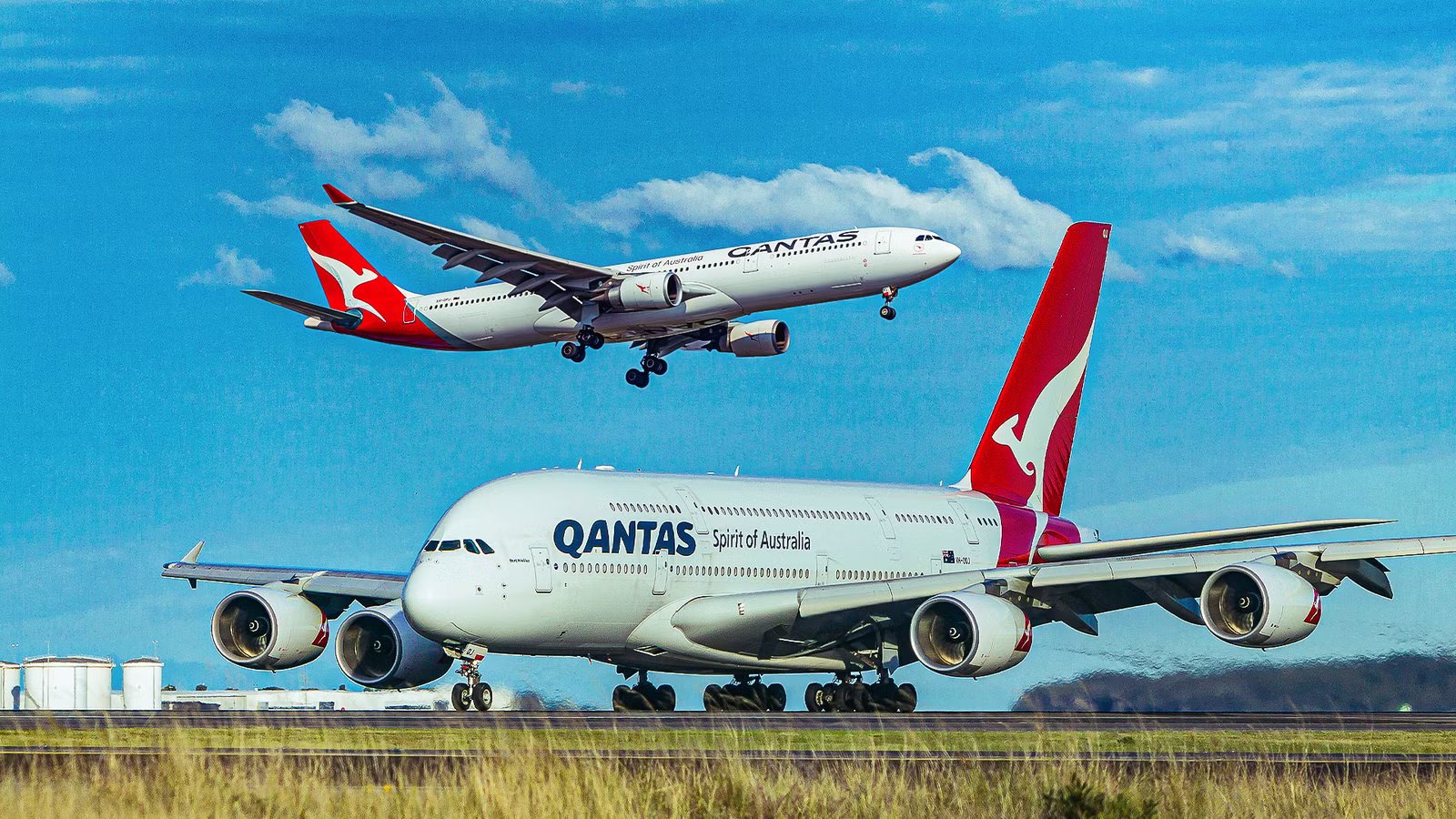
Qantas was among the airlines  Boeing consulted during the 777 program’s development in the 1990s, yet the carrier never placed an order for the type. In a pivotal 2000 fleet decision under CEO James Strong, Qantas chose the Airbus A330 for domestic and regional routes, the 747-400ER for long-haul, and later the Airbus A380, citing the Boeing 777 as too large for domestic use while Australia’s strict ETOPS regulations made twin-engine ultra-long-haul flights nonviable at the time.
Soon after, the Boeing 777-300ER went on to become the backbone of virtually every major long-haul carrier’s fleet, from  Emirates to
  Singapore Airlines to Cathay Pacific. Decades later, Qantas again passed on the 777 family when it selected the Airbus A350-1000 over the Boeing 777-8X for its Project Sunrise ultra-long-haul program.
This article explores the strategic decisions Qantas once made, and how Australia’s unusually strict ETOPS regulations, combined with a single fleet order in 2000, locked the airline out of the world’s most popular widebody aircraft for an entire generation.
A Closer Look At Qantas’ Market Position In 2000

During the 1980s and early 1990s, Qantas underwent major restructuring in response to declining market share and growing competition from charter operators and emerging Asian airlines. By 1983, its share of air passenger movements had fallen to 44%, prompting the airline to modernize its management, fleet, and network strategy.
To strengthen its market position, Qantas introduced new aircraft such as the Boeing 747-400 and extended-range 767-300, expanded services across Asia, and strengthened the “Kangaroo Route” through hubs in Singapore and Bangkok. The airline further improved its competitive position through the 1992 acquisition of Australian Airlines and a strategic partnership with British Airways in 1993, transforming Qantas into a more globally integrated carrier by the mid-1990s. In December 2020, Qantas had 34% market share on routes from Australia (see the chart below).
By the early 2000s, Qantas was attempting to reposition itself within the increasingly competitive global hub-and-spoke system while protecting its dominant position within Australia. The airline sought to remain competitive with major Asian carriers such as Cathay Pacific and Singapore Airlines without weakening its strong national identity, reflected in branding focused on the airline “calling Australia home.” At the same time, Qantas aimed to maintain the characteristics of a successful legacy carrier, balancing shareholder profitability, customer service, and relatively strong job security.

This strategy also reflected broader industry pressures created by the rapid growth of low-cost carriers. The low-cost airline model focused heavily on minimizing operational costs through simplified fleets, higher aircraft utilization, fast turnarounds, outsourced services, lower labor costs, and unbundled fares. Airlines also increasingly relied on direct online bookings to reduce distribution costs and overheads. These changes placed growing pressure on traditional full-service airlines such as Qantas to remain cost-competitive while maintaining premium international operations.
Qantas’ 2000 Fleet Order

Qantas was among the airlines Boeing consulted during the development of the 777 program in the 1990s. Despite this early involvement, the airline ultimately rejected the Boeing 777 in a pivotal fleet decision announced in 2000 under then-CEO James Strong. After evaluating the aircraft, Qantas concluded that the 777 was too large for its domestic operations, leading the airline to select the Airbus A330 for medium-capacity routes instead. For long-haul international services, Qantas chose a combination of the Boeing 747-400ER and the Airbus A380.
The landmark fleet order consisted of 12 Airbus A380s, 13 Airbus A330s (split between seven A330-200s and six A330-300s), and six Boeing 747-400ERs. The decision marked a significant shift in Qantas’ fleet strategy and represented a major victory for Airbus. For decades, Qantas had been a near-exclusive Boeing customer, operating a simplified mainline fleet built primarily around the Boeing 737, 747, and 767 families.
The Airbus A380 was selected to serve Qantas’ highest-density and most strategically important long-haul routes, particularly services between Australia and Los Angeles and between Australia and London. The aircraft was designed to carry approximately 501 passengers with a range of around 14,800 kilometers. Qantas originally expected the first delivery in October 2006, although delays to the A380 program meant the airline did not receive its first aircraft until October 2008, exactly two years later. The first aircraft, registered VH-OQA, was named Nancy-Bird Walton in honor of the pioneering Australian aviator. It initially operated between Melbourne and Los Angeles, a route covering approximately 12,749 kilometers.
Alongside the A380 order, Qantas also became the launch customer for the Boeing 747-400ER (Extended Range), a variant designed to extend the life and capabilities of the 747 program. The aircraft could carry up to 500 passengers, utilized the same engines and cockpit technology as the standard 747-400, and offered a range exceeding 14,816 kilometers. Qantas took delivery of its first 747-400ER, registered VH-OEF, on October 31, 2002. The aircraft soon entered commercial service on one of the airline’s most demanding long-haul routes between Melbourne and Los Angeles.
While the Qantas order provided an important boost to the Boeing 747 program, the rejection of the 777 proved historically significant. Coincidentally, 2000 was also the year Boeing launched the 777-300ER, a model that would go on to become one of the most successful and influential long-haul aircraft ever produced. Since its introduction, nearly every major global airline with an extensive long-haul network has ordered the type. The 777-300ER offered airlines a compelling combination of lower operating costs, high fuel efficiency, and long-range capability, while carrying fewer passengers than the 747-400 yet retaining enough capacity to function effectively as a flagship aircraft.
Why Qantas Is Doubling Down On The Airbus A380 While Launching The World’s Longest Flights
The superjumbo will continue to be the carrier’s flagship until the 2030s.
Other Factors Influencing The Decision: Regulatory Constraints

Shutterstock | Simple Flying
Perhaps the most important reason why Qantas ultimately purchased so many Airbus aircraft was not simple brand preference, but the technical and regulatory constraints that shaped the airline’s long-haul operations at the time.
One of the key factors was ETOPS, an acronym for “Extended-range Twin-engine Operational Performance Standards.” ETOPS regulations determine how far a twin-engine aircraft can fly from a suitable diversion airport in the event of an engine failure. Ratings such as ETOPS 90 or ETOPS 180 refer to the number of minutes an aircraft is permitted to operate on a single engine under cruise conditions. These approvals have a major impact on which routes a twin-engine aircraft can safely and legally operate.
During the late 1990s and early 2000s, Australia maintained unusually strict ETOPS requirements compared to many other aviation regulators. As a result, certain ultra-long-haul routes from Australia (particularly services to destinations such as Johannesburg and Santiago) were not considered commercially viable for twin-engine aircraft like the Boeing 777. This forced Qantas to continue relying on four-engine aircraft, including the Boeing 747-400ER, for many of its long-range operations.
The A330 was mainly intended for domestic and short-to-medium-haul Asian routes, where lower ETOPS ratings were less restrictive, and the aircraft offered an effective balance of efficiency, range, and capacity.
Because ETOPS restrictions continued to limit operational flexibility for twin-engine aircraft, Qantas leaned heavily into the proven safety, range, and redundancy of large quad-engine jets. The airline went on to order 12 Airbus A380s and six Boeing 747-400ERs, enabling Qantas to operate high-density direct trunk routes such as Sydney–Los Angeles and Sydney–London without being constrained by ETOPS limitations.
Other Factors Influencing The Decision: Fleet Commonality

Qantas had been a near-exclusive buyer of Boeing aircraft for decades, operating a simplified mainline fleet centered around the Boeing 737, 747, and 767 by the late 1990s. The table below shows the composition of most of the Qantas fleet in 1995 and 2000. At the time, the airline’s fleet primarily relied on CFM, Rolls-Royce, and GE CF6 engines.
|
1995 |
2000 |
|
|---|---|---|
|
Airbus A 330−220 |
4 |
|
|
Boeing 747−400 |
18 |
24 |
|
Boeing 747−300 |
6 |
5 |
|
Boeing 767−300 ER |
16 |
22 |
|
Boeing 767−200 ER |
7 |
7 |
|
Boeing 737−400 |
21 |
22 |
|
Boeing 737−300 |
16 |
16 |
Fleet commonality was a major factor in Qantas’ strategic planning. The airline’s newly purchased A330s, 747-400ERs, and 767s all utilized variants of the GE CF6 engine, creating significant maintenance, training, and operational cost advantages. From Qantas’ perspective, it made more sense to place a large order for aircraft already compatible with its existing engine infrastructure rather than introduce an entirely new engine family such as the GE90 series used on the Boeing 777.
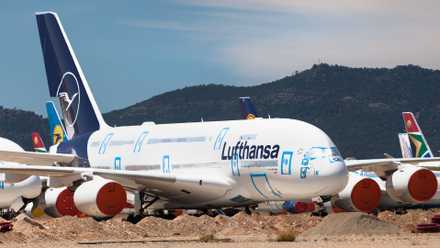
Why Airlines Don’t Want Their Airbus A380s Anymore
A look at the challenges of operating a fleet of Airbus A380s today, and the future outlook on the type.
Around 2000, fuel prices were relatively low and far more stable than they would become later in the decade. As a result, Qantas made long-term fleet planning decisions under the assumption that fuel would remain comparatively inexpensive for years to come. Four-engine aircraft such as the Airbus A340 were therefore still considered commercially viable despite being less fuel efficient than twin-engine aircraft like the Boeing 777. However, rising oil prices throughout the 2000s dramatically changed airline economics, making the 777’s superior fuel efficiency and twin-engine long-haul economics far more attractive in hindsight.
Boeing’s Second Chance: Project Sunrise

The famous fleet order was placed more than 25 years ago, and since then, Qantas has changed considerably as an airline. In 2017, the carrier introduced the ambitious “Project Sunrise” initiative, aimed at operating some of the world’s longest non-stop flights. Scheduled to launch in early 2027, the project will connect Sydney directly with London (9,188 nautical miles) and New York, with earlier plans also considering destinations such as Cape Town, Rio de Janeiro, and Paris. These flights are expected to be up to 22 hours long; however, Qantas’s research flight from London to Sydney on an A350 took 19 hours and 19 minutes.
Decades after originally rejecting the Boeing 777, Qantas once again evaluated a Boeing aircraft for its future long-haul strategy, considering the Boeing 777-8X for Project Sunrise and as a potential long-term replacement for the Airbus A380. However, in late 2019, the airline ultimately selected the Airbus A350, citing better commercial terms, fuel efficiency, and operating economics. In doing so, Qantas once again demonstrated its long-term loyalty to Airbus.
Qantas ordered 12 Airbus A350-1000ULR aircraft specifically configured for ultra-long-haul operations. The first aircraft has already rolled off the assembly line, with delivery currently expected in late 2026.
If Only Time Machines Actually Existed

Former Qantas CEO Alan Joyce admitted in 2014 that the airline’s 2000 fleet order was, in hindsight, a mistake, saying he wished he had a “time machine” to reverse the decision made by his predecessor. However, Joyce himself was not in charge when the order was placed, and by 2014, the aviation industry had changed dramatically. 14 years is a significant period in aviation, during which regulation, fuel efficiency, and market conditions constantly evolve.
The pace of technological change is extremely rapid. Think about AI. ChatGPT itself only launched in late 2022, yet within just a few years, artificial intelligence has been implemented across industries worldwide, and now it is everywhere. Judging decisions made in 2000 through the lens of 2014 inevitably ignores the vastly different industry realities that existed at the time.
Joyce’s public criticism of the original Airbus-over-Boeing decision is also questionable, given the controversies surrounding his own leadership. He left Qantas after significant reputational damage, including lawsuits over accusations that the airline sold tickets for flights that had already been canceled, as well as alleged unfair pandemic-era sackings. The airline allegedly illegally outsourced the jobs of around 1,700 ground staff during the COVID-19 period.
In 2024, Qantas cut his post-exit bonuses by $9.3 million following an external review that found management decisions during and after the COVID-19 period had alienated customers, employees, and shareholders. It is therefore fair to say that some of Joyce’s own decisions may ultimately have proven more damaging to the airline than those made two decades earlier.
Simple Flying Quiz
Easy (15s)Medium (10s)Hard (5s)