dailynewsnblog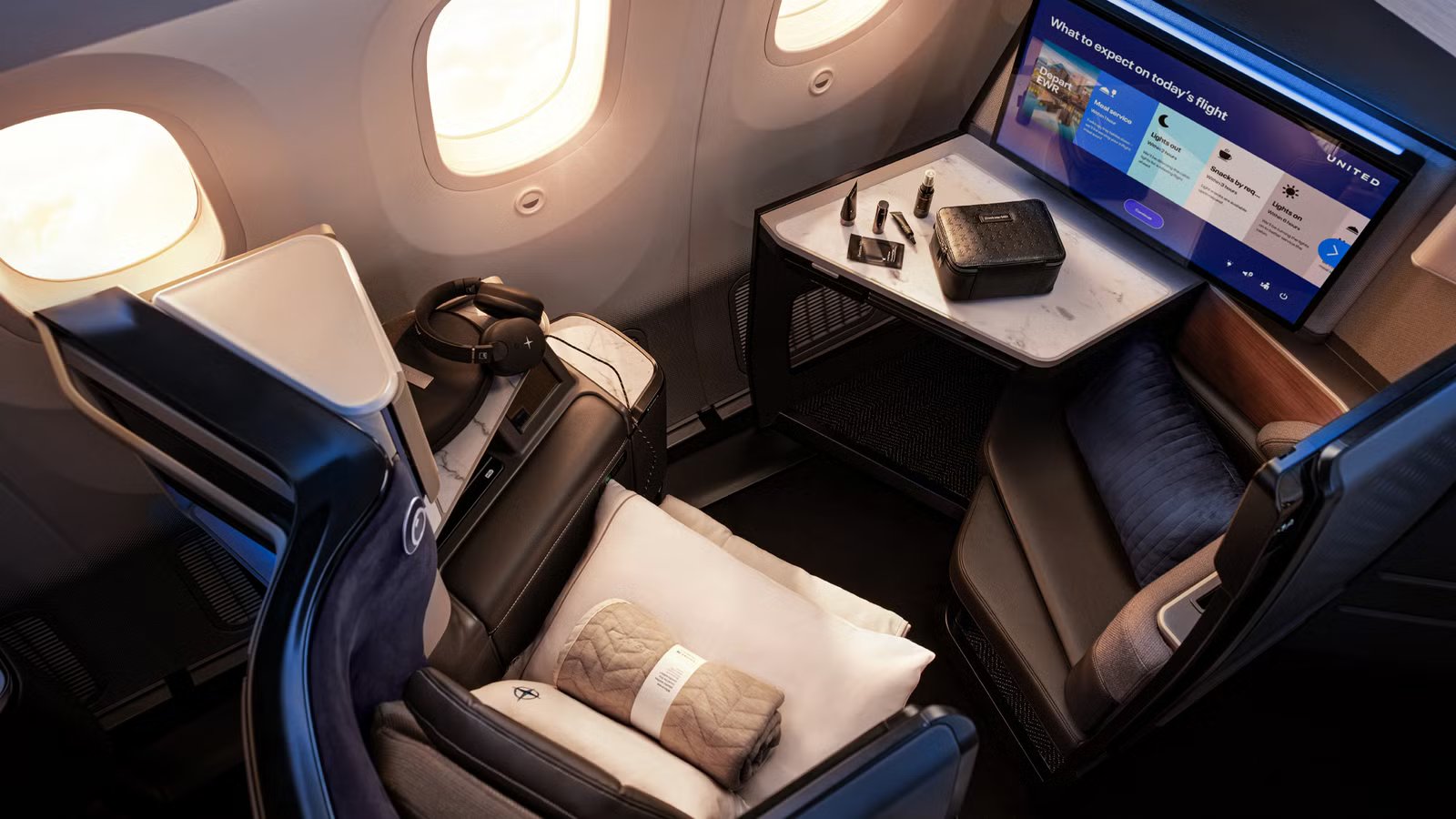
 United Airlines launched its Elevated Boeing 787-9 in spring 2026 with a redesigned cabin carrying 64 Polaris suites and eight larger Polaris Studio suites. The aircraft represents the most premium-heavy widebody any US carrier has put into service, with 99 of its 222 seats in premium cabins and a product designed to compete at the top end of long-haul business class. Every suite is equipped with a sliding privacy door.
There was one problem. The FAA had not completed the safety certification process covering emergency egress by the time the aircraft began flying passengers, and every suite launched with its door locked in the open position. United chose to begin service rather than wait, delivering the rest of the product on schedule while the certification continued in parallel.
United’s New Polaris Suites Launch With The Doors Locked Open

United Airlines’ first Elevated  Boeing 787-9 entered domestic service in late March 2026, flying proving runs between San Francisco (SFO) and Houston (IAH) to familiarize crews with the new cabin before its international debut. On April 22, the aircraft operated its first long-haul revenue flight as UA1 from San Francisco to Singapore, followed by the launch of SFO to London Heathrow (LHR) on April 30.
The 222-seat aircraft carries 64 Polaris business class seats and eight Polaris Studio suites in a premium-heavy layout that gives it the highest percentage of premium seats of any US carrier’s widebody. It delivered on nearly everything United had promised, with one notable exception. The sliding privacy doors fitted to every Polaris and Polaris Studio suite were locked in the open position at launch.
A memo circulated to flight attendants ahead of the inaugural flights instructed crew to disregard all door-related duties until further notice. The doors are physically installed and mechanically functional, but the FAA had not yet completed the safety certification process covering emergency egress by the time the aircraft entered service. United confirmed the doors would become operational once certification was received, but provided no specific timeline.
The early days of service also produced an unrelated operational issue. On April 24, two days after the Singapore Changi (SIN) launch, the return flight UA2 detected an electrical smell from the air vents roughly 30 minutes after departure from Changi. The crew returned to Singapore, and the aircraft was grounded for inspection. The incident was a maintenance issue unrelated to the door certification, but it added a headline to a product launch that was already drawing attention.
Why The FAA Has Not Yet Certified The Doors

The FAA’s certification concern with the Polaris suite doors is specific and well-established. Any movable cabin feature that could obstruct a passenger’s path to an emergency exit during an evacuation must be certified to demonstrate that it does not delay egress. The FAA’s 90-second evacuation standard requires every passenger to be able to reach an exit within that window under worst-case conditions, which includes darkness, blocked exits, and panicked movement. A sliding door that is closed when an evacuation begins is a potential obstruction, and the FAA requires testing and documentation to confirm that the door’s design, position, and locking mechanism do not add meaningful time to an individual passenger’s exit from the seat.
The certification process for cabin modifications of this type involves mechanical testing of the door mechanism, software validation for any motorized components, and integration with crew training protocols. United submitted its technical documentation to the FAA in early 2026, but the review was not complete by the time the aircraft entered revenue service. The FAA has not indicated any fundamental problem with the door design. The delay reflects the standard timeline for certifying a new cabin feature rather than a specific safety concern.
The situation is not unique to United. Every airline that has introduced business class suite doors has gone through the same FAA certification process. What made United’s case more visible was the decision to launch the product before certification was complete, which placed the locked doors in front of paying passengers and press reviewers on the inaugural flights rather than resolving the issue out of public view.
United Airlines To Debut 1st Premium-Heavy Boeing 787-9 From San Francisco Next Month
United Airlines unveils its most premium international aircraft, featuring a nose-to-tail layout of 99 premium seats.
What The New Polaris And Polaris Studio Actually Offer

The Elevated 787-9 carries 64 Polaris business class seats arranged in a 1-2-1 layout with direct aisle access at every position. The standard Polaris suites feature lie-flat beds, 19-inch (48.26 cm) 4K OLED touchscreen displays, wireless charging, Bluetooth connectivity, and Starlink WiFi. A complimentary snack bar is installed in the cabin for self-service between meal periods. The seat itself is a meaningful upgrade over the original Polaris product that United introduced in 2016, with improved storage, better surface finishes, and the privacy door that will eventually function once certification is complete.
The Polaris Studio occupies the first two rows and represents something different. The eight Studio suites are 25% larger than standard Polaris seats and include a companion ottoman that converts into a second seating position, allowing two passengers to dine or work together face to face. Each Studio suite has a 27-inch (68 cm) 4K OLED screen, the largest offered by any US carrier in business class, and receives an exclusive catering service that includes an Ossetra caviar amuse-bouche course and dedicated entrée options not available in the standard Polaris cabin. The amenity kit is also upgraded with higher-end skincare products. United charges a premium for Studio over standard Polaris, creating a two-tier business class cabin similar in concept to JetBlue’s Mint and Mint Studio split.
The overall cabin density tells the story of what United is targeting with these aircraft. The Elevated 787-9 seats 222 passengers compared to the standard 257-seat layout, with 99 of those seats in premium cabins. That is the highest premium seat ratio of any US carrier widebody. The aircraft is configured for routes where premium demand is deep enough to fill that capacity at fares that justify the reduced economy revenue, which is why the initial deployment is limited to San Francisco’s highest-yield international routes.
Delta Had Doors In 2017: Why United Took Nine Years Longer

Delta Air Lines introduced the first business class suite with a sliding privacy door on a US carrier in October 2017, debuting the product on its new Airbus A350-900. The airline has since expanded the door-equipped Delta One suite to its A330-900neo fleet and announced plans to retrofit its A330-200 and A330-300 aircraft with suites featuring privacy doors starting in late 2026. Delta currently operates roughly 80 widebody aircraft with door-equipped suites and expects 90% of all Delta One seats to have sliding doors by 2030. Qatar Airways launched QSuites with closing doors in the same year as Delta, establishing 2017 as the point at which doors became the benchmark for competitive long-haul business class.
American Airlines followed in 2025 with its Flagship Suite product on the 787-9, making it the second US carrier to offer business class doors. United, despite launching its original Polaris product in 2016, one year before Delta’s suites, did not include a door in the design. The original Polaris was a strong product for its time, with a lie-flat bed, direct aisle access, and a competitive soft product, but as Delta’s door-equipped suites became the standard against which US business class was measured, the absence of a door became Polaris’s most visible shortcoming.
United’s decision to wait was partly strategic and partly a function of fleet timing. Rather than retrofit existing aircraft with doors, United chose to introduce the feature on newly delivered 787-9s as part of a comprehensive cabin redesign. The result is that the product arriving in 2026 is a generation ahead of what a mid-cycle door retrofit would have produced, but it arrives nine years after Delta set the standard and a year after American closed the gap. United now has four Elevated 787-9s in service and several more by year-end, but full fleet coverage will take years.

Tough Luck: United Airlines Grounds New Premium Boeing 787-9 After 1st Long-Haul Flight
The aircraft is equipped with the carrier’s new elevated interior.
20 Aircraft By Year-End And The Fleet Rollout Ahead

United currently has four Elevated 787-9s in active service, all based at San Francisco International Airport. The aircraft operates daily flights on two routes: San Francisco to Singapore and San Francisco to London Heathrow. The expansion plan for the remainder of 2026 is already mapped out. A second daily San Francisco to London frequency launches on May 21, followed by a second daily Singapore service from August 1. On September 1, a third daily London departure and a new route to Zurich come online. By September, every United flight from San Francisco to London, Singapore, and Zurich will operate the Elevated cabin.
United expects to take delivery of 20 Elevated 787-9s by the end of 2026, which the airline says would represent the most widebody deliveries by a US carrier in a single year since 1988. That number depends on Boeing meeting its delivery commitments, which, given the manufacturer’s recent track record, is not guaranteed. A further ten are expected in 2027, bringing the total to 30. As more aircraft arrive, the Elevated product will expand beyond San Francisco to additional hubs, with the aircraft eventually expected to replace the aging premium-heavy 767-300ERs that United currently uses on high-yield European routes, such as to cities like Geneva and Zurich.