dailynewsnblog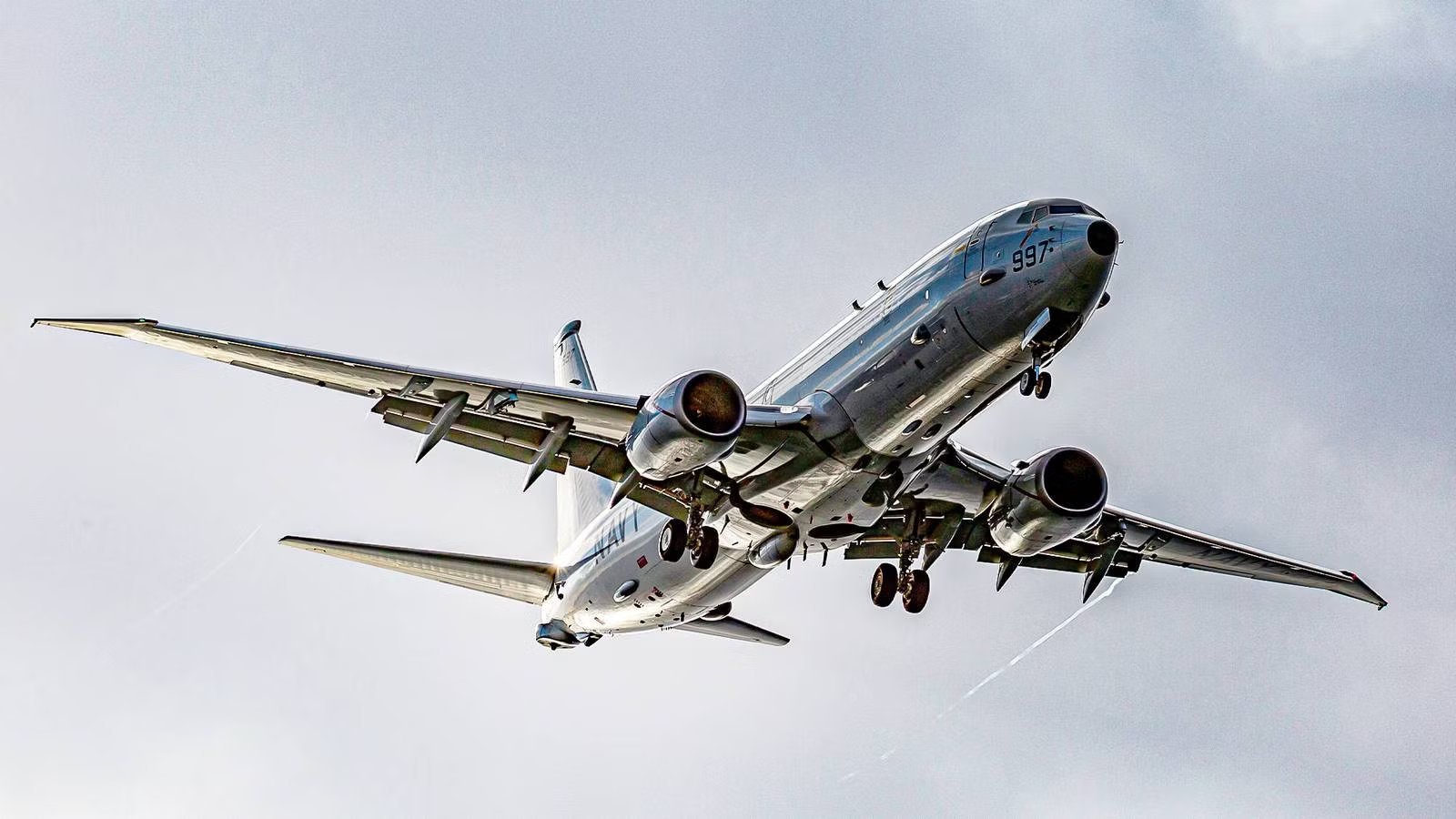
The Royal Air Force in the United Kingdom took delivery of the first  Boeing P-8A Poseidon Maritime Patrol aircraft in 2019. It was the first in the North Atlantic Treaty Organization to induct the new Boeing MPA after the United States. In the year that followed, the roster of nations to adopt the Poseidon is now up to five.
This massive boost in coastal intelligence, surveillance, and reconnaissance capability comes at a time when the Russian military has been increasingly active with illegal ‘Shadow Fleet’ operations. For the RAF, the military-grade 737-800 replaced its Cold War-era BAE Nimrod jet-powered MPA before most of the other partners, and even the US, where it replaces turboprop airplanes.
For the US Navy, the Poseidon replaced the 1950s-era Lockheed P-3 Orion and brought a half-century leap in technology with it when it was introduced in 2013. Now the members of NATO are embracing the P-8 for its massive performance enhancement but also dramatically greater payload, electrical power for systems, and far higher Force Readiness levels.
Russian false-flag vessels operate ships that are in critically poor states of repair and, in addition to conducting their criminal activities, also pose safety risks to other shipping and potential environmental hazards and worst-case scenarios. Since 2022, Russia’s shadow fleet has been implicated or directly linked to numerous incidents when undersea cables or pipelines were cut in the Baltic or North Atlantic.
The Airborne Vanguard Of European Waters

After the invasion of Ukraine in 2022, the Russian Navy retreated into its harbors, where it has attempted to protect its ships from drone attacks while the shadow fleet conducts operations on its behalf. This is a twofold strategy to overcome the vulnerabilities of its officially flagged vessels but also to subvert the economic sanctions that have been imposed on Russia by Europe and the US.
The persistent undersea sabotage by Russian paramilitary forces coincides with the scheduled retirement of many legacy MPAs across Europe. Broder Nielsen, a German Naval Aviation Commanding Officer, gave these remarks at the Farnborough Airshow on the performance of the Poseidon since Germany received its first examples last year:
“The introduction of the P-8 Alpha represents much more than just the arrival of a new aircraft. It marks the establishment of modern maritime patrol and anti-submarine warfare capability, and it will significantly enhance our contribution to NATO’s maritime security as well… our primary operational focus lies in the High North. It lies in the North Sea and in the Baltic. These regions are of vital importance for NATO and remain central to collective deterrence and defense.”
Norway has also been flying a squadron of five Poseidon on Baltic patrols since 2021, and Denmark ordered two of its own this June, with the possibility of a third remaining open as well. To complement the new twinjet MPAs, all three nations plus new NATO member Finland have collectively agreed to purchase Northrop Grumman MQ-4C Triton ISR drones. Germany also ordered MQ-9B SeaGuardian drones and is also in talks to raise its total Poseidon order to 12 airframes.
Common Defense Under The Global Fleet

The baseline benefits of the P-8 for operators are the higher speed, altitude, and payload, along with one of the largest and most reliable supply chains in the aviation industry. The strategic advantage of the aircraft’s global fleet is the interoperability between alliance members. Every P-8 is part of a unified system, whether the Poseidon is dispatched by Norway to patrol the Greenland-Iceland-UK Gap in the Atlantic or by the Royal Australian Air Force.
That makes joint missions far more effective and provides access to the shared expertise of all 11 operators around the world. Because the workstations, sensor suites, and flight decks are identical across nations, allied crews can even integrate or operate each other’s aircraft with minimal reorientation. Nielsen commented on the value presented by this aspect of the P-8, saying:
“One of the great strengths of the P-8 community is the willingness of operators to share experience and expertise, and we are benefiting greatly from this cooperation.”
When a single P-8 encounters a unique system anomaly or discovers a new system quirk halfway across the world, that data is instantly logged, analyzed, and disseminated across the entire network. This collective intelligence allows member nations to refine and enhance predictive maintenance procedures. In the air, this alignment translates into seamless, real-time mission collaboration.
During complex anti-submarine warfare or maritime reconnaissance missions, multiple P-8s function as a single distributed network rather than separate national assets. Any P-8 can securely cross-link live radar feeds, electronic intelligence signals, or sonar data in real time. Allied forces can hand off tracking targets smoothly and coordinate strikes instantly without even a momentary lapse in situational awareness.
Combating Russia’s Dark Fleet

NATO’s North Atlantic operations against the Russian Shadow Fleet demonstrate exactly how the Poseidon’s unified network operates in high-stakes, real-world missions. When a Norwegian or Danish Poseidon sweeps the ocean, its combined sensor suite can intercept the electronic emissions of the Russian ‘dark’ tankers, pinpointing them even when they try to blend into standard civilian shipping lanes.
Tracking these elusive vessels through the treacherous corridors of the North Sea and the Greenland-Iceland-UK gap in particular has become a primary maritime security priority for NATO. The rising aggression from Russia even led Sweden to end two centuries of neutrality and join the NATO alliance in 2024, as USNI reported. Boeing’s International Business Government Director for Europe and the Americas (Defense, Space & Security), Tim Flood, said:
“The threats are real; they are evolving and increasing. (…) The Russian Navy is as active as ever. The threats we see in the High North, whether it be against shipping, against undersea cables, on which the bulk of our financial and economic benefits rely so desperately, the P-8 is critical for maintaining that maritime security.”
Whether a target is a dark tanker evading sanctions or a stealth submarine hiding in the shallow, brackish waters of the Baltic, NATO assets operate as a single, collective machine. P-8s operating from RAF Lossiemouth in the United Kingdom, Keflavik in Iceland, and recently expanded deployments in Norway seamlessly pool their signals intelligence and radar data. Inter-base flexible deployment powers active alliance architectures like Operation Nordic Warden and the Baltic Sentry mission.
21st Century Air Warfare: Closing The Technology Gap

Because the Shadow Fleet often operates as a cover for Russian military surveillance and covert operations, tracking them requires specialized equipment and techniques. Like the US, Germany previously flew the P-3 as its primary MPA platform. Canada and Norway also operated the Orion before the Poseidon arrived.
The new sensor suite on the P-8 is indispensable to allied flyers. A low-cost technology used by Russia to conceal, evade, or ‘spoof’ legacy detection methods has evolved exponentially since the P-3 was built. Nielsen also told the press during the Farnborough Airshow that:
“I can say with confidence that the program has developed extremely well, the aircraft has demonstrated its operational value, and the pace of progress has been really impressive. The aircraft has performed exceptionally well. Its sensors, mission systems, and network capabilities provide outstanding situational awareness and enable our crews to contribute effectively to multinational maritime operations.”
Denmark, on the other hand, has upgraded its existing maritime security forces with the first fixed-wing asset of this size. For the Danish military, the P-8 is less of an airframe upgrade and more of a complete paradigm shift in defending the nation’s territorial waters and maritime infrastructure. The influx of investment in aviation for Denmark and every other alliance member is paired with higher funding for defense infrastructure as well. Infrastructure that will need to be protected.
Increased spending is being funneled directly into dedicated, multi-theater security frameworks like the NATO Baltic Sentry and Arctic Sentry missions. On these taskings, the P-8 acts as an MPA but also the primary airborne command and control node. During encounters like tracking a Russian submarine or suspicious deep-sea research deployment, a Norwegian or German P-8 can work in lockstep with ships from the US or Royal Navy to shadow the vessels and observe their every action.
Investing In Alliance: NATO Goes All In

Military spending by European NATO allies is soaring to over $639 billion, with well over a third of that strictly dedicated to new equipment and research. Heavy multimission platforms like the P-8 represent multi-billion-dollar investments. Procurement of P-8 jets is a key part of this far-reaching drive by NATO to improve capability and readiness through an increase in defense funding from 2% of GDP to 5% by all members.
Over 95% of international internet traffic and trillions of dollars in daily financial transactions flow through vulnerable seabed data cables, while vital pipelines secure Europe’s industrial energy independence. The intersection of soaring NATO GDP defense commitments and the multi-billion-dollar Poseidon procurement acts as the cornerstone for a massive overhaul of the alliance’s critical littoral and bluewater defenses.
As Russia intensifies its grey-zone hybrid playbook, NATO is responding with a clear shift in its collective defense posture. To maximize the strategic value of the P-8 and the host of drones that will operate alongside it, NATO allies have included huge orders of equipment and armaments in their Poseidon contracts. That is in turn backed up by improvements to air bases like Norway’s Andoya Air Station in the Arctic Circle, which will host joint missions with aircraft and crews from all NATO operators.
Against the urgent threat of the Russian Shadow Fleet, this unified front changes the game. European nations now possess the high-tech power to independently hunt dark ships and protect their own undersea cables. At the same time, the new-and-improved standardized fleet binds them as closely as ever with the United States. The P-8 delivers the perfect strategic balance. It solidifies European sovereign strength while locking in a permanent, unbreakable bond across the Atlantic.