dailynewsnblog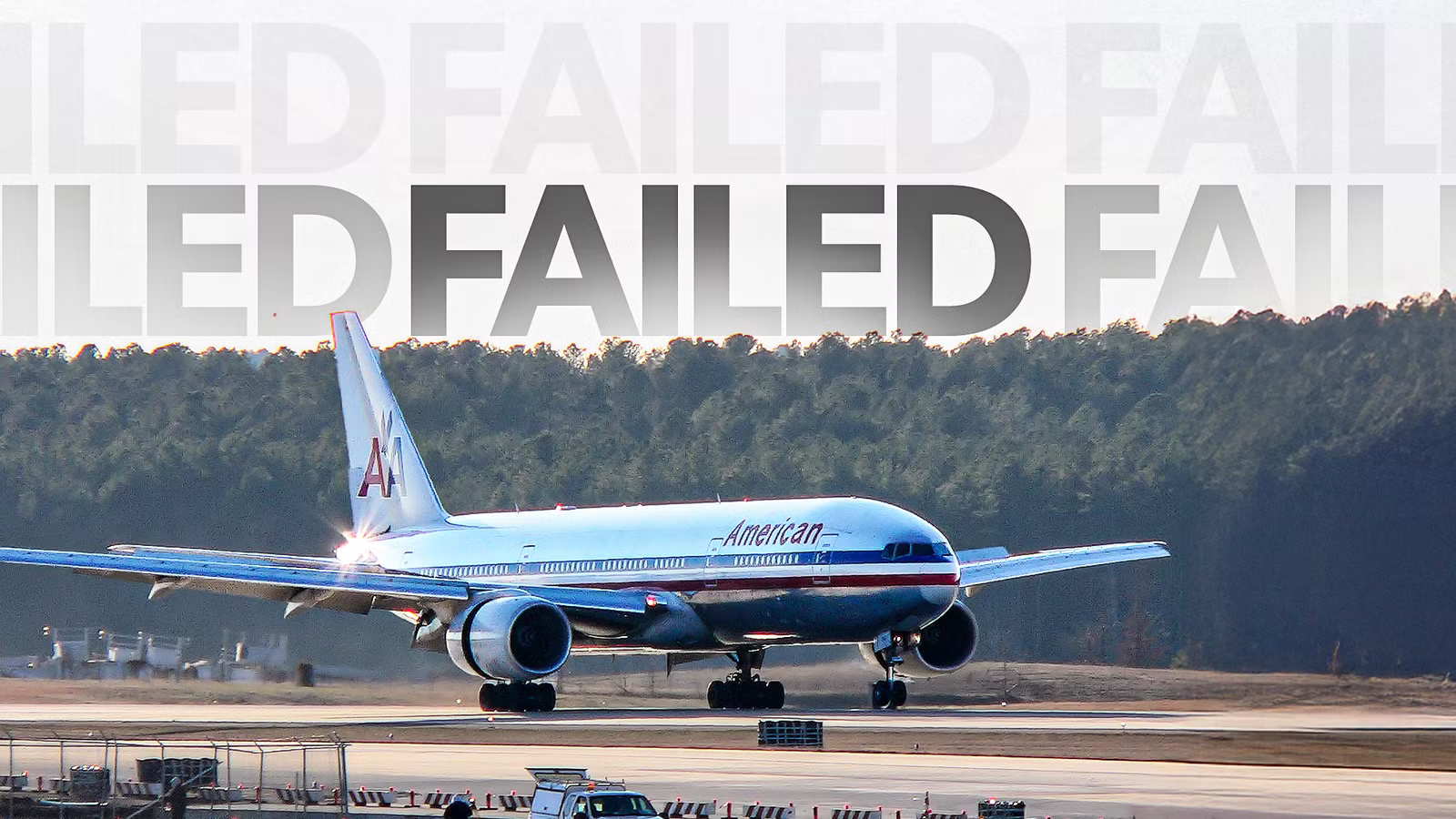
Raleigh–Durham International Airport (RDU) has had two airlines try to build a connecting hub at the airport. Both failed. American Airlines opened a north-south hub in 1987, built a dedicated terminal for it, grew the operation to 211 daily departures across 64 destinations, and shut it down in 1995 after years of losses. Midway Airlines moved into the same terminal the same year, relocated its headquarters to North Carolina, employed 2,250 people, and collapsed after September 11, ceasing all operations in 2003.
The hub attempts failed for the same reason: RDU sits between Charlotte and Atlanta, two larger airports with established connecting hubs that drew traffic from the same region. Neither American nor Midway could generate enough connecting passengers to justify the cost of operating a hub at an airport that was too close to two competitors with deeper networks and more onward destinations. RDU has since rebuilt itself as a point-to-point airport serving 80 destinations without a hub carrier, and Delta now designates it as one of its three official focus cities in the United States.
American Airlines Built A Hub At Raleigh-Durham In 1987

In 1985,  American Airlines selected Raleigh-Durham International Airport (RDU) as the site for a new north-south connecting hub on the East Coast. The airline had been expanding aggressively since the Airline Deregulation Act of 1978, building hubs at Dallas/Fort Worth International Airport (DFW) and Chicago O’Hare (ORD) to anchor its domestic network. RDU sat midway between the northeastern markets American wanted to connect to Florida, the Caribbean, and the southeastern United States. The Research Triangle region of Raleigh, Durham, and Chapel Hill was growing, home to three major universities and an expanding technology and pharmaceutical corridor that generated corporate travel demand. American saw a hub opportunity.
The airline built Terminal C on the east side of the airfield specifically to house the new hub operation. The terminal opened in June 1987 with a dedicated apron and a new runway. American launched service to 38 cities on day one. By the December 1987 timetable, the airline was operating nonstops to 36 airports on mainline American equipment and American Eagle regional prop service to 18 additional cities. The hub brought RDU its first international flights: Bermuda, Cancun (CUN), and Paris Orly (ORY). London Gatwick (LGW) service followed in 1994. The $113 million in bonds used to construct the terminal facilities were guaranteed by American Airlines, tying the airport’s financial obligations directly to the airline’s continued presence.
At its peak in late 1992, American’s RDU hub generated 211 daily departures to 64 destinations, almost all in the eastern United States, with the westernmost points being American’s own hubs at DFW and Chicago. The hub was never enormous by the standards of Atlanta or Dallas. It was a regional connecting operation designed to aggregate north-south traffic through a mid-Atlantic airport. For RDU, which had been a small regional facility before American arrived, the hub transformed the airport into something unrecognizably larger almost overnight.
Why American’s Hub Failed Between Charlotte And Atlanta

The RDU hub operated at a loss from the beginning. American never publicly disclosed the financial performance of individual hubs, but industry reporting at the time and subsequent analysis confirmed that RDU lost money even during the peak years of 211 daily departures. The problem was geographic. USAir’s hub at Charlotte Douglas International Airport (CLT) sat 130 miles (210 km) to the southwest on I-85. Delta’s hub at Atlanta Hartsfield-Jackson International Airport (ATL) sat 400 miles (645 km) to the south. Both airports were larger, better established, and drew connecting traffic from the same southeastern and mid-Atlantic catchment area that American was trying to funnel through Raleigh-Durham.
A connecting hub works financially when it attracts passengers who have no better alternative for getting between their origin and destination. A passenger in Richmond flying to Tampa had three options on the East Coast: connect through Charlotte on USAir, connect through Atlanta on Delta, or connect through RDU on American. Charlotte and Atlanta were both closer to more origin markets and offered more onward destinations than RDU could match. American’s hub was competing for the same connecting traffic that two larger, more established hubs were already serving, and it could not generate enough volume to cover the cost of operating 211 daily departures from a mid-size airport.
American closed the RDU hub in 1995 as part of a broader network rationalization that also shut down its Nashville (BNA) hub, which had suffered from the same problem of being squeezed between larger competitors. The airline began downsizing its RDU operation and eventually discontinued almost all mainline flights from the airport. American retained a daily nonstop to London Gatwick (LGW). That single route, later shifted to London Heathrow (LHR), survived for decades after the hub closed and continued operating until the COVID-19 pandemic before resuming in 2022.
Midway Airlines Moved In And Tried The Same Thing

Midway Airlines arrived at RDU in March 1995, the same year American left. The airline was a reincarnation of the original Midway Airlines that had operated from Chicago Midway Airport before going bankrupt in 1991. The new Midway was founded in November 1993, relocated its corporate headquarters to Morrisville, North Carolina, between Raleigh and Durham, and made RDU its primary hub. American subleased its Terminal C gates to Midway as part of an arrangement to service the $113 million in bonds that had financed the terminal’s construction. The gates, the terminal, and the connecting hub concept that American had abandoned were handed to a startup airline that intended to succeed where a carrier with 40 times its resources had failed.
Midway built an East Coast network connecting the Northeast to Florida through RDU. The 1995 route map included Boston, Hartford, Long Island, Newark, Newburgh, New York, Philadelphia, and Washington in the northeast, and Fort Lauderdale, Jacksonville, Orlando, Tampa, and West Palm Beach in Florida. The airline employed 2,250 full-time workers in the Triangle region and partnered with American Airlines on the AAdvantage frequent flyer program, giving Midway passengers access to American’s loyalty currency while American’s revenue management team worked behind the scenes on Midway’s pricing. CEO Robert Ferguson stabilized the operation and produced 13 consecutive quarters of profitability through the late 1990s, a stretch that suggested the hub model could work at RDU under a smaller, lower-cost operator.
By 1999, the profits were disappearing. Low-fare competitors entered the RDU market, undercutting Midway’s fares on the Northeast-to-Florida routes that generated the hub’s connecting traffic. The same geographic problem that killed American’s hub had not gone away. Charlotte and Atlanta still sat on either side of RDU, and the low-cost carriers did not need a connecting hub to offer cheap nonstop fares between the city pairs Midway was trying to serve through a connection. Midway severed its relationship with American Airlines in 2000, introduced its own frequent flyer program, brought revenue management in-house, and switched to smaller Canadair regional jets to reduce costs. The stock price continued to fall.
September 11 And The End Of Midway Airlines
-LARGE.jpg?q=49&fit=crop&w=500&dpr=2)
The September 11, 2001, attacks shut down US airspace for three days. When flights resumed, Midway Airlines did not. The airline suspended all operations immediately after the attacks and did not restart service for months. The combination of the industry-wide demand collapse, Midway’s already deteriorating financial position, and the loss of revenue during the shutdown left the airline unable to sustain operations. The 2,250 employees in the Research Triangle who had jobs on September 10 were out of work by the end of the month.
Midway returned briefly in 2002 with a reduced schedule, attempting to rebuild its RDU hub at a smaller scale. The airline operated as US Airways Express on some routes, using the partnership to feed traffic through RDU while maintaining its own identity on other services. The reduced operation was not enough. The post-September 11 aviation market had fundamentally less demand, higher security costs, and passengers who were more price-sensitive than they had been before the attacks. The low-cost carriers that had been eroding Midway’s business before September 11 continued to expand. AirTran Airways, which had begun service at RDU as ValuJet in 1995, offered nonstop fares to Florida that Midway’s connecting hub could not match.  Southwest Airlines was expanding along the East Coast. The competitive environment that had been difficult in 1999 was worse in 2002.
Midway Airlines filed for bankruptcy and ceased all operations on October 30, 2003. The airline that had moved to North Carolina in 1995 to replace American’s failed hub with its own lasted eight years. Terminal C, the facility American had built for $113 million in 1987 and subleased to Midway in 1995, sat largely empty after Midway’s departure. The building had been designed for a hub operation with banks of gates arranged for connecting traffic and concourses built to accommodate wave scheduling. Without a hub carrier, the terminal was oversized, underutilized, and architecturally unsuited for the point-to-point service that RDU would need to build its future around.
What RDU Looks Like Without A Hub

Terminal C stood for another 13 years after Midway’s departure before the airport authority demolished it in 2016. The building that American Airlines built for a hub and Midway Airlines tried to fill had no viable use without a connecting carrier to occupy its gates. RDU consolidated all operations into Terminal 1, rebuilt from the original 1955-era terminal complex, and Terminal 2, a newer facility on the opposite side of the central roadway.
 Delta Air Lines designates RDU as one of its official focus cities alongside Austin-Bergstrom International Airport (AUS). The airline operates approximately 25 routes from RDU with up to 65 daily flights, including service to all of its major hubs plus point-to-point destinations like Nashville (BNA), Kansas City (MCI), Indianapolis (IND), and Fort Myers (RSW). Endeavor Air, Delta’s wholly owned regional subsidiary, opened a crew base at RDU in the second quarter of 2025 to support the growing operation. American Airlines, the carrier that built and abandoned RDU’s hub 30 years ago, now operates its North Carolina hub 130 miles (210 km) down I-85 at Charlotte Douglas International Airport (CLT), where it is the dominant carrier with over 700 daily departures.
Catch what other trackers miss
Emergency squawks, holds, NOTAMs — live signals, no signup.
Open tracker
Catch what other trackers miss
Emergency squawks, holds, NOTAMs — live signals, no signup.
Open tracker