dailynewsnblog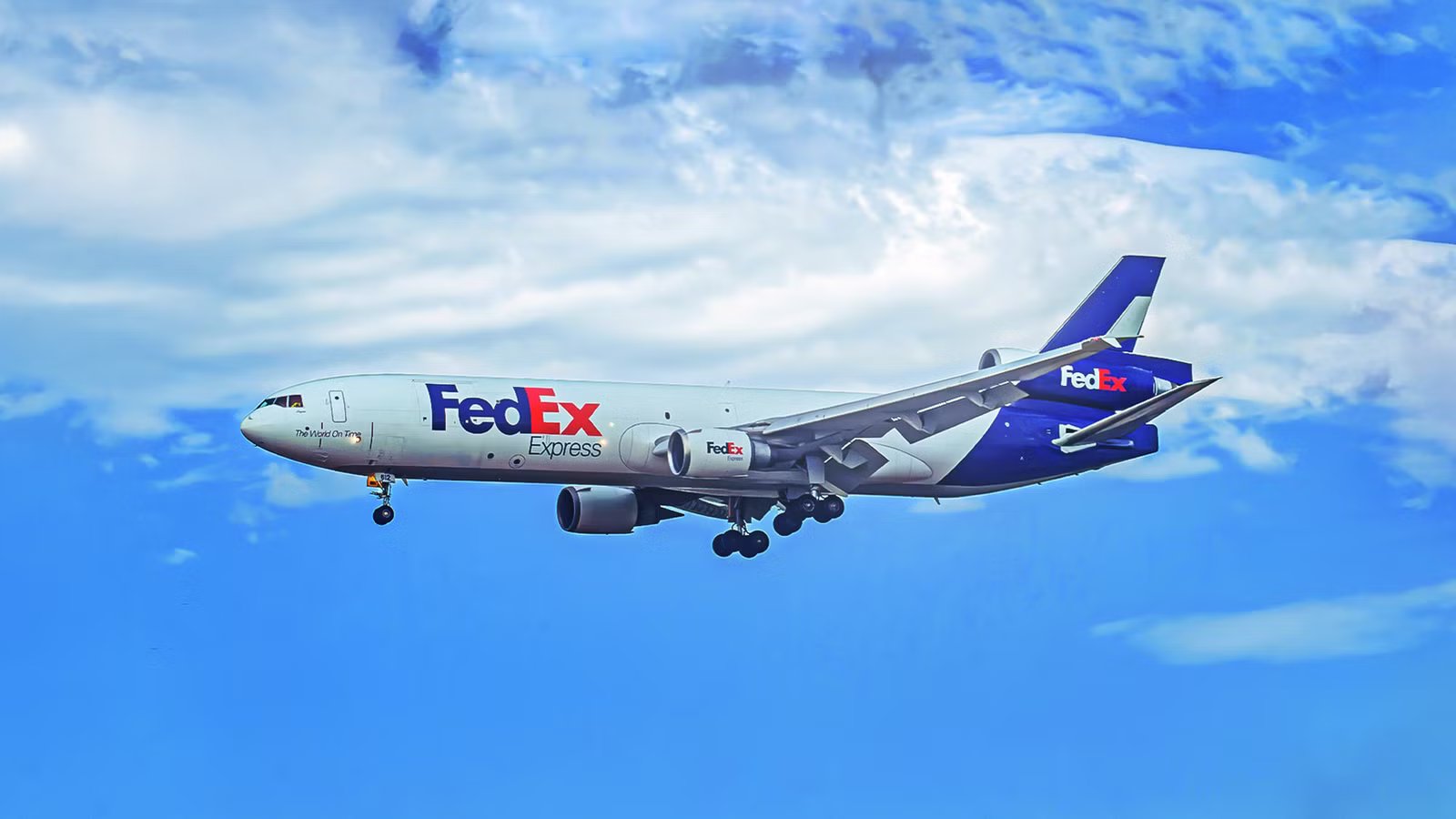
During the 1970s and 1980s, airlines were increasingly looking for aircraft that could connect more distant city pairs while offering improved fuel efficiency and greater passenger comfort. At the time, McDonnell Douglas had already achieved considerable success with the DC-10, which had become one of the leading widebody aircraft for long-haul operations. Building on that, the manufacturer decided to develop a new aircraft that could meet the changing demands of the global aviation market.
In the early 1990s, it launched the MD-11, positioning the aircraft as a high-performance long-haul aircraft capable of competing against emerging rivals such as the Airbus A340 and Boeing 777. McDonnell Douglas believed the MD-11 could become one of the leading widebody aircraft of its era. However, the aircraft struggled to achieve the commercial success the planemaker had expected.
McDonnell Douglas MD-11: An Evolution Of The DC-10

In the 1980s, the DC-10 design was beginning to age. McDonnell Douglas needed a new aircraft to compete with its rivals, as Boeing was also working on modernizing the 747 while developing the all-new Boeing 777, which would be launched in 1990. Airbus, meanwhile, was also working to launch two clean-sheet widebody aircraft, the A330 and A340. As a result, McDonnell Douglas decided to develop the MD-11. The company officially launched the program on 30 December 1986, with firm orders from ten airlines and commitments for 52 aircraft at the outset.
The concept was straightforward: retain the proven DC-10 platform while introducing improvements that would make it more competitive in the long-haul market. The MD-11 featured a stretched fuselage, extending the aircraft by around 5.6 meters compared with the DC-10, making it more than 61 meters long. It also introduced a new glass cockpit with six displays, which eliminated the need for a flight engineer and reduced the cockpit crew requirement from three pilots to two. Furthermore, the MD-11 featured aerodynamic improvements, including winglets on the wingtips, which helped improve efficiency by reducing drag.
In addition, the aircraft was powered by newer engine options from Pratt & Whitney and General Electric. Other changes included a smaller vertical stabilizer and a higher maximum takeoff weight of 286 tonnes. The first MD-11 prototype completed its maiden flight on January 10, 1990, and certification followed soon after. The aircraft attracted several major passenger airlines, such as Delta Air Lines, Finnair, Swissair, KLM, and Japan Airlines. Indeed, on paper, the MD-11 appeared to be a logical evolution of the successful DC-10. It gave McDonnell Douglas confidence that it could compete against the next generation of widebody aircraft entering the market.
Where The MD-11 Struggled

However, the aircraft soon faced challenges that limited its success in passenger operations. The MD-11 was marketed as a long-range aircraft capable of flying around 7,000 nautical miles (13,000 km). However, that figure could only be achieved with a significantly reduced payload. At full payload, the aircraft’s range dropped to around 6,460 nautical miles (11,963 km), well below McDonnell Douglas’ original performance targets.
The aircraft also consumed more fuel than expected, and aerodynamic issues reduced its overall efficiency. As a result, it struggled to compete with the Airbus A340 on long-haul routes. Indeed, the aircraft’s performance shortfalls quickly undermined its competitiveness and prompted several airlines to reconsider their commitments. Several airlines reduced or canceled their orders.
Specification | McDonnell Douglas MD-11 |
|---|---|
Length | 200 feet, 10 inches (61.21 meters) |
Wingspan | 169 feet, 6 inches (51.66 meters) |
Height | 57 feet, 9 inches (17.60 meters) |
Range | Around 7,000 nautical miles (13,000 km) (marketed) |
Maximum Takeoff Weight (MTOW) | 630,500 lb (286,000 kg) |
Cruise Speed | Mach 0.83 (≈ 560 mph / 900 km/h) |
Singapore Airlines, for instance, canceled its order for 20 MD-11s in favor of the Airbus A340-300.  American Airlines, which eventually took delivery of 19 aircraft, also expressed dissatisfaction with both the airframe and its engines. In the end, the MD-11 program concluded with just over 200 aircraft delivered, compared with around 380 Airbus A340s and more than 1,700 Boeing 777s.
It Was The Wrong Aircraft At The Wrong Time

Nevertheless, McDonnell Douglas continued working to improve the aircraft. The manufacturer introduced several Performance Improvement Packages (PIPs) and later launched the extended-range MD-11ER in an effort to address the aircraft’s performance shortfalls. However, these improvements came too late to reverse the MD-11’s fortunes, and many airlines that had taken delivery of the aircraft began retiring their fleets earlier than expected.
One of the MD-11’s biggest challenges was that it entered a rapidly changing market. By the late 1980s, advances in ETOPS regulations had accelerated the industry’s shift toward twin-engine widebodies. Airlines increasingly favored aircraft that could offer similar range with lower fuel consumption, reduced maintenance costs, and improved operating economics. Against this backdrop, the MD-11’s three-engine configuration became a disadvantage rather than a selling point.
Over time, competition also intensified. The A330, which Airbus launched in 1987, proved to be a more efficient aircraft on shorter long-haul routes, while the Boeing 777 quickly established itself as the key player for the next generation of widebody aircraft. As noted previously, even the four-engine A340 delivered better range and lower fuel burn than the MD-11. This ultimately left McDonnell Douglas without a clear competitive advantage in the passenger market.
The MD-11 Found A Second Life In Cargo

Furthermore, in 1997, Boeing acquired McDonnell Douglas, which further undermined the program. The US planemaker had already established the 777 as its flagship long-haul aircraft. So, there was little commercial justification for the MD-11; its production ended in 2000. For the passenger segment, the tri-jet was a failure. That being said, it found a second life in air cargo. Freight operators have different priorities from passenger airlines.
They prioritize payload capacity, range, acquisition cost, and the ability to reliably operate long sectors. On those terms, the MD-11 remained a capable aircraft. The factory-built MD-11F freighter variant offered a maximum payload of around 91 tonnes and a main-deck volume of approximately 440 cubic meters, supported by a large forward cargo door that allowed operators to handle oversized freight. For operators expanding long-haul freight networks during the 2000s, the aircraft offered a cost-effective option, especially as passenger airlines began retiring their fleets and making aircraft available for conversion.
A total of 53 factory-built freighters were delivered, while most of the other cargo aircraft came from passenger MD-11s that were later converted through programs such as the MD-11 Boeing Converted Freighter (BCF). Many cargo operators such as FedEx, UPS, and Lufthansa Cargo added the MD-11 to their fleets.
The MD-11 Freighter Era Is Ending

Indeed, without demand from the air cargo market, the MD-11’s story would likely have ended much sooner. However, that chapter is also beginning to come to an end. In November 2025, a UPS Airlines-operated MD-11F crashed shortly after takeoff from Louisville Muhammad Ali International Airport. As the aircraft was climbing, the left engine separated from the wing, causing the aircraft to crash and killing all three crew members on board, along with 11 people on the ground.
The incident prompted the Federal Aviation Administration (FAA) to issue an Emergency Airworthiness Directive requiring all MD-11 and MD-11F operators to complete mandatory inspections before returning the aircraft to service. Following this,  UPS Airlines, which had been one of the largest operators of the type, decided to retire its MD-11 fleet permanently. For the carrier, the inspections and required repairs ultimately proved too costly for an aircraft type that was already approaching the end of its service life.
UPS had already been planning to phase out the MD-11, but the accident accelerated those plans by several years. In January 2026, the carrier announced the retirement of its remaining 27 MD-11 freighters, recording a one-time charge of approximately $137 million. Fedex, however, chose a different path. Rather than retire the aircraft, the carrier decided to return its MD-11 fleet to service.
The grounding still resulted in approximately $175 million in additional costs, but FedEx opted to continue operating the type. One reason is that supply chain constraints have continued to delay deliveries of new freighters, leaving operators with limited replacement options. Until the widebody freighter supply chain catches up with demand, FedEx has no practical alternative that can match the MD-11’s capabilities on the routes it operates.
A Long-Haul Dream That Never Materialized

When McDonnell Douglas launched the aircraft, it expected the MD-11 to become one of the leading long-haul widebody aircraft, competing directly with the 777 and A340. The aircraft was marketed with a range of nearly 7,000 nautical miles. However, it did not deliver the performance McDonnell Douglas had promised.
The manufacturer introduced several Performance Improvement Packages and later developed the extended-range MD-11ER variant; these changes were not enough. For many years, the MD-11 became an important part of global cargo networks, keeping the aircraft in service long after passenger airlines had moved on. Now, even that final chapter is coming to an end.
Cargo operators are retiring the older fleet and increasingly moving towards new-generation freighters. Indeed, the aircraft may not have become the long-haul passenger aircraft McDonnell Douglas envisioned, but demand from the cargo market gave it a much longer career than it would have otherwise achieved.