dailynewsnblog
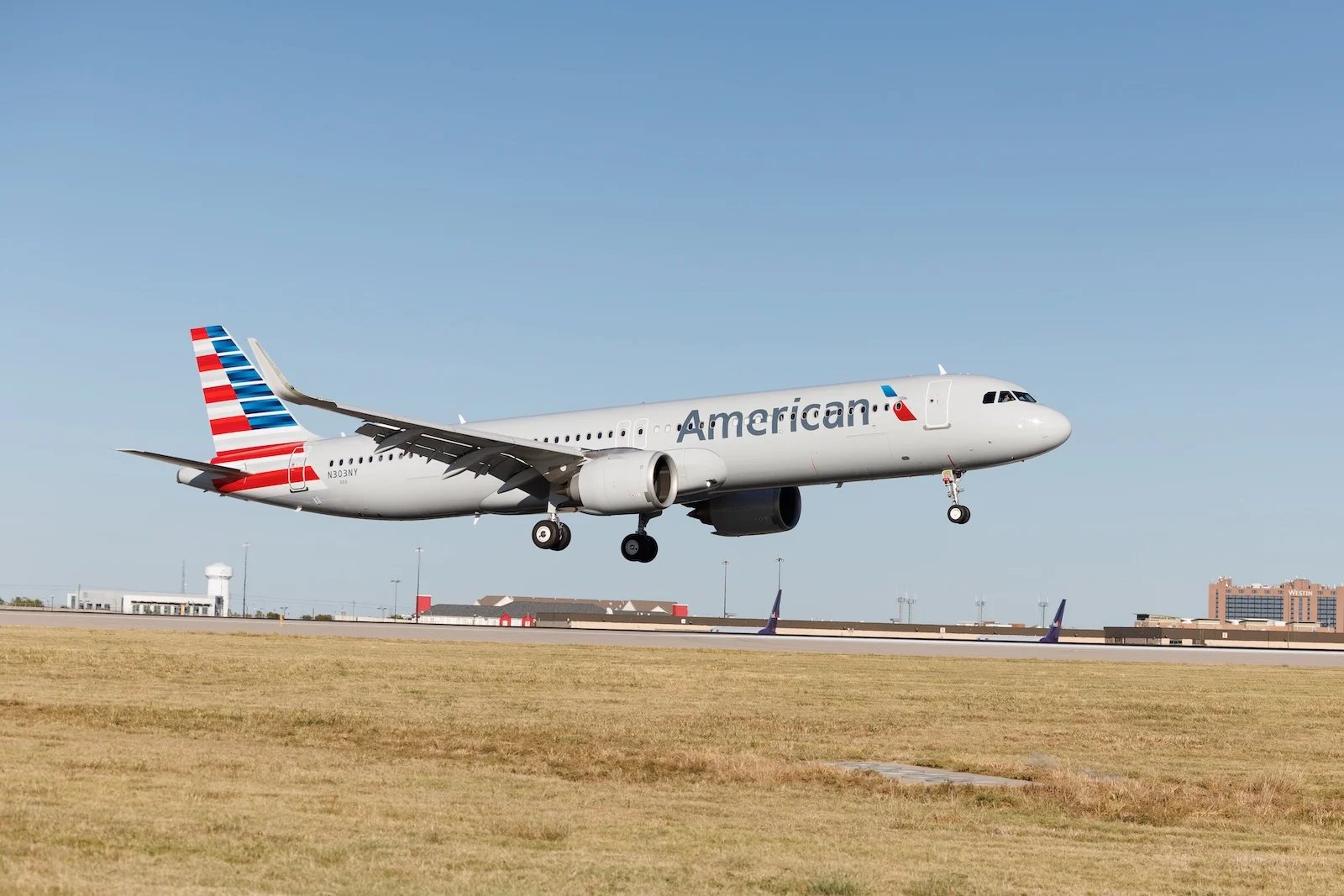
On August 4, 2026, Marine One and an Envoy Air regional jet briefly shared the airspace over the Potomac River near  Ronald Reagan Washington National Airport (DCA), despite new FAA procedures designed specifically to prevent commercial aircraft from operating near the presidential helicopter. Marine One, carrying President Donald Trump, lifted off from the White House grounds at about 2:33 PM local time, while Envoy Air Flight 3742 departed DCA roughly a minute later. The aircraft never came close to colliding, and the president was never in danger, but the incident exposed a potentially important weakness in one of the safety measures introduced after the January 2025 midair collision at the airport.
This article examines what happened on August 4, how the FAA’s post-collision helicopter restrictions are supposed to work, and why the mandatory ground stop for commercial traffic was not activated before Envoy Air 3742 departed. Drawing on FAA and NTSB information, the investigation’s findings, and reporting from outlets including The Wall Street Journal, CBS News, ABC News, and KATU, we will look at the communication chain between Marine One and the DCA tower and the safeguards built around it.
What Actually Happened Over The Potomac On August 4

As Simple Flying reported at the time, the incident unfolded quickly. Marine One, carrying President Donald Trump, lifted off near the White House at around 2:33 PM local time. About a minute later, Envoy Air Flight 3742 departed DCA for Pensacola International Airport (PNS), despite a rule that requires commercial departures to halt while Marine One is active in the surrounding airspace.
Federal separation rules for this airspace require aircraft to remain at least 1.5 miles (2.4 km) apart horizontally, or 500 feet (152 meters) apart vertically. The Wall Street Journal, which first reported the incident, noted that the FAA does not believe that the two aircraft ever converged on a collision course, nor did they come within a distance it would classify as a dangerous close call, and the White House has been unambiguous that the president was never in danger.
That is precisely what makes the incident worth taking seriously. If nothing dangerous happened, why did the FAAimmediately open a formal investigation and stand up a Safety Review Team, and why is the NTSB, an agency that does not investigate every procedural slip, also looking into it? The answer is that the danger was never really about this specific pair of aircraft. It was about whether the rule built to prevent this exact situation actually worked when it mattered.
The Rule Built After 67 Deaths, And How It Is Supposed To Work

To understand why regulators reacted so fast, let’s come back to January 29, 2025. That night, a US Army UH-60 Black Hawk helicopter collided in midair with a regional jet operating as  American Airlines Flight 5342 on final approach to DCA, killing all 67 people aboard both aircraft. In the weeks that followed, as documented by Simple Flying, the FAA imposed permanent restrictions on helicopter traffic around the airport, closing the low-altitude corridor known as Route 4 between Hains Point and the Wilson Bridge, and banning the use of visual separation, where a controller simply eyeballs the distance between a helicopter and an airliner instead of relying on radar-confirmed minimums.
Non-essential helicopter flights were banned outright. Presidential transport, medical evacuation, and law enforcement missions were still permitted but only under a tighter condition: commercial departures and arrivals must stop while Marine One, or another priority helicopter, is active nearby. As previously reported by Simple Flying, the NTSB had explicitly warned that the airspace posed an “intolerable risk” without exactly this kind of enforced separation, and the FAA built its post-collision rule around that warning.
On paper, none of this is new or untested policy. Route 4 has been closed for over a year. The ban on visual separation has held. But August 4 was the first time the rule had to work in real time with the President’s own helicopter in the middle of it, under ordinary operational pressure, with a regularly scheduled airliner queued for departure. That is a very different test than a policy setting quietly on paper, and it is the test the rule failed.
One Radio Call, Three Attempts, And A Transmission Logged As Unreadable

According to KATU, the Marine One pilot attempted to contact the DCA tower three separate times before liftoff. Each transmission was logged by the tower as “broken and unreadable.” No ground stop was ever entered into the system. A minute later, Envoy Air 3742 was cleared to depart, and the two aircraft were airborne within the same stretch of Potomac airspace at the same time.
Whether the failure lay with the radio equipment, the frequency, or the transmission itself is still under review and is one of the specific questions the FAA’s Safety Review Team has been asked to answer. But the operational fact is simple: the rule that exists specifically to prevent commercial jets from sharing this airspace with Marine One depends entirely on a controller clearly hearing and correctly acting on a single voice call.
According to CBS News, that is exactly where this chain broke. None of this makes Envoy Air’s crew or the DCA controllers working the position that afternoon the culprits in the story. The controllers never received the information that would have triggered the ground stop. The pilots of Envoy 3742 had no reason to believe they weren’t cleared. That’s exactly the kind of failure that should worry regulators most, because it means the rule itself, not any person’s judgment, is what needs fixing.
Just months earlier, a Delta Air Lines flight and a Republic Airways jet had to abort landings at DCA when an Army Black Hawk strayed off its approved path near the Pentagon, as documented by NPR.org. Different mechanism, same underlying pattern: a helicopter operating in DCA’s airspace without the tower having the information needed, early enough, to act.
The Critical Gap: A Safety Rule With A Single Point Of Failure

Compare this to how modern aviation typically handles safety-critical separation. The Traffic Collision Avoidance System ( TCAS) does not rely on the controller hearing anything; it independently interrogates nearby transponders and issues resolution advisories directly to pilots. Runway status lights at major US airports illuminate automatically from radar and surface-movement data, without waiting for a human radio call. Instrument landing system glide slope alerts are generated by onboard avionics, not verbal instruction. Each of these systems assumes that a human link in the chain will, at some point, fail to hear or act on something, and each one is built with an automated backstop for exactly that moment.
The DCA helicopter-separation rule has no equivalent backstop. There is no automated trigger tied to Marine One’s filed flight track that independently halts departures if a verbal ground-stop call is missed, garbled, or simply never made. The entire enforcement mechanism is one controller, one transmission, one moment. That gap exists against a staffing picture the FAA is now trying to overhaul with its 2026 controller recruitment campaign. In April, the agency launched an unusually targeted recruitment campaign aimed at gamers, arguing that skills such as multitasking, spatial awareness and rapid problem-solving can transfer to air traffic control. As documented on the FAA website, by August 11, Transportation Secretary Sean Duffy said more than 2,000 new controllers had been hired in 2026, reaching 94% of the year’s recruitment target, with another 2,000-plus candidates in the pipeline.
But hiring numbers do not translate immediately into certified air traffic controllers at DCA. The FAA’s own recruitment material notes that becoming a fully certified controller can require one to three years of experience and training, depending on the assignment.
None of that proves that staffing caused the August 4 incident. It does, however, reinforce the vulnerability of a safety procedure that depends on a human communication chain working perfectly in real time. A garbled radio call is not, by itself, remarkable in aviation; pilots and controllers work around bad transmissions constantly. What is remarkable is that, in this specific rule, a garbled transmission is indistinguishable from a rule that was never triggered at all. There is no fallback layer to catch the difference. So, what, specifically, is the FAA proposing to add one?
What The FAA And NTSB Are Doing Next

Both agencies have opened formal reviews and, according to ABC News, the FAA is treating the episode as a procedural breakdown rather than a near-miss, shifting the focus from what almost happened to why the safeguard itself did not activate. The 89th Airlift Wing, the United States Air Forceunit responsible for Marine One and other priority government transport, is also part of the review, since any fix will need to work from both the helicopter’s side of the radio and the air traffic control tower’s.
The timing matters, too. DCA now handles roughly 25 million passengers a year against a facility originally designed for closer to 15 million, and Runway 1/19 alone handles around 800 movements a day, close to one flight every minute in peak periods. As documented by Simple Flying, it’s also not the airport’s first close call in the year: an American Airlines 737 and an American Eagle E175 came within just 800 feet of colliding at DCA in a separate incident, a reminder that this is one of the busiest, the least forgiving runway environments in the country for any communication gap to open up.
A fix, if the FAA pursues one, would likely take one of two forms: a tightened verbal protocol, such as requiring a second, independent confirmation before any commercial departure is cleared during VIP transport, or a genuinely automated ground-stop trigger tied to Marine One’s filed flight data, closer to how TCAS or runway status lights already operate. The first is faster and cheaper. The second is the one that would actually close the single point of failure exposed by this incident.
The Rule Worked On Paper. It Just Needed A Backup

The January 2025 rule was never the problem. Closing Route 4, banning visual separation, and requiring a ground stop during VIP transport were all reasonable, evidence-based responses to a preventable tragedy. What August 4 exposed is narrower and, in some ways, more fixable: the rule assumed a radio call would always get through clearly, in one of the most congested and understaffed control environments in American aviation, and that assumption did not hold on its first real test.
The concrete thing to watch now is what the FAA’s Safety Review Team actually recommends, and on what timeline. A verbal-protocol fix would suggest regulators are treating this as a one-off communication failure. A push toward an automated, transponder-based ground-stop trigger would suggest they have accepted that DCA’s airspace cannot continue to rely on a single clear radio call between a helicopter carrying the president and a control tower running a third of its positions short.
Either way, the test that matters is not whether Marine One and Envoy Air 3742 came close enough to worry about on August 4, but whether the next aircraft that tries to reach that tower gets through on the first attempt.