dailynewsnblog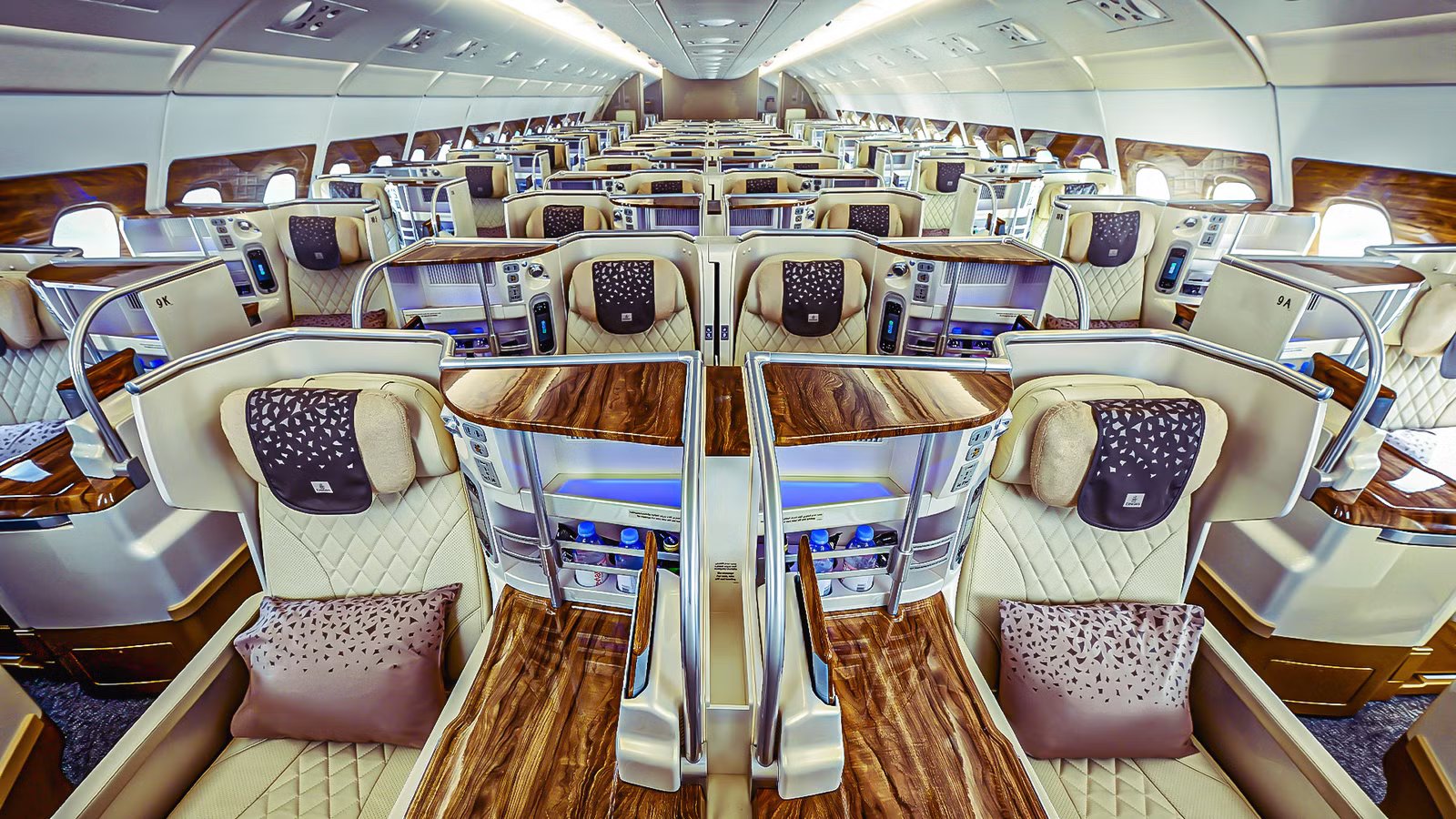
On May 20, 2026, a newly reconfigured Airbus A380 operated by  Emirates completed its inaugural commercial flight from
  Dubai International Airport (DXB) to Birmingham International Airport(BHX). What would seem like a routine flight was actually a major turning point for the world’s largest passenger jet network. This specific deployment introduces an ambitious intermediate cabin segment to the carrier’s historically high-density configurations, replacing pure passenger volume with premium improvements.
The economic motivation for altering the interior architecture of an active superjumbo touches on broader issues of fleet longevity and global supply chain constraints. When manufacturing delays stall the delivery of next-generation widebody aircraft, international airlines are forced to heavily optimize the assets they currently control. For Emirates, this means undertaking the largest cabin retrofit program in commercial aviation history to satisfy an insatiable consumer appetite for premium comfort.
The Premium Trade

Trading raw passenger volume for higher financial margins represents the core dilemma of modern widebody fleet management. For years, the highest-capacity double-decker aircraft operated by Emirates functioned as pure people-movers, maximizing efficiency on dense leisure routes. The recent conversion of airframe A6-EUX changes this strategy entirely by dropping the total seat count from 615 down to 569.
The older two-class configuration was an operational marvel designed specifically for high-demand trunk routes, such as flights connecting Dubai to regional UK airports or dense European leisure markets. Packing 557 economy seats into a single airframe allowed the carrier to lower the baseline cost per seat-mile to incredibly competitive levels. However, the modern travel landscape has demonstrated a massive, sustained surge in premium leisure demand. Travelers are increasingly willing to pay extra for enhanced comfort, making a dedicated mid-tier cabin far more lucrative for network planners than trying to fill a sprawling, low-yield economy deck.
By reducing the total capacity to 569 seats, the airline sacrifices a portion of its mass-market volume to introduce 56 premium economy slots and expand business class by 18 seats. The trade-off allows the airline to generate significantly more revenue per available seat-mile, even if the aircraft flies with fewer total passengers on board, with the configuration being particularly effective on slots at highly constrained airports where carriers cannot simply add more daily flights to increase revenue.
Stripping Back To The Beginning

Actually completing a major interior overhaul on the largest passenger airliner in the world successfully, means an extraordinary amount of physical labor and engineering precision must go into the process. Stripping out entire rows of seating is only the first step in a highly invasive structural transformation. To successfully realign the upper deck of the superjumbo, teams must completely dismantle and rebuild the underlying aircraft infrastructure.
flight
Catch what other flight trackers miss
Emergency squawks, holds, NOTAMs — live signals, no signup.
Open tracker
Catch what other flight trackers miss
Emergency squawks, holds, NOTAMs — live signals, no signup.
Open tracker
During the conversion of the first high-density airframe, Emirates Engineering had to remove exactly 120 economy seats from the upper deck. Technicians then had to relocate heavy galleys, adjust overhead storage bins, alter structural partitions, and completely re-map complex electrical systems and plumbing lines to accommodate the new cabins. This monumental task consumed approximately 35,000 man-hours of dedicated labor from a specialized team of 50 engineers, utilizing more than 2,500 distinct types of replacement parts to finalize the build.
The highly intensive engineering workflow represents the baseline requirement for the 15 two-class airframes scheduled for conversion by the end of 2026. These aircraft were never originally wired or plumbed to support premium galley placements or advanced business class seat electronics on the upper floor, so the modification process requires deep structural intervention. Through managing this complex program entirely in-house, the carrier maintains strict quality control over its cabin finishes while slowly standardizing its fleet product.
Simple Flying Quiz
Think you really know the Airbus A380?
Answer 10 questions and put your knowledge to the test
Easy (15s)Medium (10s)Hard (5s)
Reaching Out To A New Market

The distribution of cabin classes across a double-decker aircraft highlights a fascinating study in floor space optimization. When designing a premium environment, airline planners must constantly choose between high-density premium seating and low-density luxury environments. Tension becomes especially apparent when comparing how much revenue can be generated from the exact same square footage of cabin real estate.
In the broader fleet modernization scheme, the space management trade-offs become incredibly stark. For instance, the airline can easily accommodate 56 premium economy travelers within the exact same cabin footprint that would alternatively hold only 14 first class private suites, showing quite clearly a clean fourfold increase in passenger density for that specific section of the aircraft. While first class suites command astronomical ticket prices, they often suffer from erratic or seasonal demand, whereas a dense block of mid-tier premium economy seats offers highly predictable, consistent revenue streams on every single flight.
Choosing to sacrifice the ultimate prestige of a first class cabin on these specific airframes allows the carrier to stabilize its cash flow on hyper-competitive routes. Corporate travel policies frequently bar employees from booking first class or business class tickets, but explicitly permit premium economy choices, so by leaning into this density transition, Emirates captures an entirely new demographic of affluent business commuters who want an upgraded experience without violating their company expense accounts.
Upper Deck Democracy

Altering the traditional hierarchy of the upper deck means that passenger psychology and cabin branding will also morph. In the past, the upper level of the double-decker aircraft functioned as an isolated haven reserved entirely for high-paying business and first class passengers. Moving premium economy to this upper deck area on the newly reconfigured aircraft now democratizes the top floor, departing from decades of absolute passenger segregation.
To make room for the premium economy section, technicians dismantled large sections of the upper deck cabin that previously housed standard economy seats. The resulting configuration allows a broader segment of travelers to experience the unique architectural benefits of the upper deck, which features a distinct cabin curvature and quieter operational acoustics.
Airframe Layout Version | Upper Deck Seating Classes | Lower Deck Seating Classes |
Legacy Two-Class Layout | Business Class and Economy Class | Economy Class exclusively |
Retrofitted Three-Class Layout | Business Class and Premium Economy | Economy Class exclusively |
With this move to up the premium factor on the upper deck, Emirates could well decide to adjust the layout even further depending on the success of this concept. Emirates is following the configurations of other major A380 operators, like Qantas and All Nippon Airways, the former of which has an upper deck consisting of 70 business class seats and 60 premium economy seats. Considering the surge in premium passengers, Emirates may consider including far more premium seats in this space.
Where To Fly The Airbus A380 Next Year: Airlines & Routes
Find out where the double-decker will be flying to next year.
The A380’s Resurgence

The A380, not too long ago, was considered a total failure, but plenty of carriers have turned back to type. The reason for this relates directly to chronic manufacturing supply chain issues plaguing the entire aerospace sector. Because Emirates faces extensive, multi-year delivery delays for next-generation widebody models like the Boeing 777X, optimizing the existing fleet represents the only viable path to sustain network growth.
The immense scope of the interior modernization campaign is designed to mitigate against these external manufacturer delivery shortfalls. Operating a massive, highly synchronized engineering assembly line allows the airline to thoroughly upgrade two aircraft every month using an in-house team of 270 technical personnel. Emirates’ rapid production cadence ensures that it can continuously refresh its onboard experience and maintain an elite product standard without relying on delayed factory rollouts.
Investing heavily in these existing quad-jets preserves critical slot-constrained capacity across major global hubs. Airports like London Heathrow or Birmingham enforce strict slot limitations, preventing airlines from simply adding extra flights to compensate for smaller planes. Maintaining the massive physical presence of the superjumbo while maximizing the internal yield via multi-class retrofits allows the airline to thrive within these operational constraints.
Will The Idea Work?

Integrating these newly reconfigured three-class aircraft into a massive global network introduces complex challenges for scheduling teams and route planners. Managing a mixed fleet means that identical aircraft types flying to the same destination might feature radically different cabin layouts. Ensuring that premium economy passengers actually receive their booked seats means absolute consistency during day-to-day operations is a must.
The inaugural deployment of retrofitted airframe A6-EUX on the Dubai to Birmingham route provides a clear roadmap for future network adjustments. Passengers booking travel to regional destinations can increasingly expect to see these premium cabins appear on schedules that were previously operated by pure high-density layouts.
With 15 high-density airframes scheduled to undergo this extensive structural conversion by the end of 2026, the overall uniformity of the fleet will improve significantly. This multi-billion dollar idea demonstrates that the viability of the double-decker aircraft is no longer tied strictly to moving mass numbers of economy passengers.