dailynewsnblog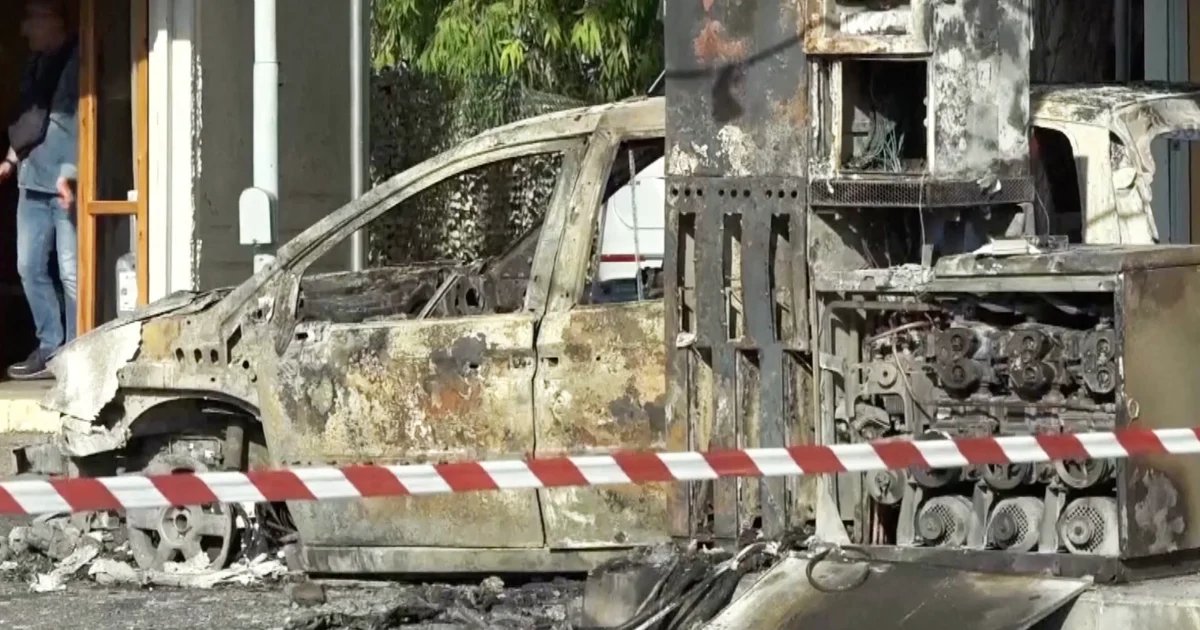
Labeled a “massacre” by authorities, video showing four migrant workers being burned alive at a gas station is driving a growing reckoning over the exploitation of foreign laborers by criminal gangs in Italy.
Subscribe to read this story ad-free
Get unlimited access to ad-free articles and exclusive content.

Broadcast this week by Italian media and geolocated by NBC News, the footage shows two men leaping out of a vehicle, before one of them douses it with liquid and sets it ablaze.
As plumes of black smoke rise from the trunk, the men push against the doors to ensure their victims can’t escape.
Four men died, a fifth made it out alive.
The gruesome killings drew widespread attention after surveillance footage was made public in the country that relies heavily on its celebrated agriculture industry.
“We are facing forms of modern slavery that cannot be tolerated,” said Gianluca Gallo, the local councillor responsible for agriculture in Calabria — the southwestern region where the victims’ charred remains were found in the burned-out van parked at a gas station.
“The horrific murder of the four farm laborers in Calabria has shocked us all,” Italian Prime Minister Georgia Meloni said in a post on X on Wednesday.
Police said that two suspects were arrested in the attack. Italy’s state broadcaster RAI reported they were from Pakistan.
While the men in the video may have prevented four of their victims from escaping the car, one was able to get out through the trunk.
Taj Mohammed Alamyar said he and the other men were being driven home by the gangmasters who controlled almost every aspect of their lives.
Alamyar told Sky Italia in Hindi that he escaped through the back of the car after it was set ablaze in the town of Amendolara.
“I just want to know how I should contact the families,” he said, referring to the victims, three other Afghans and a Pakistani worker. “I don’t have a phone or their numbers.”
“I thought I was going to die,” Alamyar told a local affiliate of RAI in broken Italian, his hand bandaged due to burns.
As well as anti-immigrant sentiment, migrant workers in Italy endure some of Europe’s harshest labor conditions.
The five men were working in an area of Calabria well known for its fruit picking and about 20 miles away from where the four were found dead, according to authorities.
Alessandro D’Alessio, public prosecutor of Castrovillari in Calabria, said Wednesday the killings were an “incident of unprecedented gravity, both in terms of the facts — four deaths — and the circumstances surrounding it.”
Experts say the workers had also likely fallen prey to a combination of migratory hurdles and a dangerous web of intermediaries who connect farmlands with illegal labor supply.
It was also far from the only tragedy that migrant workers have faced in Italy, with abuse reported in several business sectors, including construction. Two years ago, an Indian man was left to die after his right arm was severed from heavy machinery at a melon greenhouse.
“These dramatic events are not isolated facts,” Alessandra Corrado, a professor at the Center for Rural Development Studies at the University of Calabria, told NBC News.
“The housing infrastructure put in place outside the urban centers as tent or container camps by institutions is very bad because they create isolation, marginalization and ghettoization of these workers,” she said.
Italy’s already squeezed farmers are under strain by large supermarket and food chains. To turn some profit, farmers tap into migrant workers, often from South Asia or Africa.
Unable to navigate the complex legal hurdles to enter the country legally, these workers often fall prey to gangs who take massive bribes, often exceeding $10,000, to smuggle them into Italy, Corrado said.
Once inside the country, workers are often paid meagre wages on uncontracted and inconsistent work with everything from their food, shelter and their transportation to and from the farms managed by their gangmasters.
“They have to pay a lot to enter Italy and when they arrive, they are not regularly contracted,” Corrado said. “Then they are moved very early in the morning to reach their strawberry production and then, in the afternoon, they are moved back to their settlement,” she added.
Gangmasters often put workers in overcrowded shacks; workers die of not just killings like this one, but also of suicide or accidental fires or extreme cold and heat.
Gallo, the region’s agriculture commissioner, said, “There must be a clear, consistent, and determined response to the new slave masters of the contemporary era.”
The abuse by the gangmasters exists because “too many workers remain undocumented, vulnerable, and unprotected,” EEFAT, the European Federation of Food, Agriculture and Tourism Trade Unions representing more than 2.5 million workers, said in a statement Wednesday.
“This is a structural problem, and demands a structural response.”