dailynewsnblog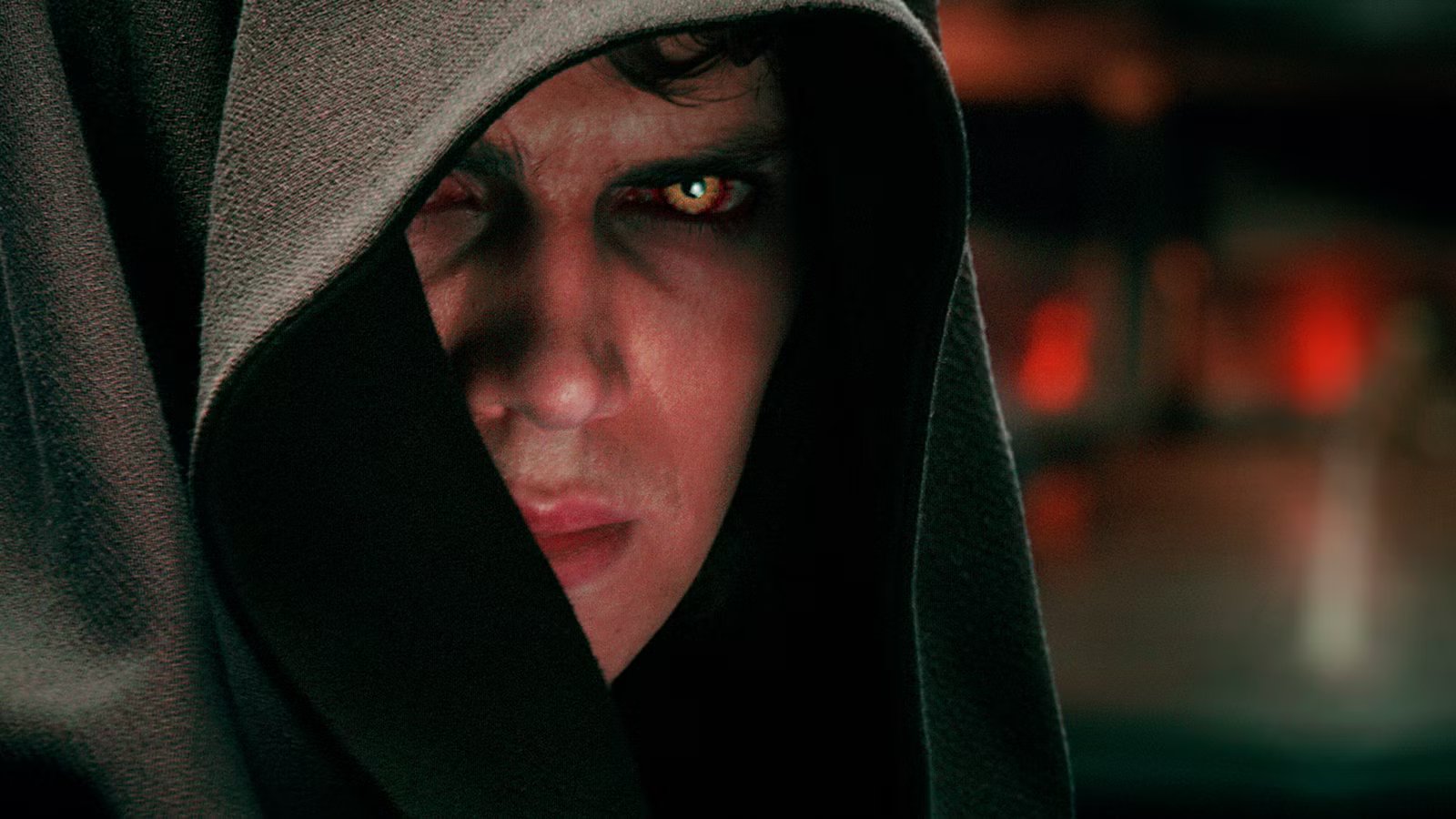
Star Wars has always been rooted in cosmic horror — that element is only starting to poke through the seams now, 49 years after A New Hope. The catalyst for underlying dread is one of the franchise’s most popular narrative devices: the Force. Mystical and all-encompassing, it’s often framed as a metaphysical current running through the universe, or a natural energy that binds all things, balancing light and dark as part of a larger cosmic order.
For decades, the Force was framed through a spiritual system governing the rules and teachings of the Jedi Order. Essentially quasi-monks, the Jedi stood as protectors of the galaxy and embodiments of the Light Side. Opposing them were the Sith, who act as a perversion of that same philosophy, treating the Force as a means to attain power through fear, anger, and hate.

The original films put that duality front and center, with Luke Skywalker ultimately triumphing over Darth Vader and the Emperor’s evil. Years later, the prequel movie trilogy complicated that idea, exposing the rigid, institutional nature of the Jedi Order and the cracks that led to its collapse. For all the Jedi’s ideals, they never stood a chance against Emperor Palpatine and Darth Vader. These characters were early signs that something far more unsettling and sinister was at play in the Force, just out of view.
The collapse of the Jedi Order raises a larger question about Star Wars morality and the Force, which isn’t inherently good or evil, but unseen energy made manifest. Variances in that understanding begin to show later in the timeline, particularly in Star Wars: The Last Jedi. Rian Johnson’s controversial movie has an older Luke Skywalker rejecting the idea that the Force ever belonged to the Jedi at all, noting instead that it’s far beyond doctrine or control.
Where different approaches to Force use were once shaped by beliefs around light and dark power, the Force itself now reads as something far less knowable. Creatures introduced in Star Wars: Rebels and The Clone Wars exist entirely outside that binary, like the ancient Bendu of Atollon, who describes himself as representing the center of the Force. Other examples include the hyperspace-tunneling wolves of Lothal, which are directly linked to the World Between Worlds, or the starfaring whales known as the purrgil, which instinctively leverage the Force as a way to navigate hyperspace.
These creatures aren’t tied to good or evil. They simply exist, operating on a scale that feels indifferent to the conflicts around them, in spite of their raw connection to the Force. It suggests that there might be a lot more to the Star Wars setting, more creatures or sentients with an instinctual connection to the Force beyond our current understanding.
That uncertainty about the nature of the Force reaches a crescendo in the 2011 Mortis arc from season 3 of The Clone Wars. The three-episode special sees Obi-Wan Kenobi, Anakin Skywalker, and Ahsoka Tano unwittingly pulled into a realm outside of time, where they come face-to-face with the Father, the Daughter, and the Son. These beings are presumed to be the incarnations of the Force itself, representing balance, light, and dark, respectively.
The Mortis gods, often referred to as “the Ones,” suggest that the Force can be personified in many ways. They challenge our notion of the Force as simply an energy field or life force. They’re vague enough that their appearance doesn’t provide clarity, but there’s a sense that even these godlike figures are only approximations of something much larger, which is where the cosmic horror starts to creep in.

Every Star Wars property touches on the idea that when the Force’s scales tip out of balance, the results for mere mortals can be horrifying. The rise of Emperor Palpatine is the best example: He’s often depicted as one of the most ruthless, evil foes in the franchise. Yet he pales in comparison to more extreme figures, like Darth Nihilus and Tenebrae — beings who don’t just wield the Force, but consume it. Nihilus is most terrifying. Capable of draining life from entire planets to fuel his survival, he embodies a more horrifying twist on the Force that sees it as a kind of insatiable appetite, turning him into an anomalous void.
A similar concept is presented in Abeloth, the Dark Side user Aaron Allston’s Fate of the Jedi book series introduced in 2009. Once the mortal servant of the Mortis gods, Abeloth evolves into an unstable being twisted by the Force after drinking from the Font of Power and bathing in the Pool of Knowledge in a desperate attempt to gain immortality and live with the Ones forever. Instead, the fusion of these two opposing Force nexuses transforms her into something unrecognizable, later referred to as the “Bringer of Chaos.” Abeloth is so powerful that the Sith and Jedi have to team up to defeat her. While she remains outside the current canon, Ahsoka’s growing focus on Mortis and deeper Force mythology — particularly in Baylan Skoll’s arc — makes Abeloth feel less like a Star Wars Legends outlier, and more like an inevitability.

If Abeloth represents anything, it’s the endpoint of a fundamental misunderstanding in the idea that the Force can be neatly interpreted through doctrine, balance, or belief. The Jedi tried to frame it around light and dark, order and corruption, as something that could be studied, guided, and even mastered. But in current Star Wars canon, the Force no longer fits that kind of black-and-white thinking. The Jedi of earlier canon were just imposing labels on something far larger, less comprehensible, and terrifying than they knew. As Star Wars leans further into that grand unknown, it’s becoming clearer that the Force doesn’t belong to anyone. And whatever it is, it was never meant to be understood.