dailynewsnblog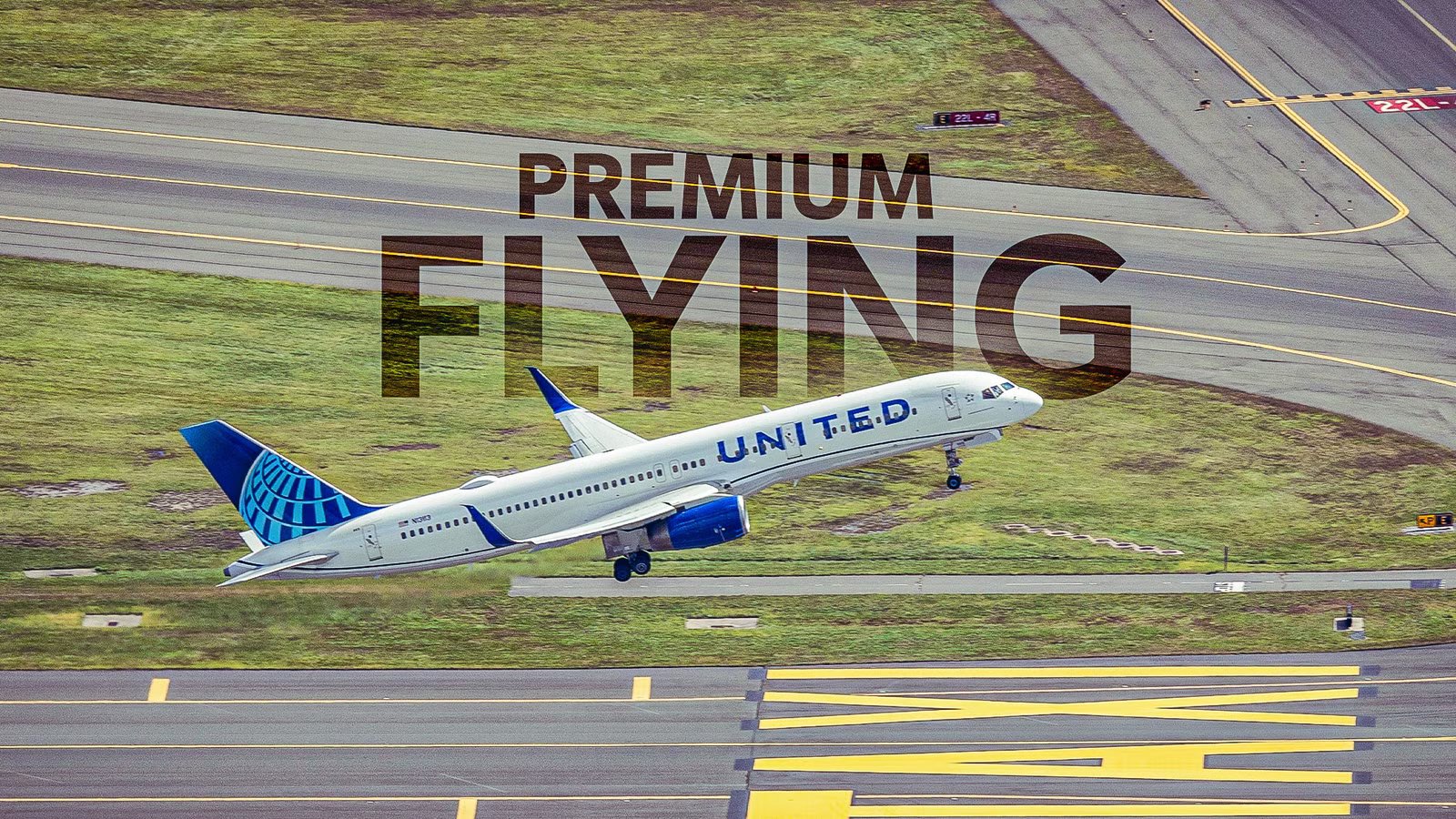
La Compagnie, a French airline, famously known for its niche all-business class operating model, is bringing back one of the most beloved aircraft in aviation history. Over the summer, the airline will operate over 50 flights across the Atlantic using a Boeing 757, effectively introducing a new transatlantic scheduled service on a decades-old aircraft, at a time when airlines phase out the aging twin-jet in favor of newer and more efficient aircraft, such as the Boeing 787-8 and Airbus A321XLR.
What makes this even more unique is the premium nature of these flights, with the only cabin class available being business. In this article, we’ll have a look at the unique nature of all business-class flights and why La Compagnie is bringing back such an old aircraft to operate these flights.
Why La Compagnie Is Bringing Back The Boeing 757

Ahead of the summer season, the Paris-based airline is temporarily returning an old acquaintance to its fleet to meet peak demand on its flights between Europe and the United States. The Boeing 757-200, of which the airline previously operated two, is being wet-leased from Icelandair and will be used on a total of 54 flights between June 5 and June 27, during part of the World Cup, and again from September 2 until October 1. The aircraft will predominantly be used on the airline’s routes from Paris Orly (ORY) and Milan Malpensa (MXP) to Newark (EWR).
This additional capacity will allow the airline to increase frequencies on its seasonal route between Newark and Nice (NCE) while ensuring stable capacity on its year-round routes to Paris and Milan. According to Cirium data, the all-business configured Boeing 757 seats 76 passengers, the same number as the carrier’s own Airbus A321neo. However, the actual number of seats might be slightly higher as Icelandair 757s typically feature 80 seats. With the additional capacity, the airline can already profit from the high-demand summer season while awaiting the delivery of its own Airbus A321neo later this year.
The aircraft most likely to be used for flights is an almost 27-year-old 757 registered as TF-FIA, which was originally delivered to  Iberia back in 2000. According to Flightradar24, La Compagnie already uses this specific aircraft on an incidental basis, and also while writing this article, the aircraft was making its way to Malpensa as B034. Important to note, however, is that the temporary use of the aircraft by La Compagnie is far from a large-scale return of the aircraft on transatlantic flights, and the simple argument of the availability of an all-business-class configured aircraft with sufficient range is more relevant here.

La Compagnie Plans Record US Flights In Summer 2026 Using Leased Boeing 757
All-business-class La Compagnie is making a bold move by leasing a Boeing 757 from Icelandair, boosting its US flights to a record level.
This Is The Premium “Low-Cost” Airline

La Compagnie has been around for a while now and is perhaps the best-known example of an all-premium airline. The French airline was founded in 2013 and commenced operations on the 21st of July 2024 between  Paris Charles De Gaulle Airport (CDG) and
  Newark Liberty International Airport using a Boeing 757-200. Less than a year later, a second route was established between London Luton Airport (LTN) and Newark.
However, in 2016, the airline already suspended this route following Brexit. The carrier presents itself as a “Boutique Airline”, aiming at price-sensitive business travelers in high-yield markets with fares below legacy carriers’ business class. In essence, the airline operates as a premium low-cost airline, with fares being 30 to 50% less expensive than the competition.
Following a transformational period in the two years before the pandemic, the airline now operates exclusively out of Paris Orly Airport (ORY) and has replaced its two Boeing 757s with brand-new Airbus A321neos. In addition, the airline has started serving two new routes from Nice (NCE) and Milan Malpensa (MXP) to Newark. The flights to Nice commenced back in 2019 on a seasonal basis, while flights to Milan started in 2022 and operate year-round. In addition to scheduled services, the airline is also increasingly offering private charter services to complement revenue and improve aircraft utilization.
For La Compagnie, the pandemic years were particularly difficult as business travel came to an almost full standstill, resulting in an almost 15-month suspension of regular commercial services. However, the airline’s all-business strategy finally started to show success, and it reported its first-ever operational profit in 2022. This is an achievement many skeptics wouldn’t have expected to be possible, especially considering La Compagnie is not the first airline attempting to succeed with an all-premium business model.
The underlying reason for these profits is the rising popularity of premium cabins among leisure travelers, with leisure passengers now making up a significant portion of the airline’s business. In an interview with Forbes in honor of the airline’s ten-year anniversary in 2024, CEO, Christian Vernet, said the following about the carrier’s long-term plans:
“We’ve turned 10 years old, a significant age for an airline. We’re no longer in our infancy, we’ve proven our model. We have two airplanes today, but we’ve got plans to go up to 10 airplanes in the future, opening new routes between New York and the rest of Europe, and potentially other destinations in the U.S.”

Not So Fast: How The Boeing 757 Made A Comeback At This Luxury Airline
The aircraft is surprisingly rejoining the airline’s fleet.
This Is The Other All-Business Class Airline

Besides La Compagnie, only one other true premium-only airline is currently operational. BeOnd, which is headquartered in Dubai but based in the Maldives, commenced operations in November 2023 and currently operates one Airbus A319 and one A321 to several destinations in Europe and the Middle East. Due to operational constraints, most of the airline’s flights to Europe have an en-route stop in the Middle East to refuel. Other than La Compagnie, BeOnd has been targeting the leisure segment from the start, and the airline is certainly ambitious in doing so. In 2024, BeOnd’s CEO Tero Taskila told Forbes:
“In the next 5 years, we plan to operate 32 aircraft and service 52 destinations. That is the target from myself and our shareholders. We are also looking to open two new hubs in the next three years, in the Caribbean islands and the Middle East.”
As of writing, however, BeOnd has announced to suspend all flights until October, following the ongoing conflict in the Middle East and subsequent rising fuel costs. This raises the question whether the airline will ever return to regular service or has been too ambitious, expanding too aggressively and over-promising.
Deserving an honorable mention is also  oneworld member
  British Airways all-premium transatlantic service, which the airline operated until 2020. This route connected London City Airport (LCY) and New York John F. Kennedy Airport (JFK) using a small Airbus A318 with 32 lie-flat business class seats in a 2-2 layout. En route, the aircraft made a stop in Shannon (SNN) to refuel, while passengers cleared U.S. pre-clearance at the airport. These unique flights on one of the most premium-heavy city pairs in the world were intended to fill the premium void left by Concorde’s retirement in 2003. However, amidst the pandemic, these flights were also canceled as global business travel demand came to a standstill.

All-Business Airline BeOnd Pauses Flights Until October Amid Fuel Shortage
As fuel costs soar, BeOnd’s unique all-business class service faces an uncertain future.
The All Business Class Model

Over the years, a wide range of different business models have been attempted by airlines around the world. However, very few of these actually succeeded, and even the few that did prove commercially viable often still struggle with thin margins. Airlines such as US-based MGM Grand Air, UK-based Silverjet, and the Swiss airline PrivatAir, all struggled to cope with high operational costs and strong competition from legacy airlines.
It is certain that the all-business-class model is a unique one, and as one might expect, it is dependent on very specific operating and market conditions to be profitable. In most cases, these premium flights are operated by narrow-body aircraft with an above-average range, such as the A321neo, or by pushing the range of aircraft, such as the Airbus 320 or Boeing 737, to the limit. Something possible since the payload onboard of these all-business aircraft is typically lower due to the sparse configuration and limited capacity.
From an airline economics perspective, all-business class airlines focus on maximizing revenue per passenger over volume. This model can be financially rewarding for airlines, as La Compagnie has proven, but also comes with significant risks as the model relies on consistent high premium load factors. As a result, the model only works in a select number of high-yield markets with strong business travel demand or leisure routes with limited premium and direct competition.

The World’s Only 2 All-Business-Class Airlines: Passenger Experience Compared
These airlines place luxury first and fly a limited number of routes.
The Story Of The 757

Despite the return of the 757 to La Compagnie not being a permanent extension of the aircraft’s long operational career, it is certainly nice to see the iconic aircraft a bit more in action before it is eventually retired from the global fleet of aircraft. When the Boeing 757 was first announced over four decades ago on August 31, 1978, to be developed alongside the Boeing 767, it became clear a new chapter for commercial aviation was unfolding.
The aircraft was significantly more fuel-efficient than its predecessor, the Boeing 727, and its powerful engines delivered strong thrust, allowing the Boeing 757 to operate from high-altitude and short runways, as well as under high-temperature conditions. Adding to the Boeing 757’s appeal to airlines was its long range of up to 3,900 nautical miles (7,200 km). This made it one of the first twin-engine aircraft to receive ETOPS certification, allowing for transatlantic flights with a lower capacity than the long-haul aircraft available at the time.
|
Boeing 757 Operators In April 2026 |
||||
|---|---|---|---|---|
|
Airline |
757-200 |
757-300 |
Total |
Average Age |
|
1. Delta Air Lines |
74 |
16 |
90 |
27.3 years |
|
2. United Airlines |
40 |
21 |
61 |
27.3 years |
|
3. Icelandair |
9 |
2 |
11 |
26.2 years |
|
4. Azur Air |
10 |
10 |
27.7 years |
|
|
5. SCAT Airlines |
3 |
3 |
33.6 years |
|
|
Source: planespotters.net |
||||
Revolutionary at the time was a new flight management system and the introduction of electronic flight instrument systems (EFIS), eliminating the need for a flight engineer. Later, a new winglet design improved the aircraft’s aerodynamics, which resulted in enhanced lift, reduced drag, and up to 35% better fuel efficiency. Furthermore, the cockpit of the Boeing 757 is nearly identical to the Boeing 767, which allowed for crew cross-training, a groundbreaking concept at the time. Pilots even compare the Boeing 757 with a sports car, praising the aircraft for its hands-on flying and responsive handling. Something newer aircraft, such as the Boeing 777, do not have.
The 757-200 was the first 757 variant to be produced by Boeing, with the aircraft’s first commercial flight taking place in January 1983 with Eastern Air Lines. At first, Boeing also announced a shorter 757-100 model to be launched alongside the -200, with around 150 seats, to replace the Boeing 727. However, the large wing and landing gear of the 757 were found to be excessively heavy for an aircraft of that capacity, and the project was discontinued in March 1979. After the initial success of the 757, Boeing later introduced a stretched variant, the 757-300, which entered service in March 1999 with German leisure airline Condor.