dailynewsnblog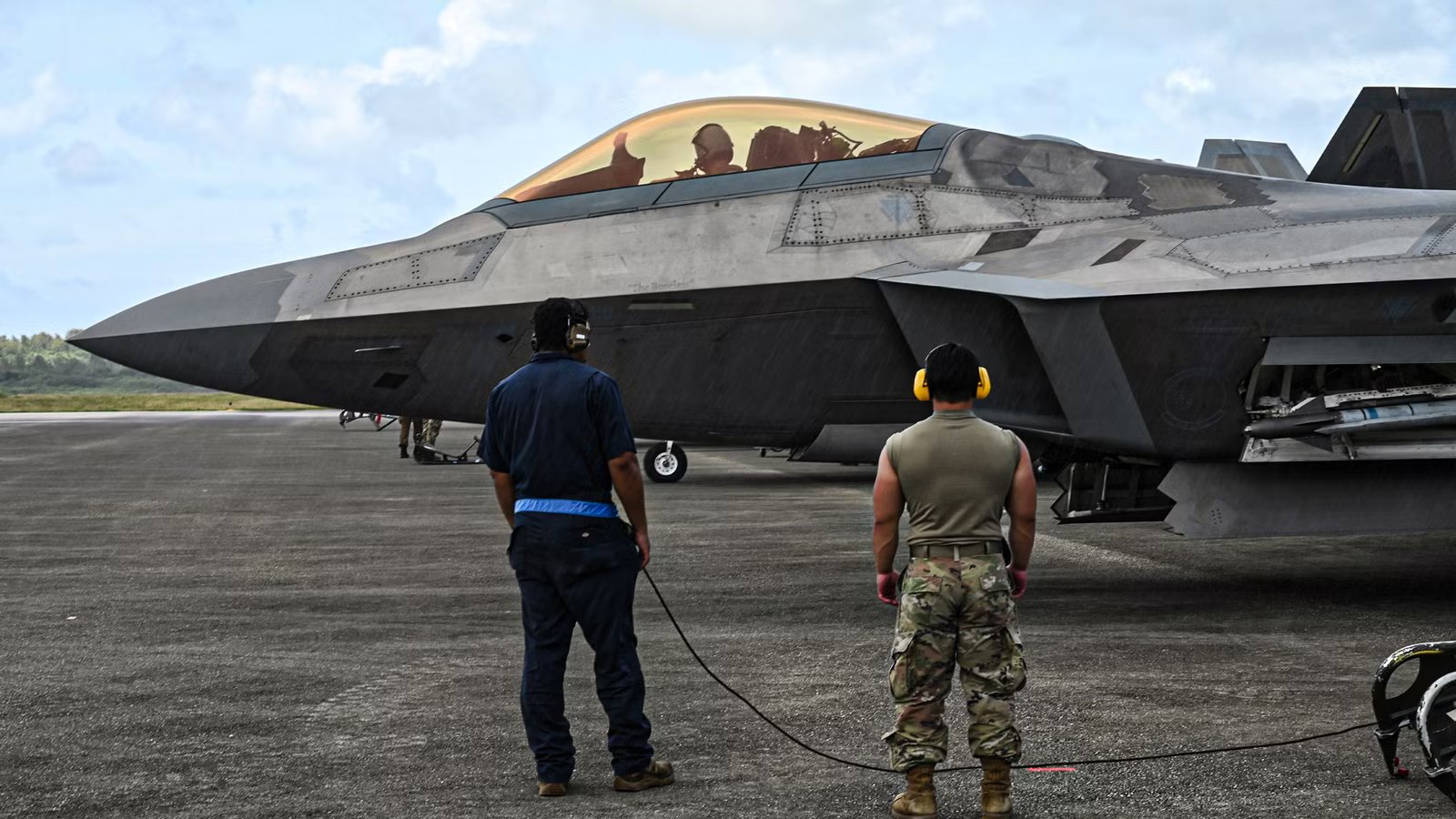
On April 24, Northrop Grumman announced the first delivery of its production anti-jam navigation system to upgrade the US Air Force’s Lockheed Martin F-22 Raptor fleet. The new system has been dubbed the EGI-M, or LN-351, with encrypted M-code signals from GPS III satellites that integrate with fiber-optic inertial navigation systems to make these stealth fighters more resilient than ever before to GPS spoofing and other electronic interference.
The $1.39 billion program began when NG was awarded the contract for the LN-351 GPS system in 2019. The system conducted the first in-flight trial in 2023, and USAF evaluation flights began in February 2025. The program to replace the outgoing LN-251 system will span a 13-year period of performance that complements the broader F-22 Super Raptor modernizations.
Despite the fact that the Raptor, as the first 5th-generation fighter ever made, is now getting on in advanced age with its retirement looming on the horizon, the USAF is continuing to invest in the fleet. This is to ensure a capability gap does not develop before the introduction of the 6th-gen Next Generation Air Dominance platform in the 2030s. Boeing was only recently awarded the contract for the F-47 stealth fighter in early 2025. Until this new and even more exquisite platform arrives, the F-22 remains the premier air superiority fighter in the USAF and the world.
More Resilient And More Lethal

One of the main functions of the F-22’s new system is to leverage the capability of M-code signals, which can blast through electronic interference and GPS-denied environments to make the Raptor more survivable in heavily contested airspace. The upgrade is critical for the F-22 to remain survivable and lethal in environments where adversary anti-access, area-denial systems are present. Particularly in the Indo-Pacific, this is an important tactical element to ensure that Raptor pilots maintain the upper hand.
GPS is vital for determining intercept geometry, aligning and operating both navigation and weapon sensors, as well as actually employing weapons. Under heavy electronic attack, degraded GPS accuracy, or the total absence of GPS signal can either significantly hamper the ability of an F-22 to perform its mission or render it completely powerless to strike the target as intended.
New satellites operated by the US Space Force can beam encoded signals directly to specific target areas that further enhance operations for all forces and increase resilience against ground-based jammers with localized effect. This new system uses modernized Navstar security algorithm cryptography that makes it extremely difficult to be spoofed, even by near-peer adversaries like China or Russia.
The LN-351 features a blended navigation mode that constantly validates the integrity of GPS data by cross-referencing it with the inertial sensors. Gyros provide much higher precision and lower drift when GPS signals are completely lost, ensuring the aircraft remains on course even if it must fly blind for extended periods. By doing so, if a GPS signal is being attacked or manipulated, the system can automatically detect the discrepancy and rely on the trusted inertial data.

Why The Pentagon Is Worried About International Stealth Fighter Development
The new 5th-generation arms race.
The Open Architecture Difference

Northrop Grumman has also made the system open architecture as a further measure of ensuring that it will remain future-proof going forward. The US Air Force has been prioritizing simple and ‘vendor agnostic’ iterative upgrade capabilities with all of its modernization programs in recent history. This measure promises that decades down the line, the fleet of fighter jets will not be held captive by a single contractor with proprietary technology that reduces the combat effectiveness of America’s Armed Forces for the financial benefit of a single company.
The shift to an Open Mission Systems architecture is arguably the most strategic part of the upgrade because it breaks the vendor lock that historically made the F-22 difficult and expensive to update. Unlike the legacy LN-251, the new EGI-M uses a modular design that allows the Air Force to quickly install third-party navigation applications or software updates to counter new jamming techniques as they emerge.
In the 21st century, defense threats evolve at an exponentially faster rate than at any point in the past. It is vital for the most ‘exquisite’ platform in the Air Force to be able to evolve just as rapidly as the technology employed by America’s adversaries and those of its allies and partners around the world.
Previously, changing a single component or piece of code in the F-22’s navigation suite required a massive, multi-year overhaul of the entire proprietary software stack. The newest system will be a plug-and-play style interface that allows technicians to simply upload algorithms or hardware modules in a fraction of the time that they used to.
Here’s Why Air Forces Are Expanding Their Stealth Fighter Programs
The global race for the ultimate stealth jet.
The Raptor Learns To Fight Blind

Jamming techniques evolve weekly on the modern battlefield. The newly combined resilience of the Northrop Grumman GPS system with its simple and quick updating capability will make the F-22 both more tactically effective when it is in the fray and more adaptable in between missions. This system will also allow the F-22 to talk to the rest of the US Armed Forces and advanced allied platforms without breaking emissions silence.
Although the new system will not allow the Raptor to instantaneously overcome every form of electronic warfare that it encounters, it can fly blind and return with data collected from exposure to a new hostile system that will allow specialists to develop new ways to make the entire fleet more survivable on the next encounter. Combined with the new stealth data link, the real-time and after-action capability of the F-22 is being dramatically enhanced.
The LN-351 is designed to be the standard for multiple aircraft, including the E-2D Hawkeye. This means a software fix for a GPS spoofing issue found by an F-35 pilot can be instantly pushed to the F-22 fleet, creating a unified defense across the entire Air Force and Navy. Integrating the F-22 into modern data links that are shared also allows it to exchange high-speed sensor data in real-time.
On top of being compatible with the same upgrades in the hangar, the Raptor is now plugged into a network that is far superior to its legacy system. Instead of just hearing each other over a radio, they can now see the same digital battlefield map. This new capability makes the world’s best fighter jet even more fearsome than it already was.

From 76 F-22 Raptors To 200 Next-Gen Fighters: How Much Larger America’s Air Superiority Fleet Could Get
A closer look at the future of air power in the US Armed Forces.
Super Raptor: Making An Apex Predator Smarter And Stronger

Integrating the F-22 into a shared common data link is a monumental shift for the US and its allies because it transforms the Raptor from a lone wolf into a high-speed aerial quarterback. This change solves the decades-old Tower of Babel problem, where the F-22’s advanced sensors could see threats but couldn’t stealthily share that data with non-F-22 aircraft. In high-end conflicts, the time from spotting a target to destroying it must be measured in seconds. Common data links like Link 16 allow the F-22 to transmit warning and targeting information instantly, reducing the data-to-decision timeline across the entire coalition fleet.
The F-22 was originally conceived during the Cold War for a singular mission. The aircraft combined all of the best elements of technology at the time and incorporated them into one fighter jet that could dominate in every element of air warfare. Nearly three decades after it debuted, the Raptor is still faster, more maneuverable, better armed, and stealthier than anything in the sky today. While it may not be the champion in any one category, it combines a level of performance across all fields of comparison that makes it the unrivaled master of the sky.
The one shortcoming that the F-22 has been hindered by in the modern era is its data link, which essentially isolated it from the shared battlefield networks of 21st-century weapons systems produced by the US and its allies. The barrier to solving this issue has always been the enormous cost of retrofitting the most sophisticated tactical aircraft ever constructed. However, advances in technology have made it possible to now bring the F-22 up to the standard that will unlock the potential for the Raptor to now be an exponential force augmentation wherever it is deployed in the battlespace.
5 Fighter Jets With The Most Advanced Radar Systems
A closer look at some of the fighters with the longest striking range.
The High-Low Fleet Mix On The Battlefield Of Tomorrow

The Raptor’s onboard computer fuses data from its radar, electronic warfare suite, and newly added infrared sensors into a single picture. Sharing this ‘God’s-eye view’ in real-time ensures that every friendly unit, from other jets to ground-based air defenses, has perfect situational awareness of the battlespace. Even as a ‘quarterback,’ the F-22 remains a supreme dogfighter. The common data link enhances this by allowing the Raptor to conserve missiles and share data to maneuver into the perfect blind spot before striking.
A shared common operating picture guarantees that every allied unit, whether in the air, on the ground, or at sea, knows exactly where friendly assets are located in real-time, even in chaotic, GPS-denied environments. The F-22 can now push its high-fidelity targeting data directly to 4th-generation fighters like the F-15EX, F-16, and allied jets like the Eurofighter Typhoon. This allows these older planes to engage enemies at extreme ranges using F-22 data without ever turning on their own radars, which would otherwise give away their positions.
As part of the Raptor 2.0 modernization, the F-22 will also be ready to act as a command hub for Collaborative Combat Aircraft. Pilots can use the shared data link to direct these autonomous drones to scout ahead, jam enemy signals, or even soak up enemy fire, preserving the F-22 for the final, lethal blow. For allies like NATO or Pacific partners, a data-linked F-22 is a massive asset because it provides survivability to the whole team. They gain the protection of the F-22’s superior sensing without needing their own fleet of top-tier stealth fighters.