dailynewsnblog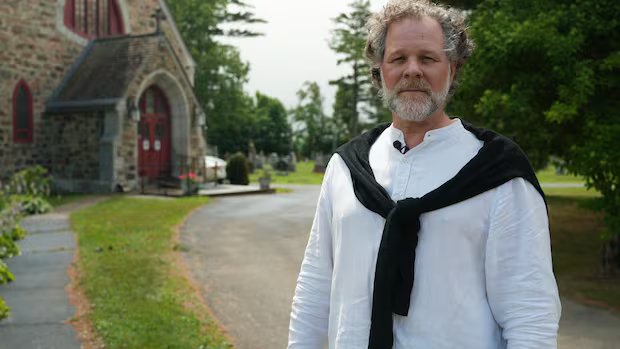
Called in as the chaplain for a dying woman a few years ago, Father Rodney Clark recalls the harsh administrative reality that immediately followed her death.
The woman was homeless and had chosen medical assistance in dying at the Joliette, Que., hospital after her cancer metastasized.
But with no relatives around or financial resources, her body was essentially abandoned.
“There was no one around her who could cover the costs for transport and cremation,” said Clark.
He quickly tried to find a donor to pay the bill so he could claim her remains before they were sent to a local funeral home.
The hospital gave him less than a day to find the money, an affordable undertaker and to sign all the necessary paperwork, he said.
But Clark said by the time he organized everything, including a free marked grave, it was too late.
Less than 24 hours after her death, she’d already been cremated and buried in a common grave in Joliette, becoming one of hundreds of Quebecers whose bodies remain unclaimed every year.
“It’s heartbreaking,” said Clark, a priest at Christ Church, an Anglican parish in Rawdon, Que., a small town northeast of Montreal in the Lanaudière.
“In theory, it’s possible to retrieve [ashes] and lay them to rest a second time, but by then, the cost was simply not something I could keep asking donors to cover.”

While Montreal has the most unclaimed bodies, the total number in the province doubled from 448 in 2020 to 992 last year, according to Santé Quebéc. Quebec’s death benefit is $2,500 — an amount many organizations say is insufficient to cover expenses, including funeral services and cemetery plots.
Number has exploded since 2020
The number of unclaimed bodies has doubled from 448 in 2020 to 992 last year, according to statistics provided by Santé Québec.
In addition to those, an average of 135 cases a year are overseen by the coroner’s office if the death is unexplained, violent or involves allegations of negligence.
If police can’t find any surviving family or if they refuse to claim the body, the province takes charge of the remains and authorizes a funeral home to arrange cremation or burial.
“It’s been an increase of about 200 per cent for our funeral home over the past five years,” said Mélanie Poirier, director of operations and customer service at Magnus Poirier.
Montreal has the most unclaimed bodies, but other regions with barely any cases 20 years ago have also experienced a big jump. Experts say that may in part be due to population growth, as more people leave Montreal to move to the suburbs or smaller cities like St-Jerome, Granby or Joliette.
In the last six years, the number of unclaimed bodies in the Laurentians doubled from 29 in 2020 to 67 last year.
In the Lanaudière region, it’s nearly quadrupled from 16 in 2020 to 58 in 2025.
“There’s certainly a financial issue at play. People are facing certain financial hardships,” Poirier said.

Death benefit capped at $2,500 for decades
The Quebec Pension Plan’s death benefit has been capped at $2,500 for nearly three decades. That amount is only reimbursed after the cremation and funeral bill is paid.
“Funerals are super expensive,” said Isabelle Perreault, a professor in the department of criminology at University of Ottawa who studied why bodies remained unclaimed in Quebec.
“The $2,500 offered by the government, it’s just for transportation and cremation. It covers the basics.”
Some people are also discouraged by the paperwork involved in claiming a body, which can be complicated for grieving family or friends, said Perreault.
She said some people wrongly assume claiming a body means they are also legally responsible for that person’s estate, which is not the case.
“I think that’s an important thing to know because sometimes they say, ‘Oh, maybe that person has a lot of debts and I don’t have enough money to manage all that,” said Perreault.

In addition to cost, Perreault and Poirier have noticed other patterns, including isolation or family who live outside the country.
Others don’t have descendants or are estranged from their children or relatives.
“There’s people who are not in touch with their family for decades,” said Perreault.
Seniors’ groups call for increase
In April, several organizations that advocate for seniors called on Quebec Finance Minister Eric Girard to increase the death benefit from $2,500 to $5,000.
“It’s absolutely inconceivable that we are unable to provide a funeral service and burial worthy of the name for all citizens,” said Catherine Harel Bourdon, the president and CEO of Les Petits Frères, a non-profit organization that supports seniors who are socially isolated.
Many of the seniors they help no longer have loved ones to care for them. They have a hard time paying their rent and can’t afford to set aside money for funeral services or a final resting place, said Harel Bourdon.
“They don’t know what’s going to happen to their bodies, so it’s a stress they don’t need at the end of their life,” she said.
Les Petits Frères supports these seniors until their final days and in some cases, helps arrange their burials on cemetery plots owned by their organization. But the demand for this support has gone up.

A provincial spokesperson said increasing the death benefit to $5,000 and indexing it annually would represent a cost of approximately $450 million a year.
“Such a measure would eliminate the [Quebec Pension Plan’s] financial flexibility,” said Alex Champagne, a policy adviser for the finance minister.
Having that wiggle room helps the province “cope with economic uncertainties — a necessity that is all the more critical in the current economic climate,” said Champagne, in an emailed response to CBC’s questions.
He also argues the death benefit was never intended to cover all of the expenses following a person’s death.
Although the province discussed increasing the amount, he said the Coalition Avenir Québec government prioritized other changes, including allowing workers aged 65 to 72 who already receive a retirement pension to opt out of making further contributions.
There are no plans to increase the death benefit before the next public consultation scheduled for 2029, said Champagne.
Liberals say they’d consider increasing death benefit
Ahead of the provincial general election, scheduled for Oct. 5, CBC asked the other political parties where they stood on the issue.
The Liberal Party of Quebec said it would look at increasing the amount if elected.
The other parties, including the Parti Québécois, Québec Solidaire and the Conservative Party of Quebec, did not respond.
Clark thinks there needs to be better collaboration between health officials, the police, religious organizations and charities to make sure people aren’t unclaimed in the first place.
“Those links in our social fabric, which used to be very strong, are now almost non-existent,” said Clark.
Poirier also believes the rise in unclaimed bodies points to a troubling societal issue that needs to be addressed.
“What really concerns us is knowing that behind all these people, there’s a story there, there’s a human being,” she said.