dailynewsnblog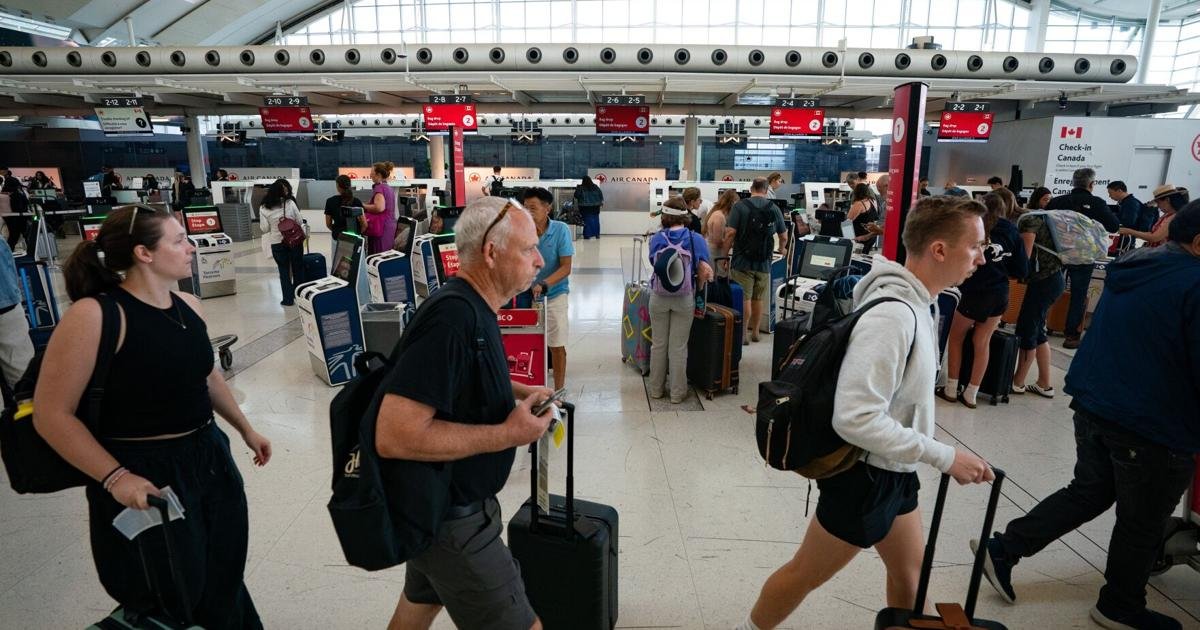
OTTAWA — With an English rose on her lapel, the Iron Lady wrapped her pitch for privatization in the soft, everyman’s mantle of individual empowerment.
“Popular capitalism,” Margaret Thatcher called it, the idea that selling off state assets would spread the glories of direct ownership and lead to a more prosperous United Kingdom.
“Millions have already become shareholders,” the U.K. leader declared to her British Tory convention in 1986. “And soon there will be opportunities for millions more.”
Her government soon dissolved the state-owned British Airports Authority. And by the following year the U.K.‘s largest airport, Heathrow, was among those in private hands as part of a new, publicly-traded company.
Much of the world shared the era’s fever for the free market. In Canada, government-owned Air Canada was privatized. The sell-off of Petro-Canada began in 1991, and Canadian National Railway hit the stock market in 1995. But the country did not follow Thatcher’s example when it came to airports.

Canada is willing to let foreign investors buy stakes in Canadian airports, Prime Minister Mark
Since revealing it would consider “options” for airport privatization last fall, the Liberal government has been coy about its plans. Prime Minister Mark Carney suggested last month that they might open the gates for foreign investors to buy stakes in Canadian airports, which experts say could be worth tens of billions of dollars on the market.
Though not quite “popular capitalism” of the Thatcher variety, Carney’s pitch has its own populist spin. His government is setting up the “Canada Strong Fund,” a $25-billion pool of borrowed money that Ottawa will use — and possibly expand by raising more cash through “federal assets,” like airports — to invest in factories, energy projects, mines and more. Canadians could put their own money in, too, allowing anyone to “own a small piece” of the developments Carney promises will protect the economy and make Canada less dependent on the United States amid Donald Trump’s trade tariffs and talk of annexation.
Some investment firms have said they’re open to the idea, while Carney’s top civil servant has previously spoken in favour of opening airports to private investors.
But privatization — especially in the full-scale manner it came in 1980s Britain — strikes some economists and business experts as questionable. No interest group is clamouring for a sell-off. And some argue that messing with the status quo, Canada’s “somewhat unique” model of airport ownership, would be foolish, and could lead to higher costs for both airlines and the people who fly.
“We have to be careful of short-termism,” said Barry Prentice, a professor at the University of Manitoba’s Asper School of Business.
“There are many places where the government can find financing. I don’t think selling the family jewels is the way to do it.”
How does the current model work?
For more than 40 years, the ownership and management of major airports like Toronto Pearson has been distinct from those used in other countries. In the early 1990s, the federal government outsourced running the big airports to local, non-profit airport authorities through decades-long leases, but maintained ultimate ownership in public hands.
“These airport authorities make financial decisions and investment decisions independently, but ultimately don’t own the assets of the land,” explained William Morrison, an economics professor who specializes in air transportation at Wilfrid Laurier University.
Under this arrangement, which is called the National Airports System, the local authorities put any profits toward airport improvements, while paying rent to the federal government for use of publicly-owned lands. Since the early 1990s, this has resulted in more than $30 billion in infrastructure upgrades, according to the Canadian Airports Council. Budget statements tabled in Parliament, meanwhile, show the yearly rent payments Ottawa receives from local airport authorities climbed 79 per cent over the decade from 2014-15 to 2024-25, when the government got almost $560 million.
For Morrison, and others, this makes it hard to argue the current model is broken, given the amount of money that is going into improving Canada’s airports.
“Look at the main airports — Toronto, Montreal, Vancouver, Calgary. To some extent, they’ve all engaged in major investments, and their master plans are pretty clear about their intention to improve the assets and to improve economies that rely upon the airport,” he said.
Is there a better way?
There are, of course, different models. Heathrow, in London, is completely owned by the private sector. Airports like Charles de Gaulle in Paris are owned and operated by public-private partnerships. And most airports in the U.S. are owned by local or state governments.
Yet concerns with Canada’s system have been floated before. In 2000, the auditor general hammered the government for its handling of major airports, concluding Ottawa’s handling of key issues like airport improvement fees was “virtually non-existent.” Sixteen years later, in 2016, former Conservative cabinet minister David Emerson penned a lengthy report for the Trudeau government, recommending that Canada follow the U.K. and Australia in privatizing its major airports.
Emerson’s report cited data from the World Economic Forum, which at the time ranked Canadian airports among the best in the world for the quality of their infrastructure, but way down the list at 135th in the world for cost competitiveness.
At the time, major airlines banded together to oppose privatization, and the Trudeau government let the matter drop. One senior aerospace investor, who was granted anonymity to speak openly about the industry they work in, said the big airlines feared fees to use airports would increase, and wanted to stay with the “devil you know.”
Yet the investor noted how fees have since increased. Government data shows the fee charged to passengers at 25 federally-owned airports increased from an average of $17.48 in 2013 to $27.28 in 2024. Fees charged to airlines have also gone up, including at Pearson, where rates for commercial airline traffic — frozen for several years before 2021 — increased by about 25 per cent from 2021 to 2026, according to annual reports from the Greater Toronto Airport Authority.
In an emailed statement, authority spokesperson Erica Vierra said those fees are “competitive” with those at other airports, including in the U.S., and were still lower last year than they were in 2007.
Could privatization reduce costs?
Would privatization fix this? Gabriel Giguère thinks so. The senior policy analyst at the think tank MEI argued for-profit ownership would create more incentives to improve service, make operations more efficient, and possibly reduce prices for airlines and passengers.
He pointed to a study from 2022, in which a team of professors from the U.S., Alberta, and Australia reviewed 2,444 airports in 217 countries to see how ownership structures impact “improvements in service quality and financial performance.” They concluded that privatization in general does not improve performance, but that “private equity ownership” — where airports are purchased by infrastructure funds or groups of investors — did increase the number of passengers, international flight routes, operating income, terminal expansions, and more.
Yet experts like Morrison and Prentice argue that privatization still comes with monopoly concerns.
“They’re certainly local monopolies,” Prentice said, explaining that this means without government oversight a private, for-profit airport — especially a big one — would have little reason to minimize costs to consumers and airlines. They might actually have reason to maximize them, he said.
Chris Ragan, an economist who served on the federal government’s advisory council for growth from 2016 to 2019, said he has no recollection of any discussion about airport privatization at the time. He said he’s not convinced that the idea would ensure better airport services, since in his view a lack of airline competition and high airport fees are bigger issues in Canada. The argument to free up money doesn’t fly either, he said, since there are other ways the government can raise funds for major projects.
“I’m not sure what problem people think they’re solving,” Ragan said.
Vierra, the Toronto airport authority spokesperson, said privatization “does not automatically equate to lower” passenger fees, since it “imposes profit margins” and “burdens” to pay shareholder dividends that don’t currently exist in Canada.
Morrison added that issues with rising fees could also be addressed through other government action than privatization, which in Australia has prompted airlines to complain of raking in excess profits at their expense.
“Perhaps the temptation is the billions of dollars that would be a sort of windfall gain in revenues through the sale of those airports,” he said.
He noted how Michael Sabia, the business executive who Carney appointed as Canada’s top civil servant last year, has made that case before. Appearing before a senate committee in 2017, when he was head of Quebec’s La Caisse investment firm, Sabia described airports as “great infrastructure assets” for pension funds and other major investors.
“Canadian airports would be attractive on a global basis,” said Sabia, who was also an executive at CN when the national railway was privatized in the 1990s. “Even selling small minority stakes would be a way of monetizing 20 per cent of the value of the airport,” he continued. “Government could take that and recycle it into other forms of greenfield infrastructure, social programs, social infrastructure, or whatever it wanted to do.”
With the Carney government now musing about exactly that, some big investors are warm to the prospect. “The government is taking steps in the right direction and we stand ready to consider,” said Michel Leduc, chief public affairs officer with the Canada Pension Plan Investment Board, in an emailed statement. Jean-Charles Del Duchetto, a spokesperson with La Caisse, said the firm is “pleased to engage and assess any mutually beneficial opportunities” if the government opens airports to private investment.
The Union of Canadian Transportation Employees, meanwhile, is adamantly opposed to the idea of privatization. Citing concerns about job losses at airports and a loss of public accountability, union president Teresa Eschuk called the idea a “one-time cash grab to make other people rich.” The union has also written to demand a meeting with Transport Minister Steven MacKinnon, but for more than a month has received no response.
The Iron Lady might have rebuffed them entirely. She was certainly dead-set on “popular capitalism.” Yet more than 20 years later, in 2009, the U.K.‘s competition commission ordered the breakup of the private company that owned Heathrow and six major airports across the country. Passenger fees at these airports were 20 to 30 per cent higher, on average.