dailynewsnblog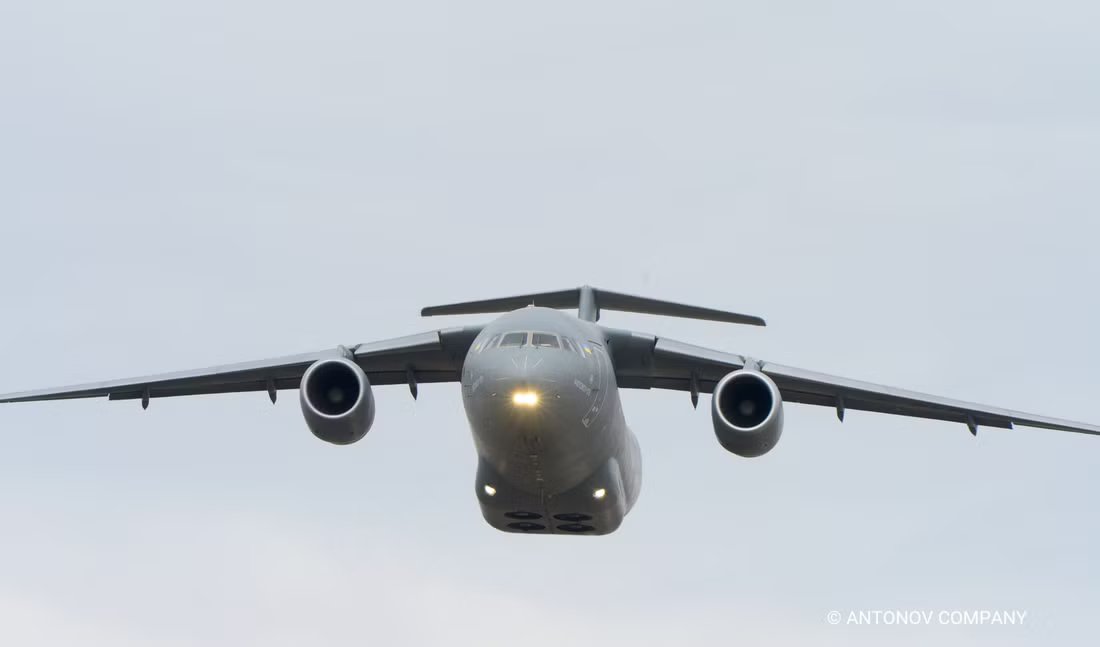
During the Cold War, Antonov was based in the Ukrainian SSR and was one of the world’s largest producers of military transport aircraft. The company produced everything from small biplanes to the mighty Antonov An-124 Ruslan and its even larger Antonov An-225 Mriya derivative. Those are even larger than the US Air Force’s Lockheed C-5 Galaxy. The collapse of the USSR was traumatic for the Soviet aviation industry, although it was not the end of Antonov or its designing new transport aircraft.
In the 2010s, Antonov returned to designing upgraded military transports to replace a share of its vast but aging fleet of Soviet-era transports. The flagship medium-sized jet-powered transport was the An-178. As the aircraft was nearing introduction, it was struck by the rupture of Ukraine and Russia in 2014. By 2022, it had recovered and was set to be exported to Peru and elsewhere when the current conflict erupted, putting the program on ice until today. This has removed one of the primary competitors to the Embraer C-390 Millennium.
Antonov At The Time Of USSR Collapse

In December 1991, Antonov was one of the world’s largest design bureaus and transport aircraft manufacturers. However, it was not a vertically integrated company in the Western sense; its Antonov Design Bureau was based in Kyiv and was responsible for design, testing, and prototypes. The Kyiv Aviation Plant produced many of the aircraft. But large-scale production of components was also spread across factories in Russia, Uzbekistan, and elsewhere.
Notable mid-sized transport aircraft include the An-26, An-32, An-72, and An-74 aircraft. By the time of the collapse, it had produced over 2,700 An-24/26 family aircraft, 360 An-32s, 200 An-72/-74 aircraft, and around 30 of the massive An-124 transports. It had also delivered over 18,000 An-2 biplanes and 1,240 An-12s, among others.
By around 1990, Antonov was delivering around 170–200 aircraft annually. The An-32s, An-72s, and An-74s were built in Ukraine, and the An-124 and An-12 were built in Russia. The An-22, some An-124 components, and more were done at TAPO Tashkent, while the An-2 and An-25 were built at PZL Mielec in Poland. It’s not just Antonov whose production was spread out over the Soviet bloc; Russia only brought the assembly of its Ilyushin Il-76 airlifter to Russia in the 2020s from Uzbekistan.
The Collapse Of The Market

The collapse of the USSR fractured Antonov’s integrated Soviet supply chain. Major suppliers, production facilities, and even final assembly lines suddenly found themselves in different independent states, complicating procurement, logistics, and program management. The end of the Cold War also reduced the demand for military transport aircraft. The newly independent air forces like Ukraine and Russia found themselves with surplus military transport aircraft that they could barely afford to maintain, let alone replace.
The Soviet collapse also reduced demand around the world. Various Soviet-aligned countries had benefited from extensive Soviet military support. For example, Soviet military aid sustained sizable transport and combat aircraft fleets in countries such as Cuba, while many other Soviet-aligned states relied on subsidized equipment, training, and logistics.
But that was all gone. Various formerly Soviet-aligned countries reoriented towards NATO and Western defense suppliers. This led to the permanent loss of those markets. Years later, when some countries (e.g., Poland) once again purchased military transports, they also purchased Western aircraft like the C-130, C-27J, and now C-390. This was even more dramatic in commercial passenger aviation. Antonov found itself facing a perfect storm. Domestic military orders evaporated, government funding dried up, export markets contracted, and its once-integrated Soviet production network was suddenly spread across multiple independent countries.
Surviving The 1990s & 2000s

Ukraine’s Antonov managed to survive, but by transforming into a much smaller company focused on exports, cargo operations, modernization, and niche production. During the mid-1990s, the once large aerospace company produced fewer than ten aircraft annually, with some of these using components and airframes left over from Soviet times.
During the early 2000s, it was around five to 15 deliveries annually, with deliveries rising to around 15 to 20 deliveries by the late 2000s. Aircraft produced in this time included the An-32, An-74, An-140, An-70, An-158, and An-148. There were discussions about completing the semi-built An-225, but this never happened.
A major source of income was upgrading hundreds of existing older aircraft and some cargo services through Antonov Airlines. Antonov did not give up on developing aircraft; it continued to develop new and modernized aircraft like the An-140, An-70, and others. It also entered partnerships with other countries. For example, it delivered parts and assembly kits to Iran for Iran’s HESA to assemble up to 80 An-140s (Faraz). This ended as Iran supplied weapons to Russia for use against Ukraine. Separately, HESA’s facilities were heavily targeted in the 2026 air campaign.
Antonov Sought To Re-enter With An-178

One of the flagship aircraft Antonov developed was the Antonov An-178 short-range medium-airlift transport. It was based on the An-158, with the project being announced in 2010 and the prototype rolling out and flying in 2015. The An-178 was intended to replace the An-12, An-26, and An-32 and was intended to compete with the upcoming Embraer C-390 or even the C-130J/LM-100J in certain contexts. Antonov saw market demand for 200 of the aircraft.
In the context of the 2000s, the old division between the Soviet and Western blocs had degraded. Russia was purchasing the French Mistral-class amphibious assault ships, and it was geopolitically acceptable for some Western-friendly countries to purchase Ukrainian aircraft. By 2010, many of the old Soviet transports were nearing retirement, and some customers were looking for replacements.
Select mid-sized transports (per Antonov etc.) | Antonov An-178 | Embraer C-390 Millennium | C-130J Super Hercules |
|---|---|---|---|
Number built | 2 prototypes | 17+ delivered | 545+ |
First flight | 2015 | 2015 | 1996 |
Maximum payload | 39,700 lbs (18,000 kg) | 57,320 lbs (26,000 kg) | 44,000 lbs (19,958 kg) |
Ferry range | 2,860 nautical miles | 4,410 nautical miles | 4,350 nautical miles |
Paratroopers carried | 70 | 64 | 64 (92 for C-130J-30) |
Orders or letters of intent rolled in from cargo airlines or national air forces in the UAE, Azerbaijan, Saudi Arabia, Iraq, China, Peru, and the Ukrainian Air Force and government. The aircraft had a capacity to carry 90 soldiers, 70 paratroopers, or 16 tons of cargo. It was powered by a pair of Ukrainian Progress D-436-148FM turbofans and had a ferry range of 2,900 nautical miles.
The Russo-Ukrainian Rupture Of 2014

Everything changed in 2014 as Russia annexed Crimea and launched a hybrid campaign in Ukraine’s east. Ukraine responded by ending defense exports to Russia, while military-industrial cooperation between the two countries rapidly collapsed. This was disastrous for various defense sectors of both countries. Even after 20 years of independence, much of the supply chains for everything from aircraft to gas turbines and naval engines remained deeply interconnected and interdependent.
Catch what other flight trackers miss
Emergency squawks, holds, NOTAMs — live signals, no signup.
Open tracker
Catch what other flight trackers miss
Emergency squawks, holds, NOTAMs — live signals, no signup.
Open tracker
According to a Reuters 2018 article, 60% of Antonov’s parts had been imported from Russia. The final new-build Antonov aircraft was delivered in 2016. Antonov chief Oleksandr Donets told Reuters in an interview that it planned to build eight planes a year thanks to a deal with Aviall, Boeing’s parts, equipment and services unit, with the first two or three planes ready by the end of 2019. Militarnyi reported Ukraine was assembling the fuselage for a new An-178 for Peru in 2020.
But then COVID-19 hit, followed by the Russian invasion of 2022. As of mid-2026, the An-178 prototype that first flew in 2015 remains the only completed aircraft of its series. None of the orders or letters of intent were ever fulfilled. The rupture has also been a slow-burning disaster for Russia’s mid-sized transport fleet. In 2026, Dallas Analytics wrote, “Russia operates 368 military An-series aircraft — irreplaceable, increasingly unserviceable, and dependent on a repair facility that its own Director General has privately declared insolvent.”
Antonov Hasn’t Given Up On The An-178 Yet

As of mid-2026, Antonov has four main activities: aircraft design and engineering, maintenance and modernization, Antonov Airlines’ cargo operations, and planning for future production. Currently, it is not a company that builds new military transport aircraft. It is involved in Ukraine’s rapidly expanding defense-industrial effort, including development and production of systems such as the An-196 Liutyi one-way attack drone. The last few years have seen the destruction of some of its manufacturing capacity (e.g., at Hostomel), and it is currently in no position to return to large aircraft production in the current state of affairs.
However, it has not abandoned its aspirations. Before 2022, Antonov reached the major achievement of removing all Russian components from its An-178-100R. The aircraft remains its principal military transport program. One thing working in Antonov’s favor is that while Russia is producing its Il-76MD-90A strategic airlifter, it has still been unable to produce medium-sized transports that could compete with the An-178 internationally.
If Ukraine emerges with sufficient security and financing, Antonov is likely to prioritize the resumption of the An-178 and possibly the development of Western-integrated transport aircraft. However, this remains uncertain, and countries and companies that order aircraft typically value certainty. For now, the Embraer C-390 Millennium is claiming a growing share of what would have been the An-178’s market. At the same time, China was one of the primary customers. As time goes on, the country is developing an increasing lineup of its own solutions, cutting its former reliance on Ukrainian and Russian aircraft.