dailynewsnblog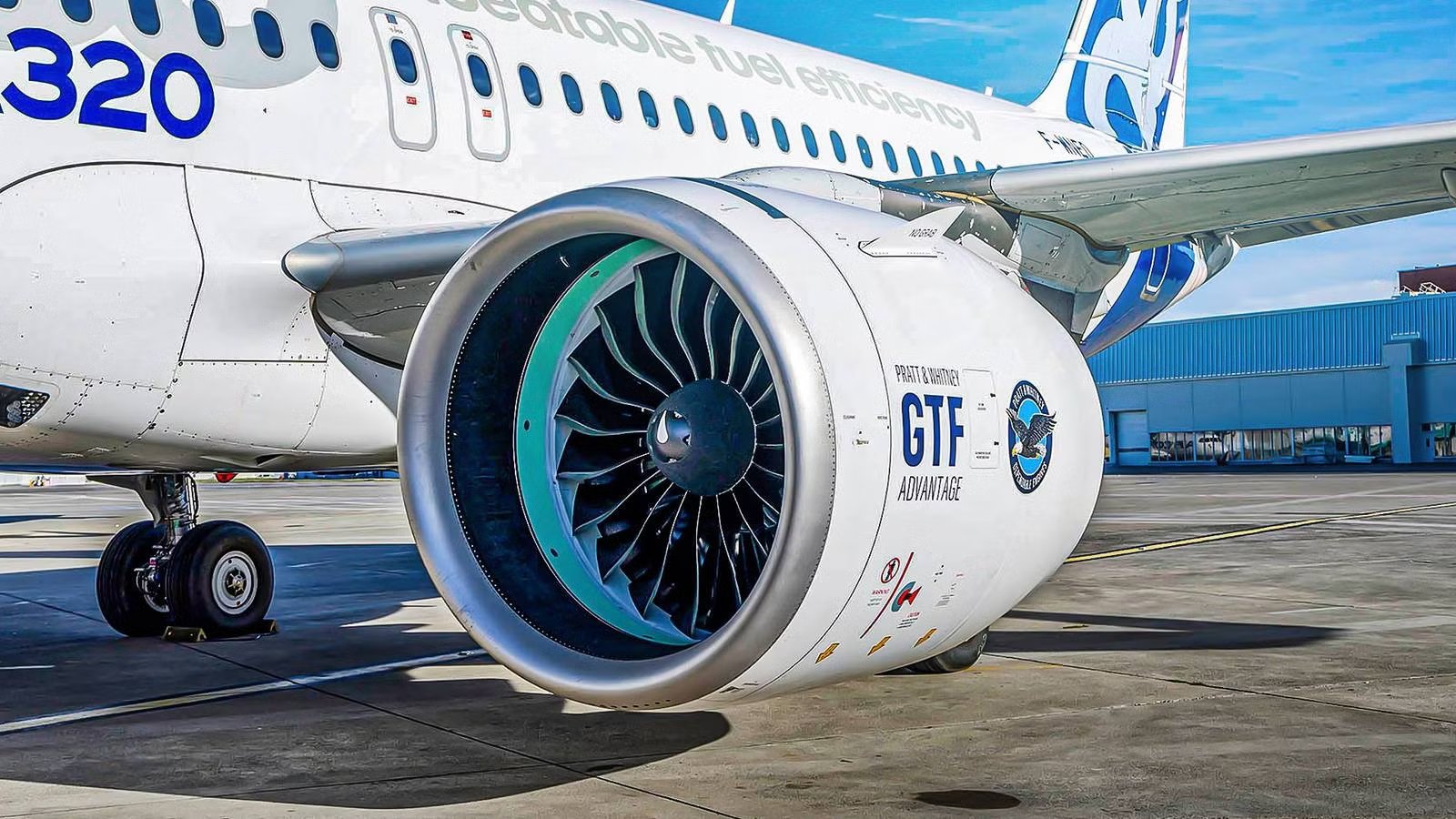
For Airbus A320neo operators, the most critical metric to care about today is no longer just fuel burn; it is Time-On-Wing (TOW). As Pratt & Whitney rolls out its comprehensive series of upgrades for the Geared Turbofan (GTF) engine family, the spotlight has shifted to the Hot Section Plus (HS+) retrofit kit. More than just a simple tweak, this retrofit kit is a 35-part change designed to close the durability gap between the existing fleet and the new GTF Advantage standard.
This guide breaks down how the HS+ retrofit kit is being deployed across Pratt & Whitney’s 21 global MRO facilities to nearly double the time-on-wing for current operators. The following sections look into the technical reality of the 35-part replacement, the logistical journey of scaling this industry-wide engine upgrade, and what airline fleet managers need to know about integrating these components during scheduled shop visits.
Good As New

The Hot Section Plus (HS+) retrofit is quickly becoming the central pillar of Pratt & Whitney’s strategy to stabilize the GTF engine fleet and restore operator confidence. It targets the most thermally stressed areas of the engine, specifically the combustor and high-pressure turbine (HPT), and imports the durability architecture of the newly certified GTF Advantage engine into the existing PW1100G in-service population. What this means for airline fleets is a new streamlined path to operational parity, allowing in-service assets to achieve approximately 90–95% of the durability performance of a factory-new GTF Advantage engine without requiring a complete engine replacement.
Rather than redesigning the entire engine architecture, Pratt & Whitney focused exclusively on the hot section, where the most significant wear and oxidation challenges reside. The 35 components replaced during the kit installation feature advanced airfoil designs and state-of-the-art coatings that are far more resilient to the extreme internal temperatures of the GTF. Key improvements include improved cooling hole geometry and more precise drilling techniques.
The HS+ kit addresses the root cause of early engine removals, theoretically allowing operators to nearly double their time-on-wing compared to the baseline GTF configurations. Also, Pratt & Whitney has ensured that engines equipped with the HS+ kit remain fully intermixable and interchangeable with both the original GTF and the newer GTF Advantage powerplants. Having this capability is critical for airlines managing mixed fleets, as it avoids the logistical nightmare of tracking incompatible engine standards across a single airframe type.
Seamless Integration Across the Global MRO Network

Pratt & Whitney needs to coordinate shop visits across a global network of 21 maintenance, repair, and overhaul facilities to keep the supply chain for these 35 specific components uninterrupted. For airlines, the bottleneck is not just the engineering of the kit, but the availability of a slot to perform the work. Managing the flow of assets through these shops means careful scheduling to prevent the very groundings the upgrade aims to solve.
To meet this demand, Pratt & Whitney is leveraging advanced manufacturing capacity across its supply chain to ensure a steady flow of the 35 new components. This approach reduces reliance on traditional long-lead casting methods that have historically plagued the industry, standardizing turnaround times and cutting component lead times by more than 60% during routine maintenance visits.
Reducing depot downtime is the best way to restore fleet health. Every day an engine spends on a stand is revenue lost for the operator. Therefore, making the most of these 21 facilities, Pratt & Whitney aims to create a hub-and-spoke model where parts are localized, and turnaround times are standardized. This industrial maturity is the invisible foundation of the program because it ensures that the installation of the 35 parts happens quickly enough to make a difference in fleet reliability metrics before the end of the 24-month cutover window.
Truly Valuable To The Aircraft As A Whole

For operators of the A320neo family, the HS+ retrofit package is really now the best way to stabilize the asset’s lifecycle economics. Of course, airlines will be captivated by the headline figure, which is the nearly doubled time-on-wing (TOW), though many will be equally concerned over the operational utility of the retrofit, which is defined by the specific performance deltas like thrust, fuel efficiency, and thermal management that the upgraded hot section delivers.
The integration of the HS+ kit provides a measurable boost to engine capability, delivering 90–95% of GTF Advantage durability benefits. With GTF Advantage, operators can also expect a 4–8% increase in takeoff thrust, which provides significant relief for hot and high airport departures, where takeoff performance has historically been a limiting factor for payload and range. Additionally, the refinements to the combustor and high-pressure turbine cooling, combined with the new airfoil designs, yield a 1% reduction in fuel burn. A 1% improvement may seem marginal in isolation, but when aggregated across an entire fleet of A320neo aircraft, it can be a substantial annual reduction in operating costs and carbon emissions, directly impacting the bottom line.
The engine core is also shielded from the oxidation and thermal stress that previously necessitated premature shop visits, mainly because the HS+ configuration delivers 90–95% of the durability benefits found in the factory-new GTF Advantage. By slowing the degradation of high-pressure turbine components, the retrofit changes the aircraft’s maintenance rhythm. For an airline, this means moving away from the reactive unscheduled removal events that have plagued GTF operations and toward a stable, planned maintenance cadence that gets the most out of aircraft availability and revenue-generating hours.
Taking The Necessary Time To Move Over

The successful deployment of the HS+ retrofit kit is time-sensitive, operating within a wider multi-year cutover window that is reshaping the A320neo production standard. The factory-new GTF Advantage engine is already entering the production stream, targeting 100% Advantage-standard deliveries to Airbus by early 2028. At the same time, the HS+ retrofit is being positioned as the essential bridge for the thousands of aircraft already in service. This timeline is a critical synchronization of supply chain capacity, shop visit scheduling, and technical certification that dictates how quickly operators can realize the Advantage-level durability of their existing assets.
Catch what other flight trackers miss
Emergency squawks, holds, NOTAMs — live signals, no signup.
Open tracker
Catch what other flight trackers miss
Emergency squawks, holds, NOTAMs — live signals, no signup.
Open tracker
The multi-year figure is the operational horizon that airlines will be working towards. Certification of the HS+ kit is currently on course for late 2026, with widespread availability expected to ramp up through the first quarter of 2027. This creates a phased transition where early adopters will begin integrating these 35 parts during their routine, scheduled maintenance shop visits, mixing in the durability upgrades without triggering unplanned downtime. The strategy relies on aligning these shop visits with the natural wear-and-tear cycle of the fleet, which may prove a bit of a challenge. By the time the production cutover to the GTF Advantage is complete in 2028, a significant portion of the legacy fleet will have already been brought up to speed via the HS+ retrofit.
The transition is carefully calibrated to avoid overwhelming the MRO network, as this could cause major issues for the program. By spreading the implementation over several years, Pratt & Whitney is attempting to avoid the bottleneck where too many engines are pulled for upgrades simultaneously. It may seem like a mandatory, immediate change, but it is most certainly a proactive maintenance strategy because planning the HS+ installation during upcoming scheduled overhaul intervals is the most efficient way to maximize engine life while minimizing the operational friction of the retrofit process.
The Most Pivotal Moment Yet

Operators will be understandably hoping that this retrofit will finally end the grounding crisis that has defined A320neo operations for the last two years. No single maintenance intervention acts as a panacea for complex engine logistics, and that is clear. However, the HS+ retrofit is a definitive turning point for engine durability. By replacing the high-wear components that previously pushed operators into premature, unscheduled engine removals, the retrofit aligns the engine’s real-world durability with the reliability standards that airlines originally expected when they signed their purchase contracts.
The impact of this change is already showing up in the aggregate data. As of mid-2026, Pratt & Whitney has reported that the number of grounded aircraft due to engine-related issues has fallen by approximately 40% from the program’s peak. This improvement is really a testament to Pratt & Whitney’s hard work, moving away from reactive, emergency-based engine removals to a model of proactive, scheduled maintenance. As the HS+ kits are integrated during routine shop visits, the surprise factor, where engines were pulled early due to accelerated thermal degradation, is being engineered out of the fleet.
It could be argued that this evolution is the most important development in the GTF program’s history. The goal is no longer just to survive the maintenance cycle; now, it is to regain the utilization levels that A320neo operators depend on for profitability. Pratt & Whitney has now developed a way to effectively buy back the flight cycles that were lost to the durability crisis. As groundings continue to trend downward and shop visit throughput stabilizes, the focus is no longer on managing a broken supply chain, but on pushing forward an efficient, high-durability operational engine that airlines can truly depend on.
Durability Takes Real Effort To Achieve

The success of the 35-part HS+ retrofit is an exercise in asset protection for the A320neo family. For airlines and lessors, the platform has long been shadowed by the durability concerns of its GTF powerplants, which risked creating a class of aircraft that was difficult to remarket or sustain over its full service life. Now, bringing these engines up to a near-Advantage durability standard, Pratt & Whitney is removing the common barrier to long-term ownership.
Airlines that prioritize early integration of the HS+ kit during scheduled heavy maintenance visits will be the first to capture the benefits of higher utilization and lower unscheduled maintenance costs. The logistical strategy for the coming years should shift from reactive mitigation to proactive cycle planning, making sure that every engine inducted into an MRO facility is fully updated to the latest standard.
This retrofit program, in the bigger picture, serves as a template for how the industry manages the transition from early-generation engine technology to mature reliability. Pratt & Whitney has demonstrated that industrial maturity, the ability to manufacture, distribute, and install complex upgrades at scale, is just as critical to commercial success as the initial engine design. The GTF platform, now reinforced by some very hard lessons and physical upgrades, is positioned to serve the global network for decades to come.