dailynewsnblog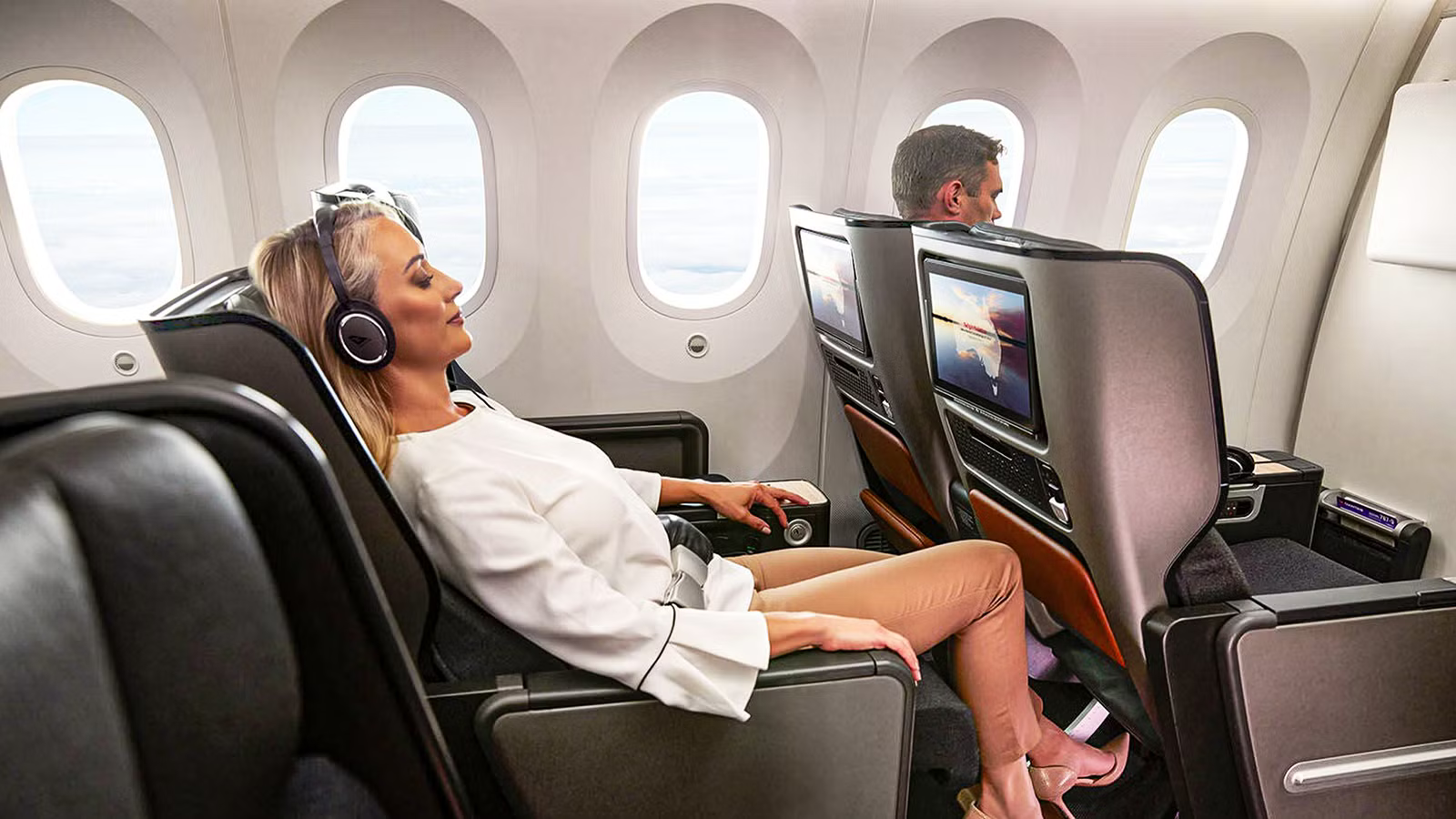
A lie-flat bed can be the most valuable feature on a long-haul flight, but on a shorter sector, it can also be an expensive luxury that delivers little practical return. For corporate travelers, the difference between arriving rested and spending thousands of dollars unnecessarily may come down to a simple question: How much time will you actually have to sleep?
The eight-hour flight rule can be used as a practical benchmark for deciding when premium economy makes more financial sense than business class. Airlines such as Qantas and  Air France demonstrate how the intermediate cabin can deliver greater comfort, improved dining, and selected premium services without the substantial cost of a lie-flat seat. But the calculation involves more than flight duration, especially when overnight departures, daytime returns, and business travel demands come into play.
Why Eight Hours Can Change The Business Class Calculation

The eight-hour threshold is best understood as a planning guideline rather than a formal airline industry rule. On flights shorter than eight hours, premium economy can offer a more comfortable environment for working and resting without requiring you to pay several times the business class fare. The distinction matters most on daytime services, when passengers may prefer to work, read, or relax and not sleep.
The underlying issue is that the advertised flight duration does not translate directly into usable sleep time. Meal service, cabin preparation, announcements, and the time needed to settle into a seat can all reduce the period available for uninterrupted rest. On an eight-hour overnight flight, a passenger may have far less than eight hours to sleep, making seat quality and service timing crucial to whether business class justifies its premium.
According to Business Class Travel’s comparison of Premium Economy and Business Class, indicative round-trip premium economy fares can fall between $1,400 and $2,200, compared with $4,500 to $7,000 for business class. These are illustrative prices, not universal market averages, but the difference shows the financial stakes. If the more expensive cabin doesn’t provide enough extra rest to protect a traveler’s productivity, the next question is whether Premium Economy can deliver enough comfort to close the gap.
How Qantas And Air France Make Premium Economy More Attractive

Both Qantas and Air France offer premium economy as a distinct cabin rather than simply selling passengers an economy seat with a slightly better position in the aircraft. These products offer more personal space and a more comfortable environment, while selecting onboard and ground services helps differentiate them from standard economy. For companies buying multiple tickets, these improvements can make premium economy a credible option for employees who need to arrive ready to work but don’t necessarily need a bed.
Qantas provides premium economy seating with about 38 inches of seat pitch, 20.5 inches of width, and 9 inches of recline, according to specifications cited in Vertu’s 2026 Qantas cabin comparison. Business class, by contrast, offers a lie-flat sleeping surface measuring approximately 80 inches. This means premium economy offers more room to sit and recline, but it can’t replicate the horizontal sleeping position that makes business class particularly valuable on overnight journeys.
Air France offers another example of how the intermediate cabin can appeal to corporate travelers. Its premium economy product includes a seat with approximately 38 inches of pitch on average, seven inches more than the economy benchmark cited by Going’s Air France cabin guide. Depending on the aircraft, the cabin can be arranged in a 2-4-2 or 2-3-2 configuration, as our seat maps show. Air France also promotes an enhanced dining experience, with meals inspired by French gastronomy, although specific menus and services vary by route and aircraft.
These products show why you can’t judge premium economy solely by what it lacks compared with business class. For a traveler who needs extra room to work, a more comfortable seat, and an improved onboard experience, the middle cabin may deliver enough value without the price of a lie-flat bed. The remaining question is how companies should decide which cabin to purchase for each individual journey.
The Fare Gap That Corporate Travel Managers Cannot Ignore

The financial argument becomes clearer when you compare the two cabins directly. Using the illustrative round-trip fares cited by Business Class Travel, premium economy costs $1,400-$2,200, while Business Class costs $4,500-$7,000. Although actual prices depend on the route, booking date, fare rules, and availability, the difference can save companies substantial money when employees travel in premium economy.
Measure | Premium Economy | Business Class |
Illustrative round-trip fare | $1,400-$2,200 | $4,500-$7,000 |
Seat configuration | Wider seat with greater recline | Lie-flat bed on equipped aircraft |
Indicative Qantas seat pitch | 38 inches | Not directly comparable to bed length |
Qantas sleeping surface | Reclining seat | Approximately 80 inches |
Best practical fit | Daytime and shorter journeys | Overnight flights where sleep matters |
The potential savings are considerable. A company that buys a $1,800 premium economy return ticket instead of a $5,500 business class ticket saves $3,700 on that journey, about 67%. Across ten comparable trips, the difference would amount to $37,000 before accounting for changes in fares, corporate discounts, or other travel expenses.
However, the cheapest ticket is not automatically the most economical choice for a business. If an employee arrives exhausted before an important negotiation, conference, or client presentation, reduced productivity could outweigh the fare savings. Corporate travel managers should consider the trip’s purpose alongside the price, rather than imposing a universal cabin restriction. This raises a more nuanced question: Can a company preserve business class for journeys where its benefits matter most while using premium economy for the rest?
Catch what other flight trackers miss
Emergency squawks, holds, NOTAMs — live signals, no signup.
Open tracker
Catch what other flight trackers miss
Emergency squawks, holds, NOTAMs — live signals, no signup.
Open tracker
Why The Direction And Timing Of A Trip Matter More Than Cabin Prestige

A trip-specific booking strategy offers one possible answer. Instead of assigning employees a single cabin for an entire itinerary, companies can evaluate each flight by departure time, duration, and arrival demands. A traveler might use business class on an overnight outbound service before a morning meeting, then return in premium economy on a daytime flight when sleeping is less important.
The logic follows the lie-flat seat’s purpose. If a traveler has a genuine six-to-seven-hour opportunity to sleep, business class may protect rest and productivity in a way that a reclining premium economy seat cannot. If the flight falls mostly during waking hours, the added cost may offer less practical benefit. As Holidays to Asia’s cabin comparison suggests, the decision depends more on the journey’s circumstances than on a blanket preference for one cabin.
Consider a corporate traveler flying overnight to an overseas meeting. Even if the scheduled sector is close to eight hours, dinner service and preparing for sleep could leave little time to rest. Business class may be worthwhile if the itinerary allows sufficient uninterrupted sleep and the traveler must perform immediately after landing. On the daytime return, premium economy may provide sufficient comfort while preserving thousands of dollars in the travel budget.
Thus, companies can treat the eight-hour benchmark as a decision aid, not a widespread practice, and incorporate it into their own travel policies, with exceptions for individual itineraries and business requirements. Nevertheless, even a flexible rule introduces another complication: premium economy products differ, and not every journey offers the same balance of comfort, service, and convenience.
The Hidden Trade-Offs Behind Premium Economy Savings

Seat dimensions are only one part of the comparison. Premium economy cabins can differ in layout, recline, privacy, storage, dining, and baggage allowances, so two products with the same cabin name may deliver different experiences. Travelers should check the aircraft assigned to their flight, since specifications and configurations can change between aircraft types and individual services.
Air France illustrates why the details matter. According to Going’s comparison, its premium economy carry-on allowance is 12 kilograms, the same as economy, while business class allows 18 kilograms. For an employee traveling with presentation materials, equipment, or several days’ worth of business clothing, that difference could affect the overall convenience of the journey. Baggage rules and additional fees should therefore be part of the booking decision, not overlooked in the pursuit of a lower fare.
Qantas places greater emphasis on premium economy, offering more space and a greater recline than economy. Its official Premium Economy cabin information outlines the product and onboard experience, allowing travelers to assess the benefits against their needs. Still, a more comfortable reclining seat isn’t the same as a fully flat bed, especially when the flight overlaps with normal sleeping hours.
Companies also need to account for total journey time. A relatively short flight followed by a long connection or an immediate meeting may create a stronger case for business class than the sector duration alone suggests. Conversely, an overnight flight arriving with ample recovery time before the working day may not always justify the highest cabin.
Corporate Travel Policies May Need A More Flexible Cabin Rule

For corporate travel departments, the eight-hour benchmark offers a starting point for more deliberate spending decisions. Instead of automatically booking the most expensive cabin for senior employees or restricting everyone to one class, a policy could weigh flight duration, departure time, sleep opportunity, and the importance of the first working hours after arrival. Such an approach would make the rationale for an upgrade more transparent while helping companies identify journeys where premium economy is sufficient.
The commercial implications extend beyond individual passengers. If companies shift more daytime and short-haul bookings to premium economy, airlines could benefit from demand for a cabin positioned between standard economy and business class. That does not prove corporate customers are already shifting bookings at a particular rate, but selected airlines’ offerings give travel managers concrete alternatives to consider when reviewing cabin policies.
The eight-hour rule is most useful when treated as a threshold for asking the right questions. A lie-flat bed earns its premium when it provides meaningful rest that a reclining seat cannot deliver; when that benefit is marginal, premium economy can become the more rational corporate purchase. The test for companies is whether they can measure that value flight by flight, balancing the cost of the ticket against the productivity of the person sitting in it.